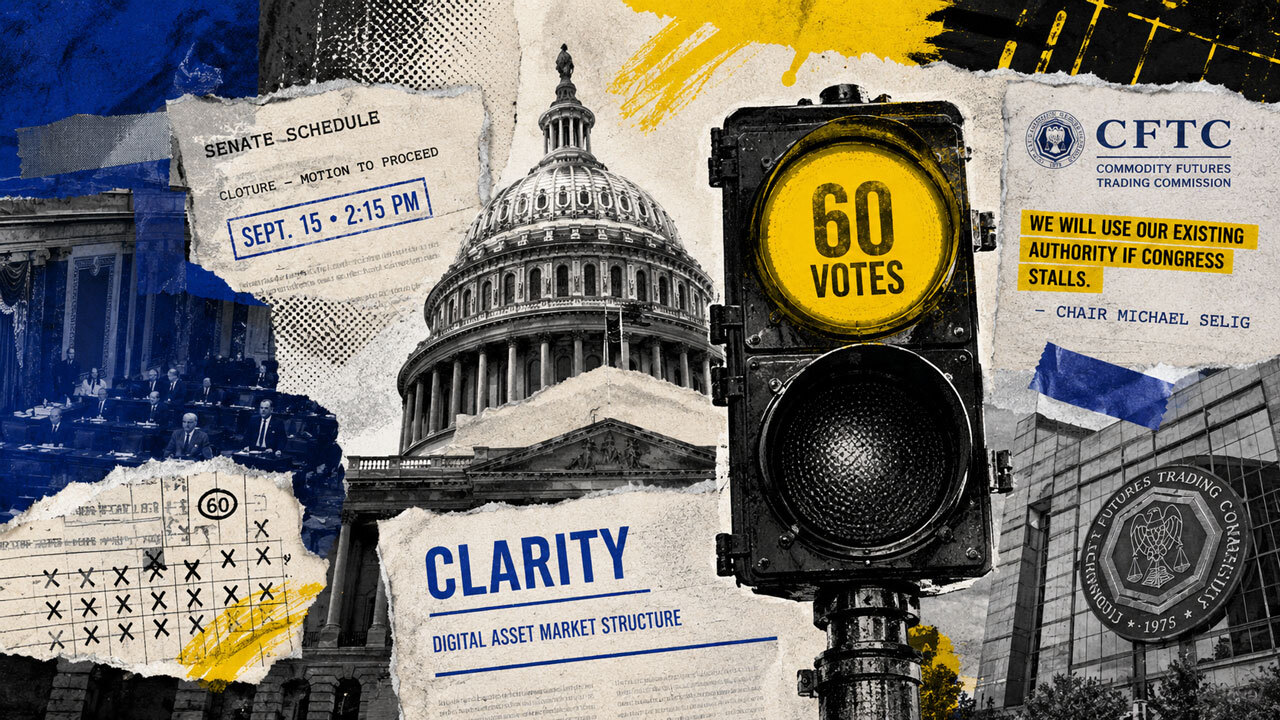
The U.S. Senate has scheduled a procedural cloture vote on H.R. 3633, known as the Digital Asset Market Clarity Act, for September 15. The scheduled vote serves as a test of the bill's 60-vote coalition in the chamber.
Under the official floor schedule, cloture on the motion to proceed to the bill is set to ripen at 2:15 p.m. A successful vote would advance the Senate toward considering the legislation, though it would not pass the bill itself. Senate rules require 60 votes in a fully seated chamber to invoke cloture.
The Senate features 53 Republicans, 45 Democrats, and two independents. If all Republicans support cloture, supporters would still require at least seven votes from Democrats or independents to reach the threshold. The bill previously advanced from the Senate Banking Committee in a bipartisan 15-9 vote in May, but that committee tally does not guarantee floor support.
In July, seven Democratic senators—Angela Alsobrooks, Cory Booker, Catherine Cortez Masto, Ruben Gallego, John Hickenlooper, Mark Warner, and Raphael Warnock—stated that the current text fell short regarding ethics, consumer protection, illicit finance, conflicts of interest, and market integrity. Republican Senator Jim Risch expressed support for advancing the measure, describing the upcoming vote as the beginning of the Senate process.
As the legislative timeline unfolds, questions remain regarding regulatory actions if the bill continues to stall. Commodity Futures Trading Commission Chair Michael Selig stated on August 20 that the agency would take crypto-market steps under existing authority if the legislation remains blocked.
Selig's regulatory agenda includes joint work with the Securities and Exchange Commission regarding jurisdiction, rules for tokenized collateral and leveraged retail transactions, pathways for perpetual derivatives, and potential exemptions or safe harbors. While the CFTC holds existing authority to police fraud and manipulation in spot digital commodity markets and regulate certain derivatives, Selig noted that legislation is required to implement a full framework for trading-platform registration, examinations, and the segregation of customer funds.
Before the legislation can become law, the Senate must consider and pass the bill, resolve any differences with the version approved by the House, and send identical legislation to the president.