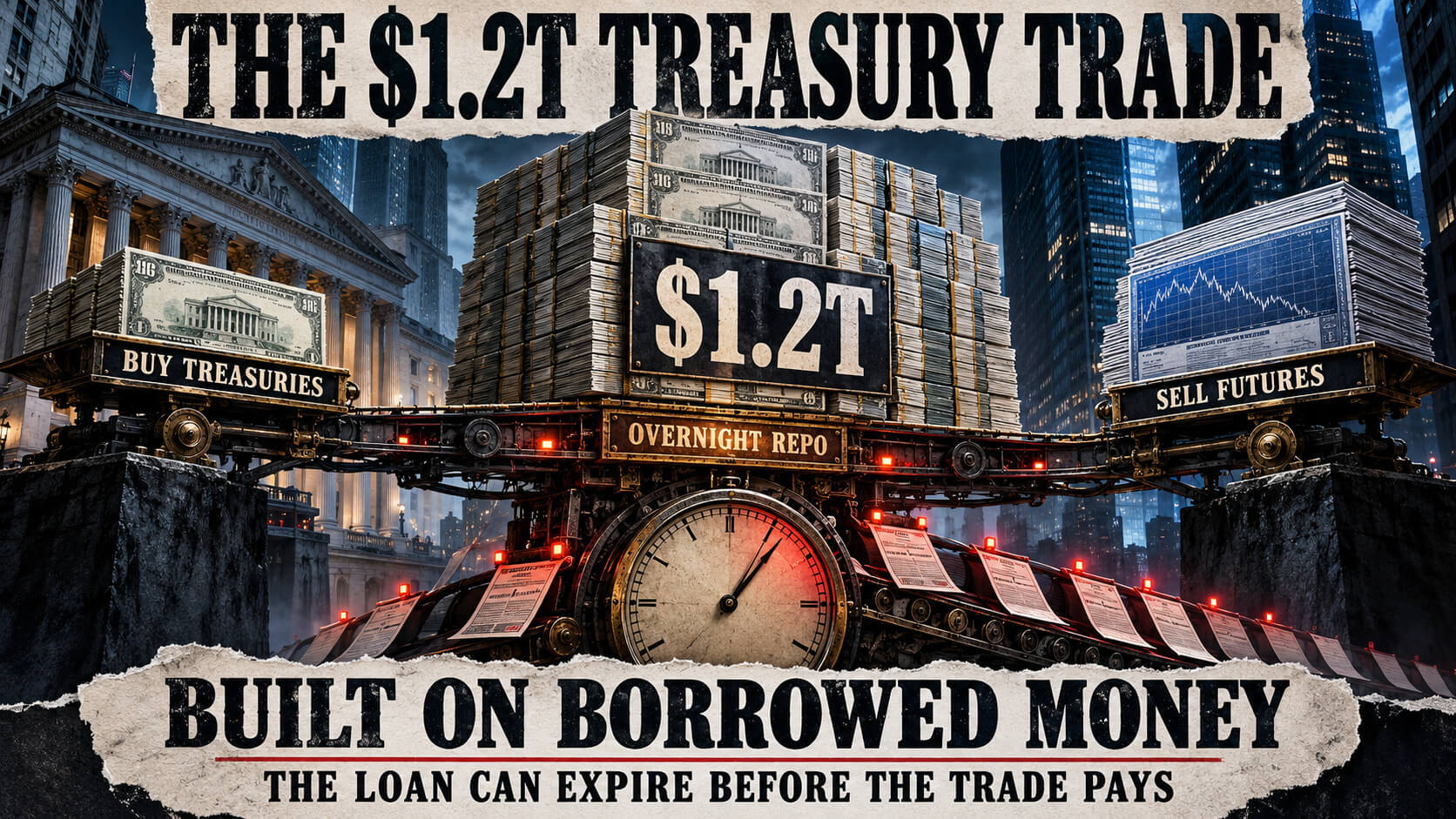
Hedge funds have built a massive $1.2 trillion position in United States government debt without betting that bond prices will rise. By purchasing Treasury securities and selling futures against them, funds capture a small pricing gap while borrowing most of the purchase money through repurchase agreements, or repo, to make the return worthwhile.
According to September reports from Morgan Stanley, these positions have fallen by about 20% this year. While the bank did not find evidence of broad basis-related market stress at the time, the strategy inherently relies on short-term loans that can expire faster than the trades can pay off.
How the Basis Trade Works
The strategy involves buying a bond and selling a futures contract to hedge against price movements. To finance the purchase, the fund uses overnight repo, selling the security for cash and agreeing to buy it back later at a slightly higher price. Because the financing is often short-term, the fund must continually renew or replace the loans to maintain the position.
While leverage can turn a small percentage return into a significant profit on committed capital, even minor increases in borrowing costs can erase expected gains. If financing terms worsen or margins increase, funds may choose to let positions expire or be forced to sell assets.
Risks of Forced Selling and Margin Calls
The core vulnerability of the trade lies in liquidity mismatches. A futures position can require immediate cash payments for losses through variation margin, while gains on the underlying bond remain tied up in the security. Repo lenders can also demand larger haircuts, requiring funds to supply more of their own capital against the same collateral.
If multiple funds must close positions simultaneously, they may need to sell bonds and buy back futures, potentially driving bond prices down and making exits more expensive. Federal Reserve researchers and major financial institutions continue to monitor these large-scale positions, noting that financing terms and repo rates provide critical indicators of potential market stress.