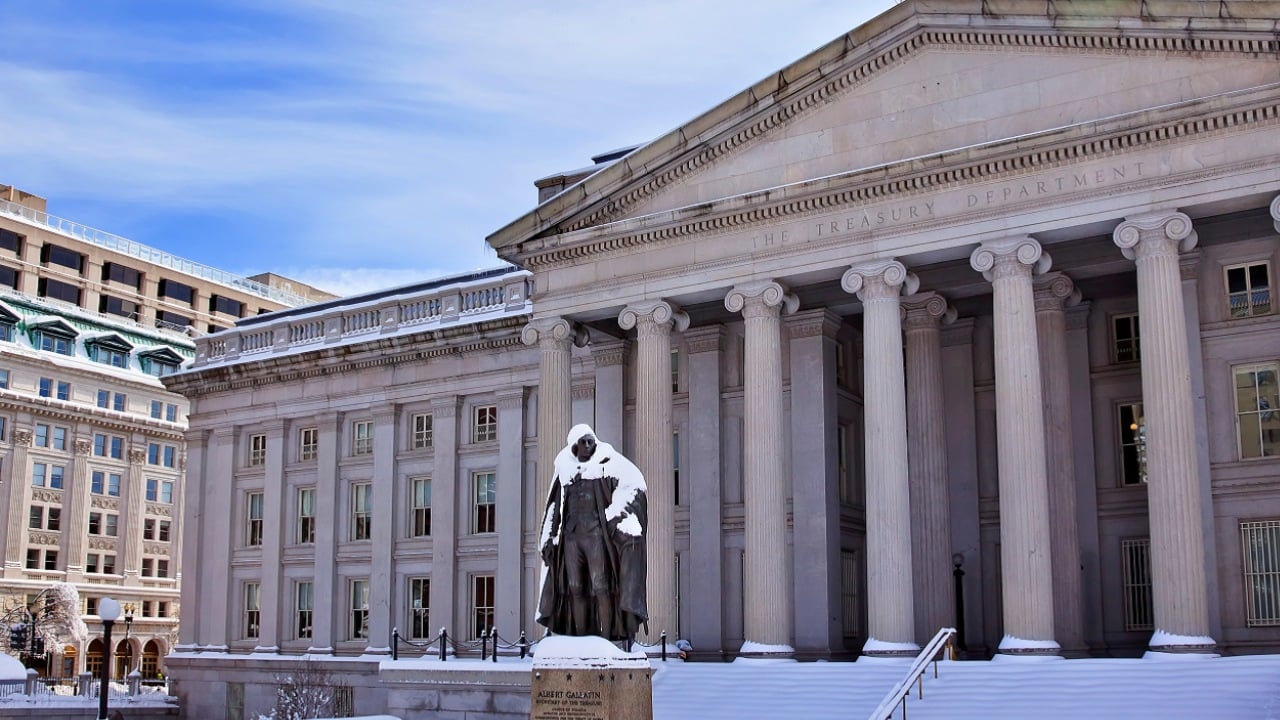
The House Financial Services Committee advanced legislation on September 16 that would codify the U.S. Strategic Bitcoin Reserve and impose a 20-year holding period on qualifying federal bitcoin. The committee approved H.R. 8957, the American Reserve Modernization Act, by a vote of 28-21 after adopting a substitute amendment.
The measure represents a committee-level advance rather than full House passage. The bill would still require approval from the full House, Senate confirmation, and the President's signature to become law.
How the Bill Would Work
Under the legislation, the Treasury Department would be required to hold all bitcoin acquired by the United States for at least 20 years from the date of enactment. During this holding period, reserve bitcoin could not be sold, swapped, auctioned, encumbered, or otherwise disposed of.
The bill would require Treasury to establish the Strategic Bitcoin Reserve and a separate Digital Asset Stockpile within 180 days of enactment. Two years before the 20-year period ends, Treasury would submit recommendations to Congress regarding continued retention or controlled releases of the assets.
After the holding period expires, Treasury could recommend selling up to 10 percent of reserve assets during any two-year period.
Government Bitcoin Holdings
The legislation addresses a substantial pool of government-controlled cryptocurrency assembled largely through law enforcement seizures and forfeitures. Data attributed approximately 324,527 BTC to U.S. government-linked addresses, valued at approximately $26.48 billion at the time of reporting.
Oversight and Reporting Requirements
The bill would establish new requirements not covered by the existing executive order. Each agency would provide Treasury with an inventory of all bitcoin and other digital assets within 60 days and annually thereafter. Treasury would publish an annual proof-of-reserve report covering holdings, transactions, and control of private keys, verified by an independent auditor experienced in cryptographic attestations.
The comptroller general would conduct continuing oversight of the reserve.
Relationship to Executive Order
The legislation builds on President Trump's Executive Order 14233, which already directs the federal government to operate the Strategic Bitcoin Reserve and Digital Asset Stockpile. The executive order relies on existing executive and forfeiture authorities.
A future president could amend or revoke the executive order, but if this bill becomes law, statutory requirements could only be changed through congressional action. Congress could still amend or repeal the law through subsequent legislation, which would require presidential signature unless Congress overrode a veto.
Additional Provisions
The bill would direct the Treasury Department and Commerce Department to study lawful, budget-neutral methods for acquiring additional bitcoin. The study could examine non-bitcoin asset sales, forfeitures, settlements, and cooperative programs, but the provision does not authorize purchases. A report would be due to Congress within 180 days of enactment.