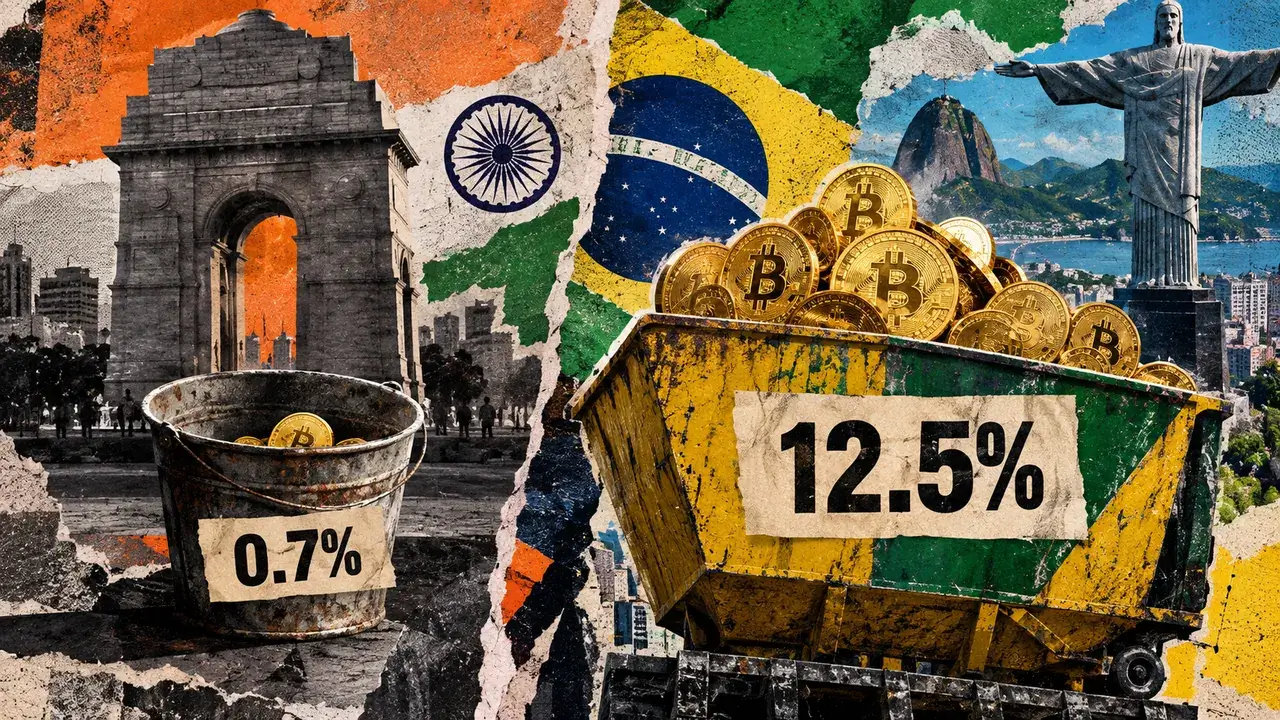
India's cryptocurrency users sent substantial value to centralized exchanges during the annual period ending June 30, 2026, but domestic platforms captured just 0.7% of exchange inflows, according to Chainalysis's latest regional analysis. The finding highlights a divergence between national crypto activity and domestic platform adoption.
Chainalysis attributed $88.4 billion in centralized-exchange inflows to India-based users, making India the largest such market in Central and Southeast Asia and Oceania. However, the share of that value received by Indian domestic exchanges fell sharply from around 7% to 0.7% in mid-2022, the report noted.
Brazil presents a contrasting trajectory. Chainalysis reported that Brazil-based exchanges increased their share of inflows from 1.5% to 12.5% over the same period, demonstrating a different pattern of domestic platform adoption.
Possible explanatory factors
Several factors may contribute to India's domestic platform challenges. India's tax withholding requirements on cryptocurrency transfers—currently set at 1% under section 393—reduce cash immediately available for subsequent trades. Ashish Singhal, co-founder of CoinSwitch, told Chainalysis that tax friction encourages offshore exchange use, as foreign venues may not apply equivalent deductions.
Payment access also plays a role. Domestic and international exchanges in India both offer local payment routes including UPI and net banking. Brazil's growth has coincided with regulatory clarity and stronger local offerings, according to Chainalysis interviews. International platforms like Binance have adopted local payment methods such as Pix transfers in Brazil, suggesting that payment access alone does not determine venue choice.
Measurement limitations
Chainalysis uses website traffic to assign pooled service activity to user countries, adjusting for income differences using GDP per capita. The methodology acknowledges imperfect removal of VPN and bot traffic, with figures representing estimates of geographically attributed activity.
The precise contribution of withholding to the measured share decline remains unmeasured. Foreign platforms may comply with Indian tax obligations despite their location, and the relationship between tax policy and platform choice involves multiple competing factors beyond withholding alone.