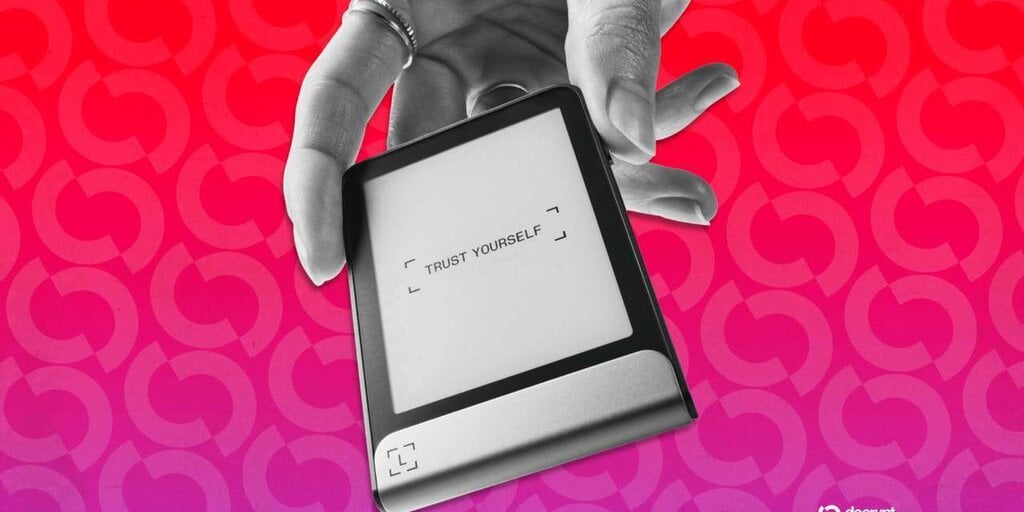
Ledger has launched Clear Signing for Solana, enabling hardware wallet users to see what DeFi transactions do before approving them. The feature was unveiled at Solana Breakpoint in London.
Until now, Solana DeFi users on Ledger devices typically signed transactions without being able to understand what they were approving. A single DeFi action on Solana typically bundles 5 to 8 separate instructions, each appearing as technical data that is difficult for most users to interpret.
How Clear Signing Works
Clear Signing compresses complex transaction bundles into readable summaries, showing the user's intent, the assets involved, and the action being completed. The implementation is built on sRFC 41, a Solana community standard that describes how to convert complex instructions into human-readable intent.
Ledger developed the feature in collaboration with the Solana Foundation and Anza, the engineering firm behind one of Solana's validator clients. Developers integrating the feature are asked to submit Codama IDLs, machine-readable maps of how a program's instructions are structured.
Initial Adoption and Impact
Decentralized exchange aggregator Jupiter was the first app to integrate Clear Signing. A Jupiter swap now displays what the user is sending and receiving in plain language before approval. Previously, approving a swap on Jupiter required 13 confirmation screens on a Ledger device; with Clear Signing, it requires 3.
Lending protocol Kamino has also added support. In total, Clear Signing currently works with nine Solana applications and covers 18 of the 22 most common on-chain actions on the network.
Technical Requirements
Clear Signing requires version 1.17.0 or higher of the Ledger Solana app and only works with wallets built on Ledger's DMK developer toolkit.
Broader Implications
The Solana Foundation and Anza collaboration around sRFC 41 suggests the network is pursuing standard ways for wallets to describe transactions, rather than having each wallet maker decode every protocol independently.