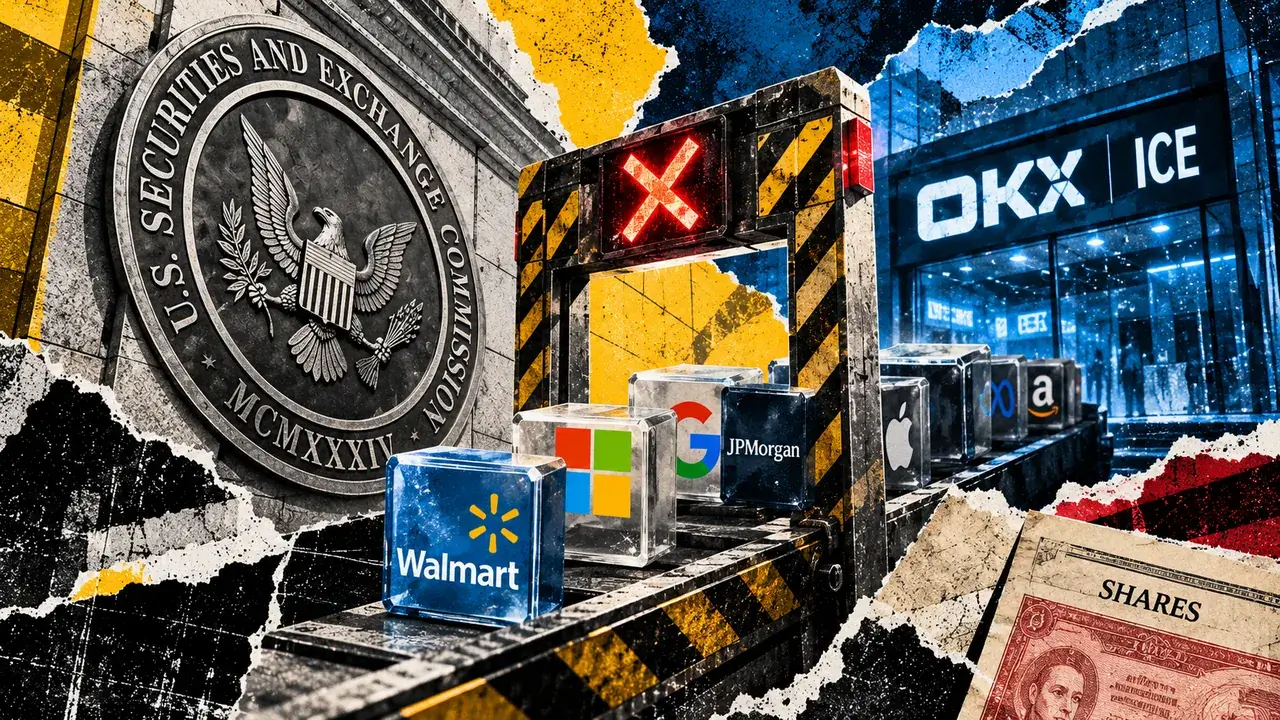
Thirty-eight companies, including Walmart, Microsoft, Alphabet and JPMorgan, have filed objections to prevent third-party tokenized versions of their shares from trading on OKXICE, a proposed 24-hour stock tokens venue backed by the owner of the New York Stock Exchange.
OKXICE is owned equally by an Intercontinental Exchange subsidiary and OKC USA. The venue proposes secondary trading through automated liquidity pools on the XLayer blockchain, separate from the NYSE itself.
How the Objection Process Works
Under SEC framework rules, issuers receive notice when a venue proposes to list tokenized versions of their shares. Companies have a 30-calendar-day window to file a written objection that prevents the token from trading on that particular venue. The SEC does not provide issuers with comparable routine veto power after this objection window closes, creating incentives for early refusal.
Revenue Structure and Incentive Misalignment
OKXICE retains service fees from the venue, while separate pool fees go to liquidity providers and network fees to the blockchain. The fee schedule does not guarantee that the underlying company receives direct payment or capital benefits from tokenized trading of its shares.
The SEC's September 17 exemption prohibits primary issuance and initial offerings on tokenized securities venues. While wider share access could theoretically benefit companies, that potential differs from direct commercial incentives tied to venue fees.
Pricing and Trading Risks
OKXICE's proposed pools price transactions based on their asset balances rather than a conventional order book. The venue has warned that token prices may diverge from underlying share prices, particularly when regular stock markets are closed or pool liquidity is thin.
The SEC identifies shareholder-register maintenance and possible price dislocation as risks issuers weigh. OKXICE provides for trading stoppages tied to underlying-stock halts but applies no additional reference-price bands, so round-the-clock availability does not guarantee traders can purchase near conventional share quotes.
Alternative Models Emerging
Canton Strategic Holdings announced on October 29 that it agreed with tokenized securities venue TSV LLC to make its shares available through an issuer-sponsored arrangement, with Fairmint engaged to tokenize them. Fairmint would issue the tokens and maintain the official on-chain ownership record, with trading expected as early as November 2.
Both sponsored and third-party tokens under the SEC framework must provide equivalent shareholder rights. Canton's distinction is that the company chose its intermediaries and ownership-record arrangement, preserving official issuer records rather than relying on third-party token issuers.
The 38 objections leave OKXICE facing an issuer-participation challenge. The practical test is whether broader share access can offer companies sufficient value to accept pricing and recordkeeping trade-offs, or whether venues will require issuer-built arrangements from the outset.