Michael Saylor, Executive Chairman of Bitcoin treasury company Strategy Inc., has argued that crypto's larger opportunity lies in widespread product adoption rather than accepting legislative restrictions for regulatory certainty.
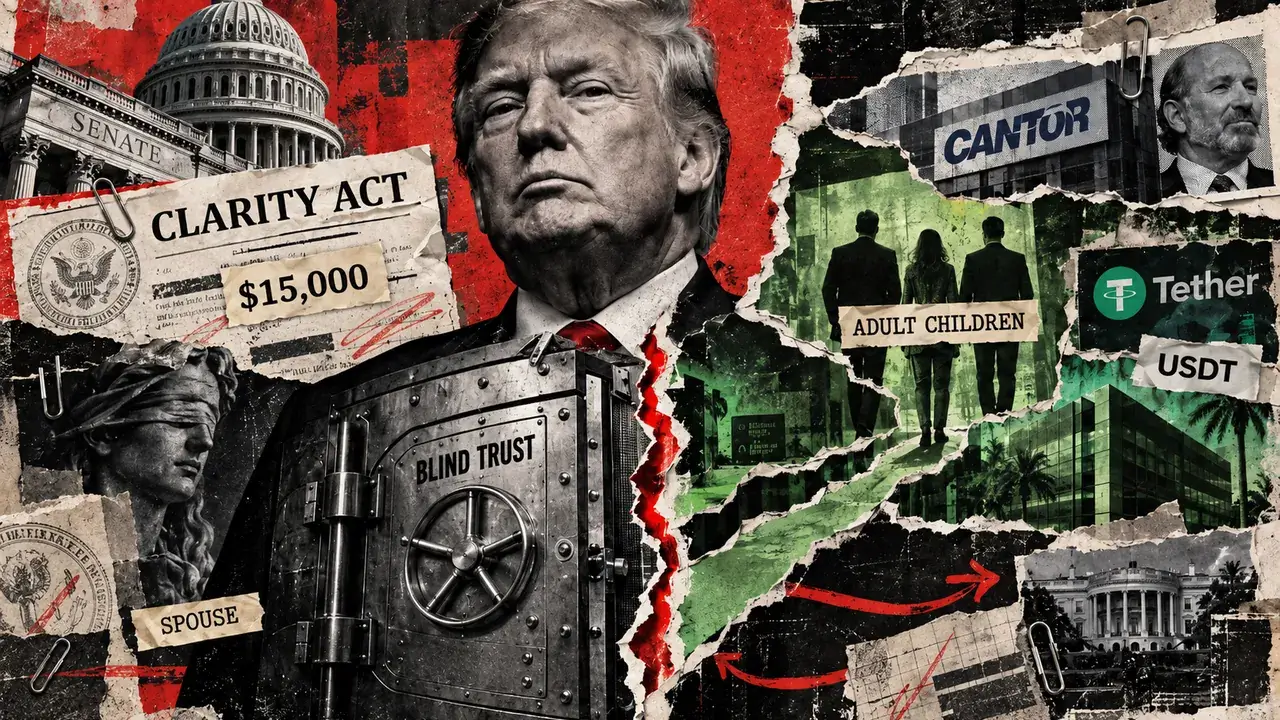
In a September 19 post on X, Saylor presented his case against the CLARITY Act compromise, which failed to advance in the Senate on September 15 after falling short of the required 60 votes. The proposed legislation would have restricted stablecoin reward structures and limited innovation sandbox participation to firms with no more than 25 employees.
Existing Authority Over New Legislation
Saylor contends that federal agencies, banks, and capital markets can expand digital finance without waiting for comprehensive new legislation. He pointed to the Securities and Exchange Commission's conditional relief for onchain trading of tokenized stocks on September 17, and the Office of the Comptroller of the Currency's decision to ease supervisory barriers to bank crypto custody, as evidence that existing regulatory authority can open markets.
He called for clear rules, open market entry, ownership protections, honest disclosures, and fraud enforcement—without requiring new congressional action.
Building a Customer Constituency
Saylor's strategy addresses industry concerns about policy reversal under a hostile administration. He argued that millions of customers using reliable financial products would create a political constituency capable of defending them against future regulatory rollback.
Saylor stated that the industry should use 2027 and 2028 to deploy products at scale, turn temporary regulatory relief into durable rules, and pursue focused legislation only where new authority remains necessary. He identified potential expansion areas including bank custody, bitcoin-backed lending, stablecoin implementation, digital credit, tokenized securities, and extended trading hours for existing financial instruments.
Customer Value as the Measure
According to Saylor, lower costs, easier access, useful services, and greater control over money would give users a direct interest in preserving financial innovation. He emphasized that customer support would still need to be earned through understandable products, transparent terms, honest risk disclosures, and reliable performance.