Strategy Inc. Executive Chairman Michael Saylor has released a 14-section essay advocating for a “Bitcoin Reformation.” In the text published on August 24, Saylor argues that Bitcoin has outgrown its founding-era orthodoxy and should integrate with modern financial, corporate, and political institutions rather than remain isolated within an ideologically pure economy.
Saylor challenges traditional doctrines that treat creator Satoshi Nakamoto as an oracle, the original white paper as a complete constitution, self-custody as a universal duty, and bitcoin-linked securities as illegitimate paper assets. He contends that Bitcoin can preserve its fixed supply, open participation, and direct-ownership option while operating across banks, insurers, exchanges, corporations, and governments.
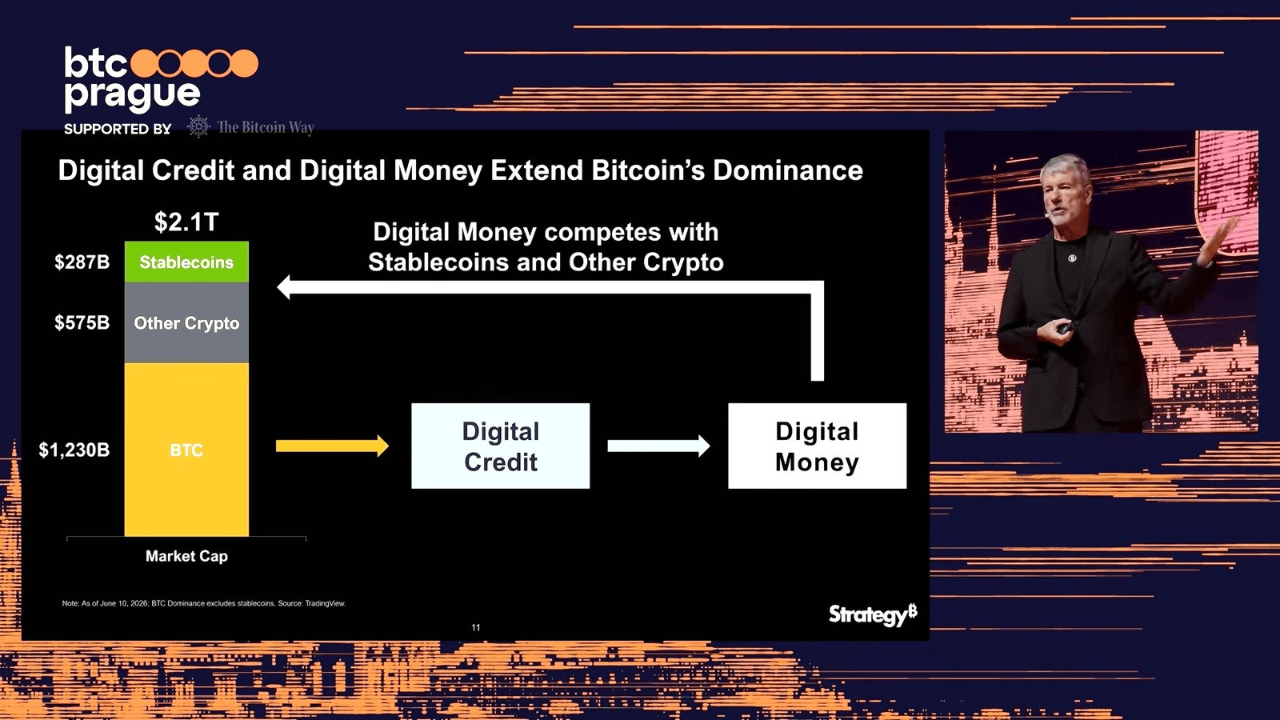
According to the essay, Bitcoin has matured from peer-to-peer electronic cash and digital gold into digital capital, serving as the foundation for credit, equity, money, and economic organization. The framework suggests that sovereign money can continue handling everyday commerce, taxes, and wages while bitcoin functions as non-sovereign capital.
While maintaining that self-custody remains a necessary exit option and check on intermediaries, Saylor rejects the idea that every holder must manage private keys directly. He notes that institutional custody can reduce operational mistakes and physical-security threats, pointing to spot bitcoin exchange-traded product shares approved by the SEC in January 2024 as a means for investors to gain price exposure without wallets.
The essay also addresses security challenges within self-custody, citing hardware wallet integration errors and customer data breaches that demonstrate ideological pedigree does not guarantee safety. Furthermore, Saylor points to the failure of proposal BIP-110 to show that Bitcoin governance is driven by economic adoption rather than ideological authority.
Concluding with a set of twelve principles, the manifesto emphasizes protocol minimalism, economic maximalism, and economic inclusion, asserting that Bitcoin should be accessible to individuals, families, corporations, machines, and nations alike.