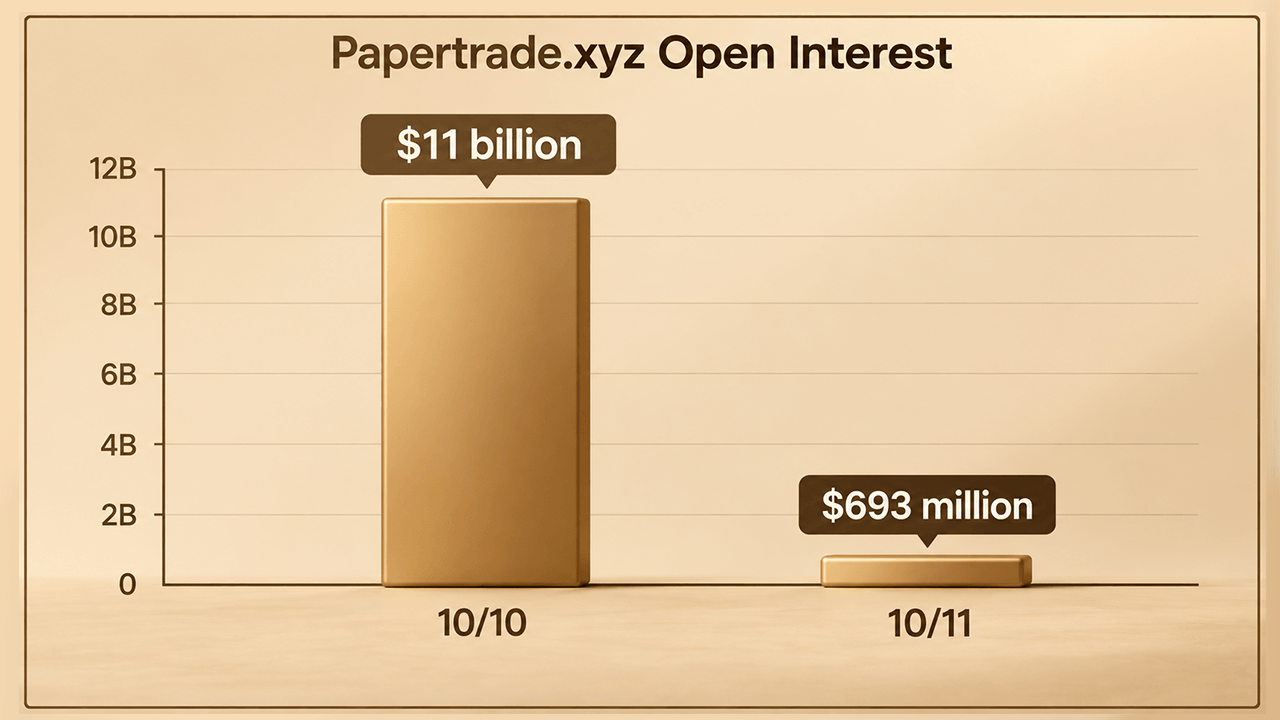
Papertrade exploit allegations emerged October 11 when X user Boblob claimed two wallets placed approximately $20 million each in Ether trades on Hyperliquid, moving ETH quotes by an estimated 0.1% to 0.2%. The same wallets allegedly held leveraged Papertrade positions with combined nominal exposure in the hundreds of millions of dollars.
Trader Rune shared the warning, flagging a documented risk in Papertrade's pricing design. The protocol uses Hyperliquid's best bid and offer midpoint to determine synthetic trade entries and exits. According to the allegation, large orders could shift these quotes before execution, potentially allowing holders of leveraged positions to benefit from the price movement.
Papertrade's documentation reportedly identifies manipulation of the best bid and offer as an unresolved risk. However, initial reports lacked independent wallet analysis, transaction verification, or confirmed profits or losses from the alleged activity.
Papertrade's Pricing Mechanism
Papertrade, which launched on HyperEVM connected to Hyperliquid, uses synthetic swaps between traders and its liquidity pool rather than matching users through an order book. The protocol supports leverage up to 1,000 times on Bitcoin and Ethereum markets. When positions open or close, it reads Hyperliquid's best bid and best offer and uses their midpoint as the fill price.
Hyperliquid's Separate Safeguards
The alleged exploit concerns how Papertrade uses external prices, not a breach of Hyperliquid's systems. Hyperliquid's native perpetuals employ separate oracle and mark prices for trading safeguards. The oracle price, a weighted median of centralized exchange prices updated approximately every three seconds, differs from the mark price used for margin requirements and liquidations. Papertrade's use of the best bid and offer midpoint serves a distinct function from these Hyperliquid mechanisms.
Unverified Status
No independent wallet addresses, transaction hashes, or transaction analysis accompanied the October 11 reports. Papertrade had not issued a confirmed public response at that time. The claims remain unverified, with no established proof that any account profited from the price movements or that the exploit affected Papertrade's liquidity pool. Reports did not confirm wallet identities, loss amounts, compensation plans, or timelines for potential system changes.