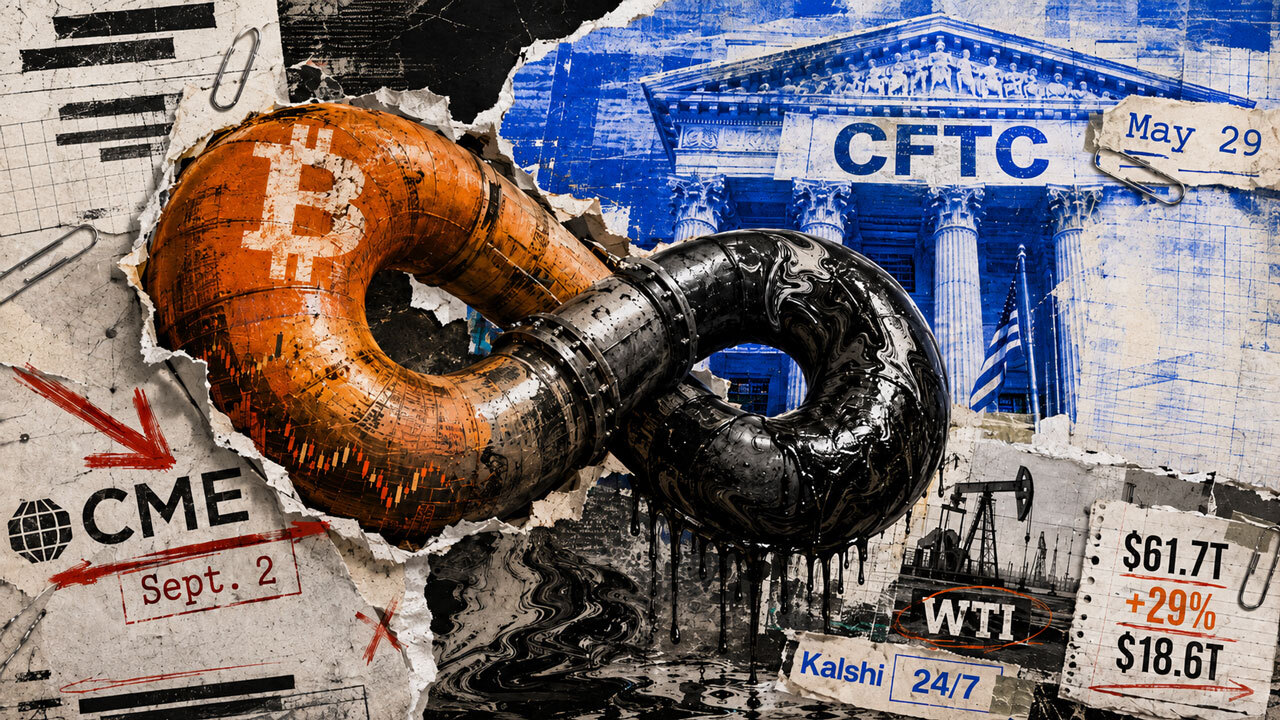
The Commodity Futures Trading Commission is defending its regulatory framework for perpetual futures contracts in federal court after the CME challenged the CFTC's May 29 approval of Kalshi's Bitcoin perpetual contract. The CFTC filed a motion on September 2 seeking dismissal of CME's challenge, arguing that the exchange cannot claim competitive harm from a product it chose not to pursue.
The core dispute centers on whether perpetual contracts—those without fixed expiration dates—should be classified as futures or swaps under the Commodity Exchange Act. The CFTC has taken the position that CME could list comparable digital commodity perpetual products if it chose to do so, making any competitive disadvantage self-inflicted rather than a regulatory injury the court can remedy.
The May 29 CFTC policy created a faster approval path for perpetual contracts tied to Bitcoin and other digital commodities with deep, active, and continuous spot markets. Other assets face case-by-case review.
Expanding Beyond Crypto
The perpetual contract structure, which originated in offshore crypto markets, is now spreading across multiple asset classes within U.S. regulated venues. Coinbase operates a derivatives market offering perpetual-style futures tied to Bitcoin, Ethereum, XRP, and Solana with continuous 24/7 trading. The CFTC granted conditional relief in June allowing Coinbase Derivatives and Bitnomial to remove expiration dates from existing digital commodity contracts.
Bloomberg reported discussions between Coinbase and the CFTC regarding contracts linked to prices on Hyperliquid, an on-chain market. Payward's subsidiary Bitnomial, a regulated U.S. derivatives exchange, would offer selected contracts tied to Hyperliquid token prices under such a structure. President Trump indicated in August that his administration was working on a U.S. route for Hyperliquid.
Kalshi is reportedly preparing a CFTC filing for a perpetual contract tied to West Texas Intermediate crude oil, potentially extending the model into traditional commodity futures markets where the CME is an incumbent.
Market Scale and Regulatory Path Forward
Global crypto perpetual-futures volume reached approximately $61.7 trillion in 2025, up 29% from the previous year, while spot trading totaled $18.6 trillion over the same period, according to CryptoQuant data.
CME has until October 2 to oppose the CFTC's dismissal motion. A ruling on whether CME has legal standing could leave unresolved the deeper question of whether perpetuals qualify as futures under U.S. law. The next phase depends on the court's decision, which venues meet CFTC conditions, and whether regulators allow the model to extend from digital commodities to on-chain markets and physical commodity futures.