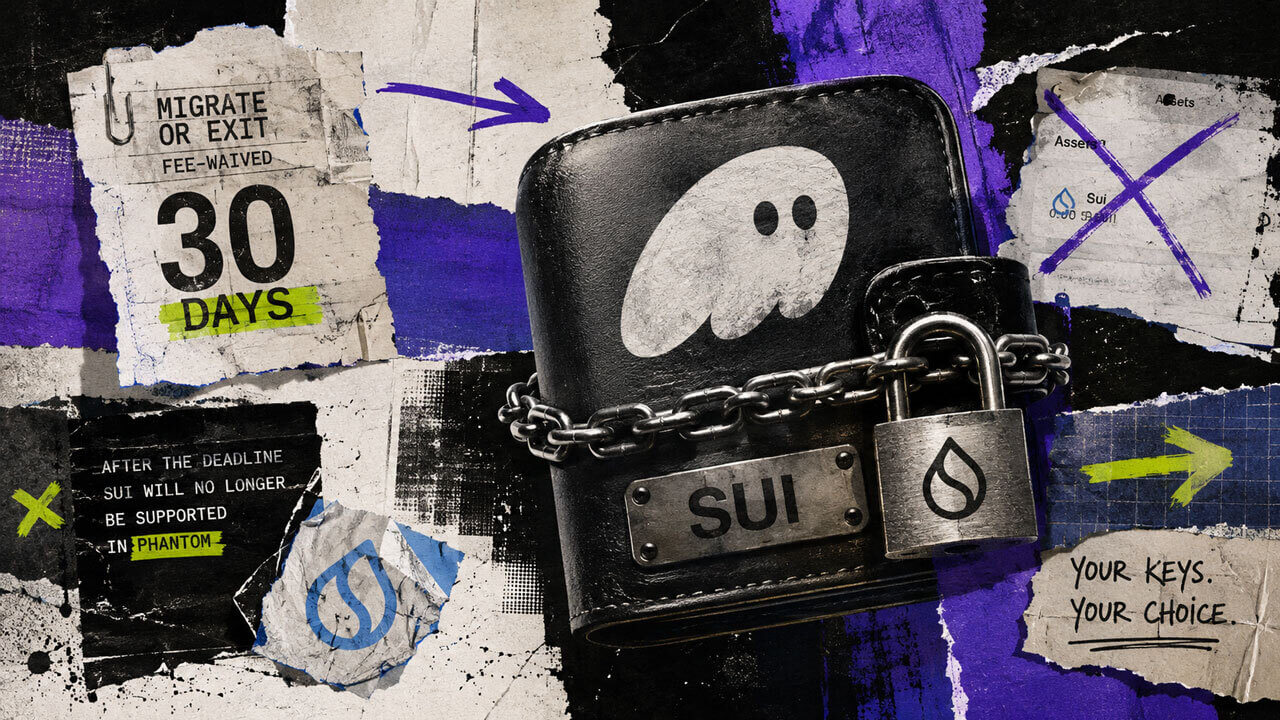
Phantom is scheduled to remove Sui from its wallet interface on Sept. 24, following a joint decision by Phantom and Sui announced a month prior. After the transition, the wallet will no longer display Sui balances, support Sui sends or swaps, or connect to decentralized applications.
While the underlying assets remain secure on the Sui blockchain and tied to user credentials, the shutdown eliminates the interface tools that enable everyday interactions. Sui support originally went live in Phantom on Jan. 29, 2025, providing a distribution channel and management tools for the network.
Neither Phantom nor the Sui Foundation has disclosed the reason for the split, and public data does not indicate how many users held or interacted with Sui through the wallet, though Phantom reported 15 million monthly active users overall.
Available User Paths and Migration Risks
Users wishing to maintain exposure to native Sui or exit the network face several choices depending on how their accounts are secured:
- Native SUI to Wrapped SUI on Solana: Users can swap assets within Phantom to keep a SUI-linked asset on a supported network without migrating recovery phrases. Phantom waived its fee for this specific route through Sept. 24, though standard network and exchange fees still apply.
- Swap into SOL, ETH, or USDC: Users can exit SUI into other supported assets using standard fee rates.
- Recovery-Phrase Wallet Migration: Users can import their recovery phrase into a compatible alternative interface, such as Slush, to continue viewing and managing native Sui assets.
- Ledger Connection: Hardware-wallet users can connect their Ledger devices to Slush, keeping private keys offline.
The transition introduces security considerations, particularly for recovery-phrase users who must handle sensitive credentials during the forced interface change. Both Phantom and Slush issued warnings advising users that official staff will never initiate direct messages, request recovery phrases or private keys, or offer to move assets on a user's behalf.
The Power of the Interface Layer
The event demonstrates the distinction between onchain ownership and interface distribution. While wallet providers cannot erase user funds or control the underlying ledger, they control the screens, transaction tools, and app connections that make a blockchain easy to use.
Following Sept. 24, users who miss the deadline do not lose their funds, as ownership persists on the blockchain and access can be restored later using a compatible wallet. However, the update removes the convenience and distribution network previously supplied by Phantom.