Foreign investment flows into U.S. Treasuries revealed a stark division in July, with private buyers favoring short-term bills over longer-duration debt. The distinction carries implications for Bitcoin, which faces headwinds from elevated long-term yields that increase the opportunity cost of holding non-yielding assets.
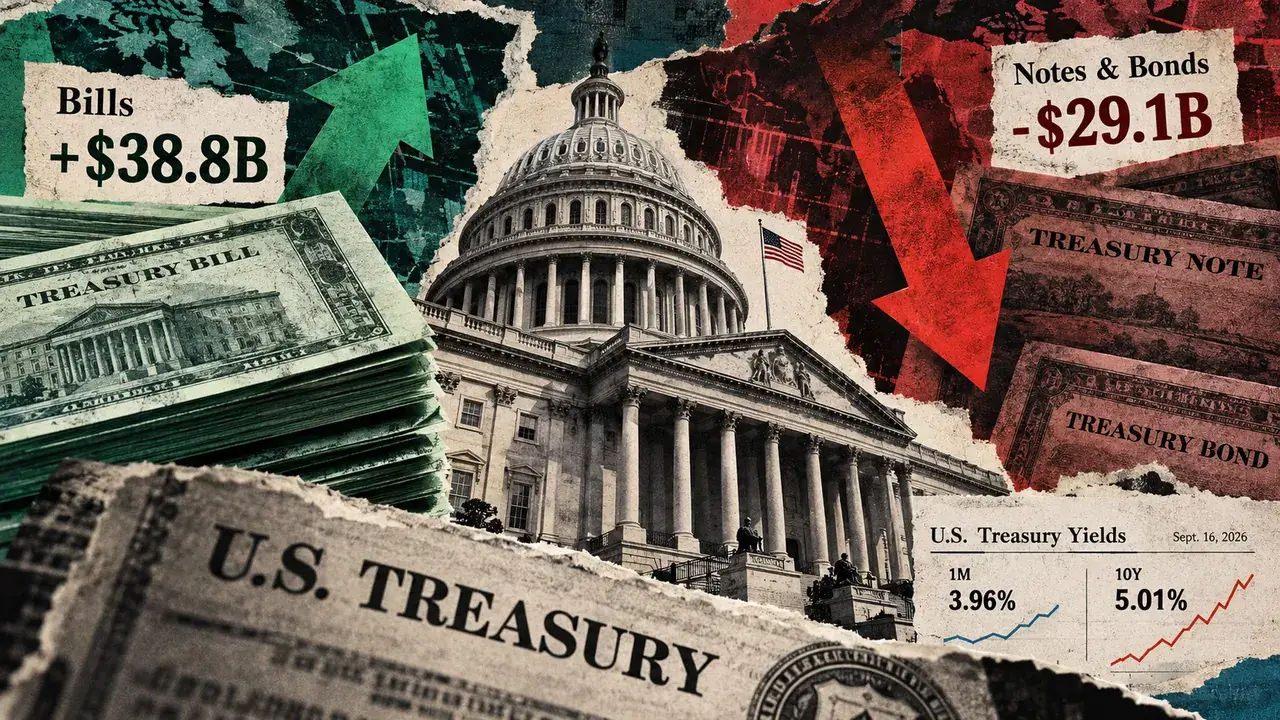
Foreign investors purchased a net $38.8 billion in Treasury bills in July after selling $29 billion in June, according to Treasury International Capital data. However, private foreign investors simultaneously sold $29.1 billion in Treasury notes and bonds. Foreign official institutions offset most of this long-duration selling by buying $25.5 billion in notes and bonds, resulting in a slightly negative combined flow for longer-dated securities.
The split reflects private demand for cash-like government paper over longer-maturity debt. Treasury notes mature between two and 10 years, while bonds extend from 20 to 30 years. By September 16, the 10-year Treasury yield held at 5.01%, with a 1.05 percentage-point gap between one-month and 10-year rates.
Market Conditions and Bitcoin Exposure
Higher risk-free returns from Treasury yields can raise the opportunity cost of holding Bitcoin, which generates no yield. Long-term borrowing costs also affect broader financial conditions, including credit availability for risk assets. Tighter credit conditions reduce capital available for investments like Bitcoin.
Research from the Federal Reserve identifies foreign demand as one factor affecting Treasury term premiums, though the relationship is complex and cannot convert a single month's flows into specific yield movements.
What Comes Next
The cleaner conclusion from July's data is that foreign demand returned to the safest, shortest part of the Treasury market while long-term borrowing costs remained elevated. A sign of broader improvement would be private foreign accounts returning to Treasury notes and bonds alongside a sustained decline in long yields, not merely another month of bill buying.