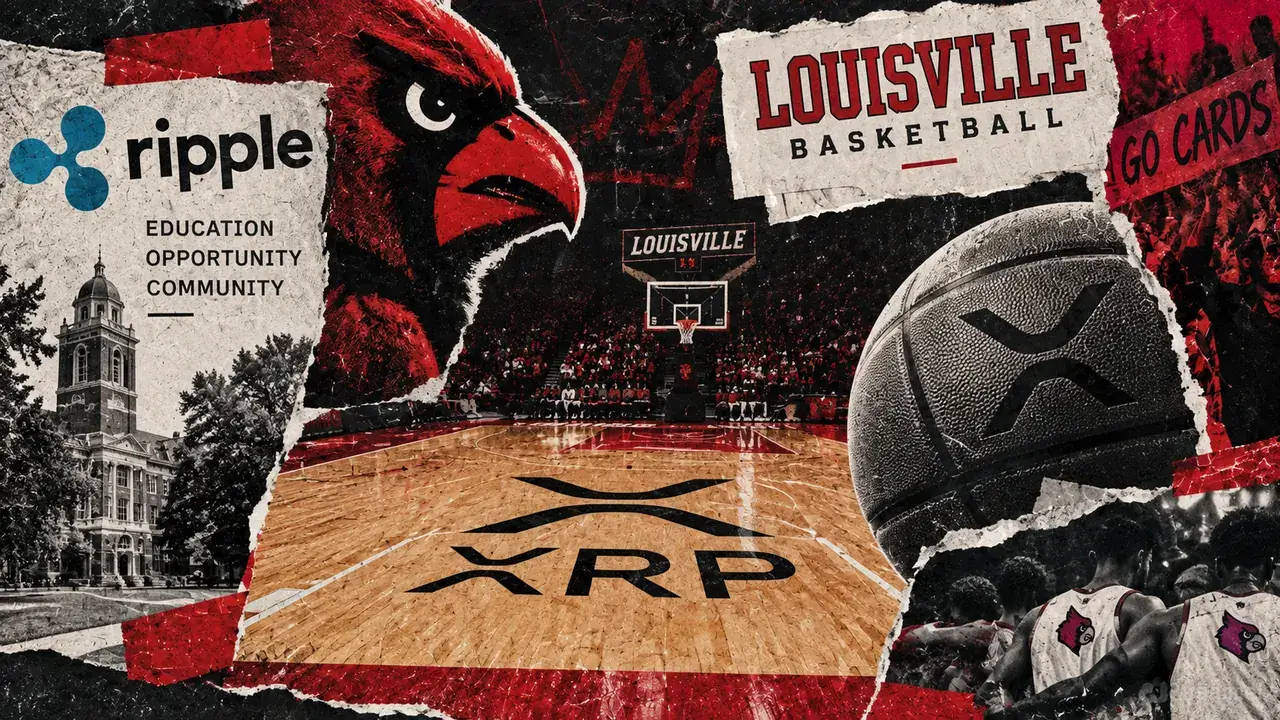
Ripple has expanded its college sports strategy by adding Louisville Athletics to its growing roster of university partnerships, marking the company's third major college-sports agreement in roughly ten weeks.
The multiyear partnership with Louisville will place XRP branding on Denny Crum Court, the home of the university's basketball program. This latest agreement follows earlier deals with Kansas, where XRP patches appear on athletic uniforms, and the University of Florida, where XRP branding is displayed on Ben Hill Griffin Stadium.
Building on Academic Foundations
Ripple's sports strategy builds on relationships established through its University Blockchain Research Initiative, launched in 2018 to finance blockchain research, curriculum development, and technical projects. The program now operates across more than 60 universities in 27 countries and has supported more than 800 new or expanded fintech courses and roughly 1,500 academic blockchain research projects.
Kansas exemplifies the connection between Ripple's academic and commercial initiatives. The university joined the research program in 2019 after Ripple committed $2 million over five years to support blockchain and cryptocurrency research. Seven years later, Kansas became the first major college athletics program to feature a cryptocurrency on its jerseys as part of a multiyear sponsorship announced in July.
The Kansas deal reportedly runs for five years and ranks among the more lucrative jersey-patch agreements in college sports. Florida's football-field partnership, announced in September, is reportedly worth approximately $5 million annually.
Branding Beyond Academic Audiences
These sponsorships represent a shift from reaching research and academic communities to exposing XRP to broader consumer audiences through television broadcasts, stadium attendance, and alumni networks. The Florida partnership included provisions to support financial and technology education for student-athletes and the university community.
However, the current agreements remain primarily branding and distribution deals. Neither university has been required to hold XRP, accept the token for payments, or conduct on-chain transactions. This leaves open the question of whether the sponsorships will translate into measurable commercial adoption beyond brand recognition.