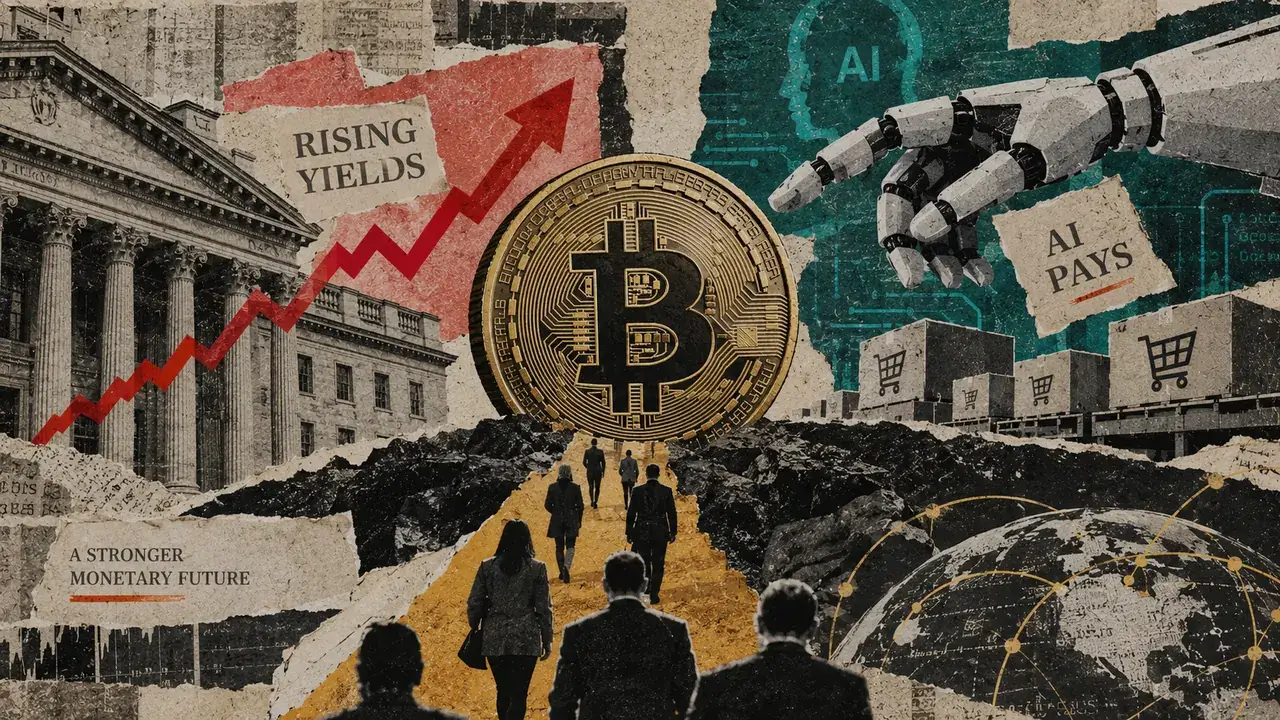
Bitcoin's monetary case is strengthening as governments face more expensive borrowing and artificial intelligence agents require payment infrastructure, according to recent financial developments and technology announcements.
On September 30, the Bank of England warned that an extended energy shock is pushing government yields higher, while growing AI-related debt is leaving more investors exposed to technology outcomes. The same day, Mastercard announced new trust and intelligence services for its Agent Pay program, including a system to identify AI-initiated transactions now rolling out for testing in the United States.
Rising Yields and Bitcoin's Competing Signals
Government borrowing costs have risen significantly. The 10-year Treasury yield reached 5.29% on September 30, according to data compiled by CryptoSlate and Federal Reserve releases. The Fed raised its target rate range by a quarter point to 3.75%–4% on September 16. The Bank of Japan set its overnight call-rate guideline at around 1.25% on September 18, effective September 24. The Bank of England held rates at 3.75% on September 17, though three policymakers voted for an increase to 4%.
Higher yields create competing effects for Bitcoin. They highlight the long-term costs of government debt financing, potentially strengthening interest in money whose supply is independent of government borrowing needs. Simultaneously, higher bond yields offer investors contractual returns that raise the comparison hurdle for an asset that generates no interest income.
Bitcoin's fixed supply—capped at 21 million coins—differs fundamentally from government-issued money. The cryptocurrency's issuance does not expand to finance government debt or support central bank policy decisions. Bitcoin traded near $83,530 near the time of publication, having reached highs of $125,000 and lows of $57,500 over the previous 12 months.
AI Agents Create a Practical Payment Route
Artificial intelligence agents cannot physically exchange currency. They can request data, receive invoices, authorize payments and continue their tasks. For this commerce to function, transactions require minimal overhead, clear spending authority and reliable settlement.
Bitcoin's Lightning Network provides infrastructure for this pattern. In February, Lightning Labs released agent tools that enable software to pay for APIs through L402, a protocol combining Lightning payments with access credentials. An agent can pay a Lightning invoice to unlock resources without human intervention.
In July, Lightning Labs announced Wavelength, an alpha toolkit designed to make wallet integration easier for developers and agents. The tools incorporate security measures including remote signing, restricted credentials and spending limits to prevent agents from accessing unrestricted account balances.
Other payment options are competing for agent commerce. Google's AP2 framework, announced in September 2025, supports cards, stablecoins and bank transfers using signed mandates. Coinbase announced agent capabilities on September 22 that add equities trading and micropayments for data, models and services within user-defined limits. Mastercard's latest testing builds another path through established payment relationships.
The Adoption Question
For businesses pricing services in dollars, dollar-linked payment options can simplify budgeting. Bitcoin's distinctive opportunity lies with users who value independently issued money enough to retain bitcoin between transactions rather than immediately converting it.
Concrete signs of monetary adoption would include repeat commercial payments in bitcoin, businesses keeping portions of earnings in bitcoin, operating balances held in bitcoin and services priced directly in it. If agents primarily spend stablecoins or authorized card balances, machine commerce will have modernized existing payment systems. If businesses and their software begin retaining and pricing value in bitcoin, the monetary transition would have a firmer foundation.
The Bank of England's assessment described a financial system that remained resilient despite gradual market adjustments, providing a backdrop where financing pressures could make independently issued currency more attractive even while existing institutions continue operating. Whether that translates into adoption depends on the choices people and businesses make about holding and using bitcoin.