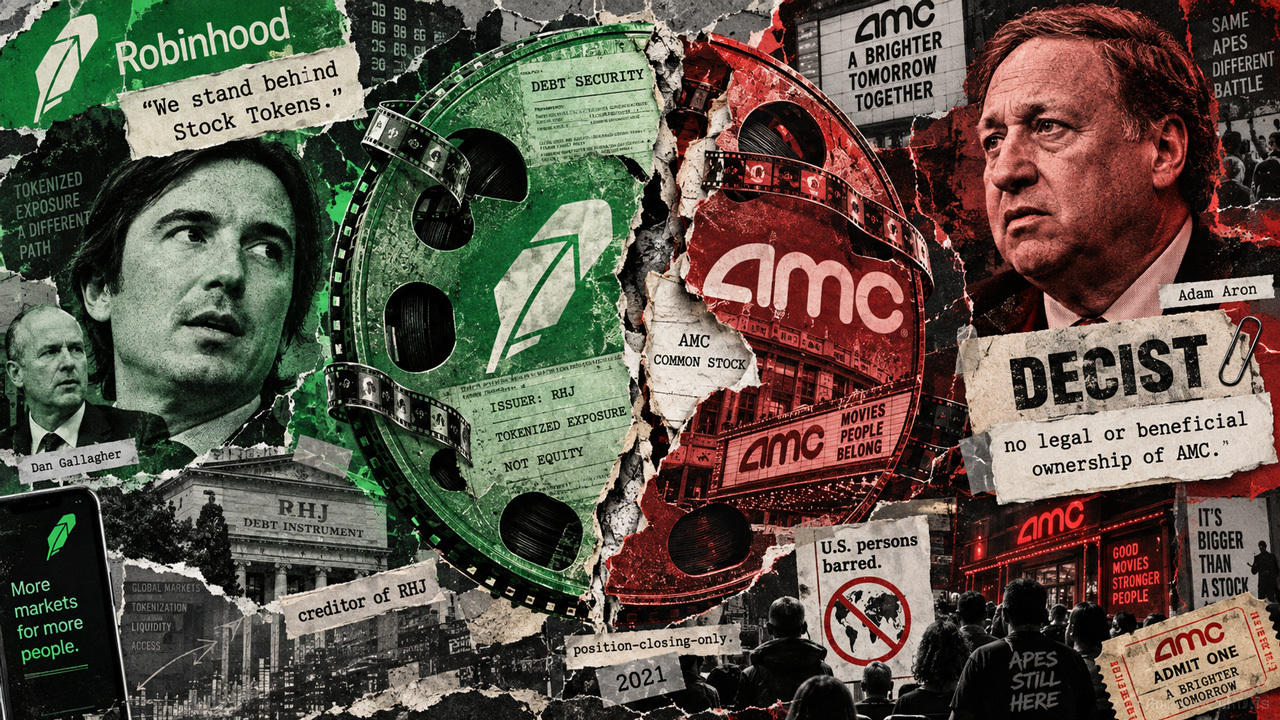
Robinhood has rejected a demand from AMC Entertainment CEO Adam Aron to halt trading of an AMC-linked Stock Token. Robinhood's chief legal officer declined the request, and CEO Vlad Tenev stated the company stands behind the product.
The core disagreement hinges on a fundamental distinction: Robinhood's instrument provides economic exposure to AMC shares but grants token holders no ownership rights in the company. Instead, holders own debt issued by Robinhood Assets (Jersey) Limited, a Robinhood affiliate.
Token Structure and Restrictions
According to Robinhood's documentation, Stock Tokens are tokenized debt securities designed to track a referenced stock's economics. Token holders are creditors of Robinhood Assets (Jersey) Limited and receive no legal or beneficial interest in AMC.
The product structure explicitly bars token holders from exercising AMC voting rights, attending shareholder meetings, claiming pre-emption rights, or receiving direct dividends. Dividend payments and stock splits are reflected through the product's mechanics rather than direct distribution from AMC.
Robinhood's prospectus states that Stock Tokens remain unregistered under U.S. securities laws and cannot be offered, sold, or delivered in the United States or to U.S. persons. The product is issued through a Jersey entity for eligible customers outside the U.S.
AMC's Concerns
Aron argued that the product blurs the line between economic exposure and share ownership, separates trading activity from AMC's capital-raising process, and denies token holders the rights attached to AMC shares. He also stated AMC would bring the matter to the Securities and Exchange Commission.
Historical Context
The dispute carries historical significance given AMC's central role in the 2021 meme-stock phenomenon. In January 2021, Robinhood restricted purchases of AMC, GameStop, and other securities during market volatility. Five years later, the companies find themselves on opposite sides of an access dispute over the same brokerage platform.