Michael Saylor has outlined a potential change in how Strategy allocates capital, saying the company could sell MSTR shares even below their net Bitcoin value in order to buy back STRC. The remarks, made in an interview, were a focal point of Strategy's investor Q&A on 19 November, as the company navigates a difficult stretch for its equity.
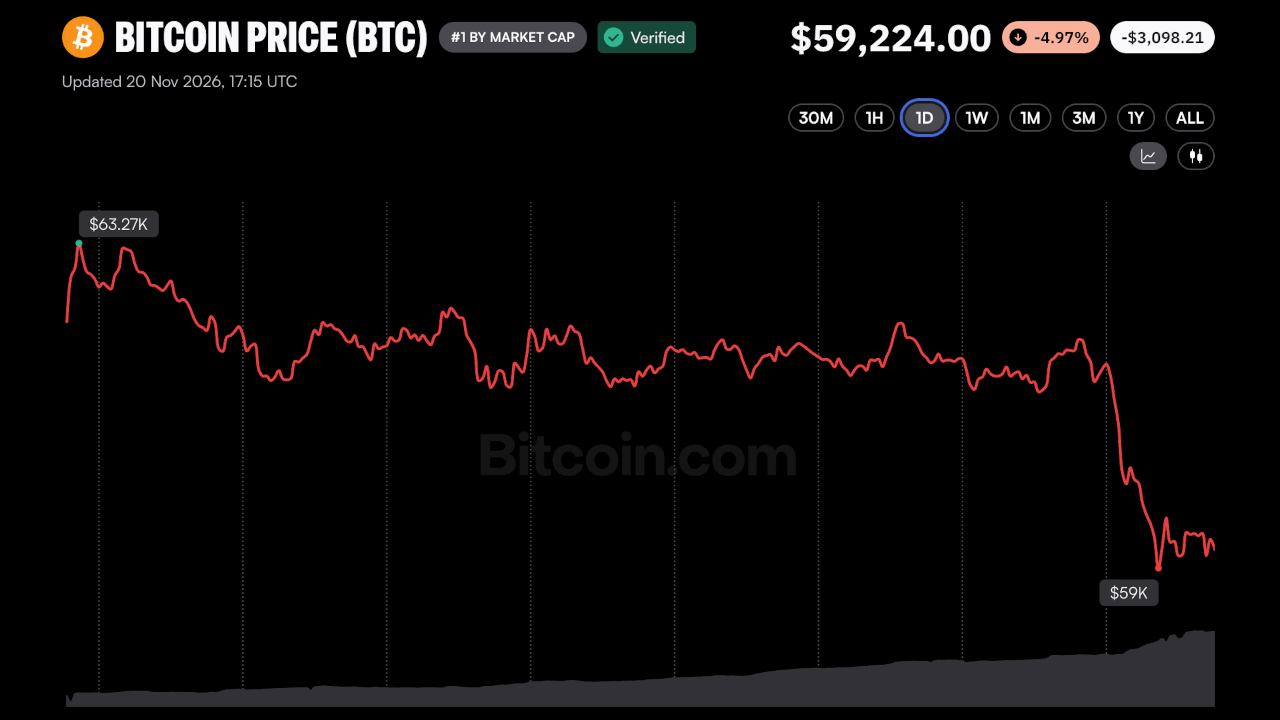
According to the source material, MSTR has fallen more than 40% in value during the fourth quarter as Bitcoin has declined. A further 25% decline would make this quarter's losses larger than last year's fourth-quarter drop and potentially the worst quarter for MSTR since the 2022 bear market.
Bitcoin accumulation slows sharply
Strategy's Bitcoin purchases have decelerated alongside the equity move. In the fourth quarter of last year, the company bought 32,470 BTC. So far in the current fourth quarter, it has bought 3,183 BTC — a decline of about 90%.
The company has also deployed $206.3 million of proceeds from MSTR share sales to purchase STRC shares, while only $33.4 million has gone toward Bitcoin purchases.
STRC stability as the priority
The source describes keeping STRC stable as Strategy's main priority. One analyst cited in the report suggested the company could continue selling MSTR shares to fund STRC buybacks, and could also sell Bitcoin if STRC trades below its $100 par value.
Saylor has argued that STRC's 12% dividend is attractive enough on its own, positioning the instrument as a key income-generating product for institutional investors.
Institutional ownership in focus
Major institutional investors increased their MSTR holdings in the third quarter, with the top 15 now holding roughly 33% of all outstanding shares, according to the source. That suggests large investors remained engaged with MSTR despite the market weakness.
The open question is whether MSTR shareholders still benefit from the company's Bitcoin strategy as attention shifts toward STRC.
A potential feedback loop
The source flags a possible circular risk: continued weakness in MSTR could push Strategy to rely more heavily on STRC buybacks to support its capital structure, which in turn could put institutional demand for MSTR at risk. If investor confidence weakens, raising fresh capital for future STRC buybacks could become more difficult.
For now, Saylor's shift toward STRC is characterized in the report as a risky change in how Strategy plans to fund future Bitcoin purchases.
Key points
- Strategy bought 32,470 BTC in last year's fourth quarter versus 3,183 BTC so far this quarter, a drop of about 90%.
- $206.3 million of MSTR share-sale proceeds went to STRC shares; $33.4 million went to Bitcoin.
- Saylor said MSTR shares could be sold below net Bitcoin value to fund STRC buybacks.
- STRC carries a 12% dividend and a $100 par value.
- The top 15 institutional investors hold around 33% of outstanding MSTR shares after adding in the third quarter.