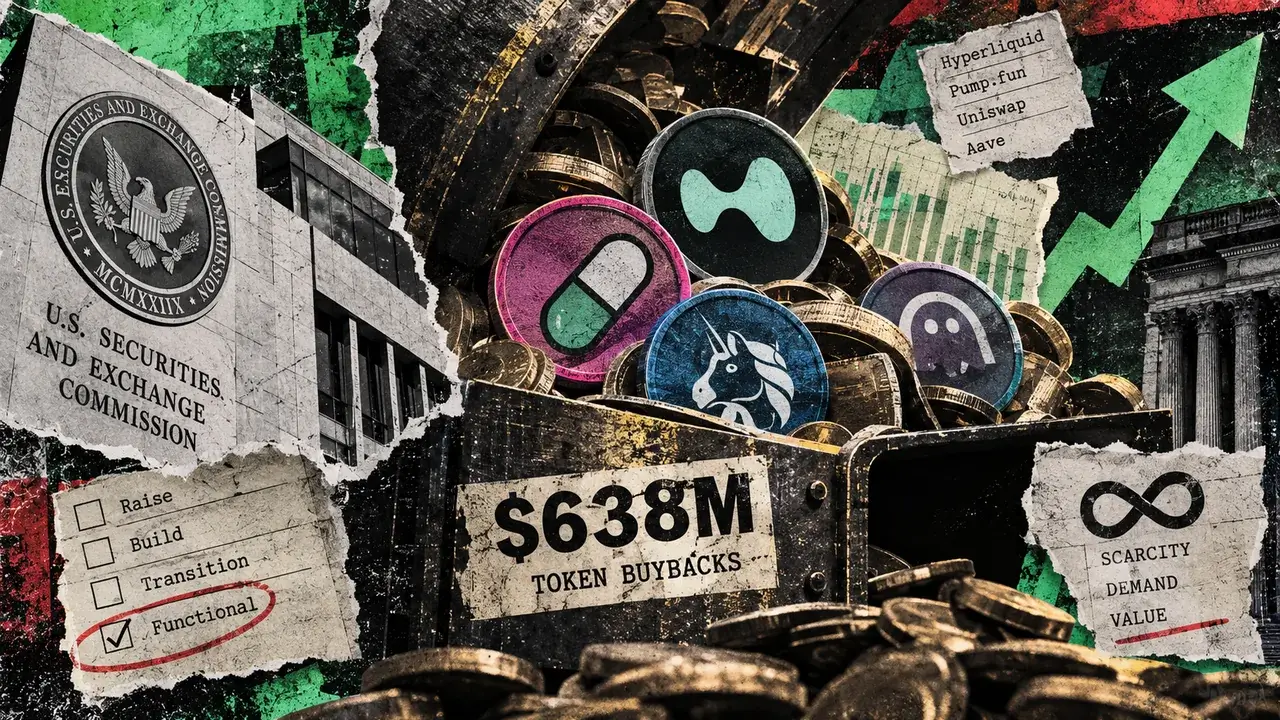
The Securities and Exchange Commission's Division of Corporation Finance has released a new set of frequently asked questions addressing long-standing questions about crypto token classification and regulatory treatment.
The guidance focuses on determining when tokens may fall outside securities regulation and what types of issuer activity do or do not trigger securities law concerns under the Howey test, which establishes criteria for investment contracts.
Staking Receipt Tokens
A significant portion of the guidance addresses staking receipt tokens, which represent ownership of crypto assets deposited for staking. The SEC indicated that a staking receipt tied to a digital commodity not subject to investment contract rules can be considered a digital tool, as it simply evidences ownership of the underlying asset.
In certain cases, such a token may qualify as a digital commodity when issued by a protocol-based liquid staking provider. The agency emphasized that the distinction depends on what rights the receipt creates. A true receipt should not transfer ownership or control of the deposited asset to the issuer, nor permit the issuer to lend, pledge, rehypothecate, or otherwise use those assets.
Development and Network Operations
According to the SEC, continuing to secure, maintain, improve, or enhance a functional blockchain network—including funding development or encouraging network effects—does not constitute the type of "essential managerial efforts" typically associated with an investment contract.
The agency noted that once a functional crypto system has no central controlling party, statements by an original issuer would generally be less likely to create a new investment contract around the native asset.
Buybacks and Marketing
Announcing a buyback of a non-security token for a functional crypto system would not amount to a promise of essential managerial efforts. However, if the network is not yet functional and the issuer markets the buyback as a mechanism designed to generate yield or returns for holders, different considerations apply.
The SEC stated that simply promoting a network's existing utility or capabilities would generally not be enough to establish an investment contract. Even aspirational statements about future features may fall outside that threshold if they do not promote the prospect of profit.
The guidance follows the SEC and CFTC's most recent statements after the CLARITY Act failed to pass in the US Senate.