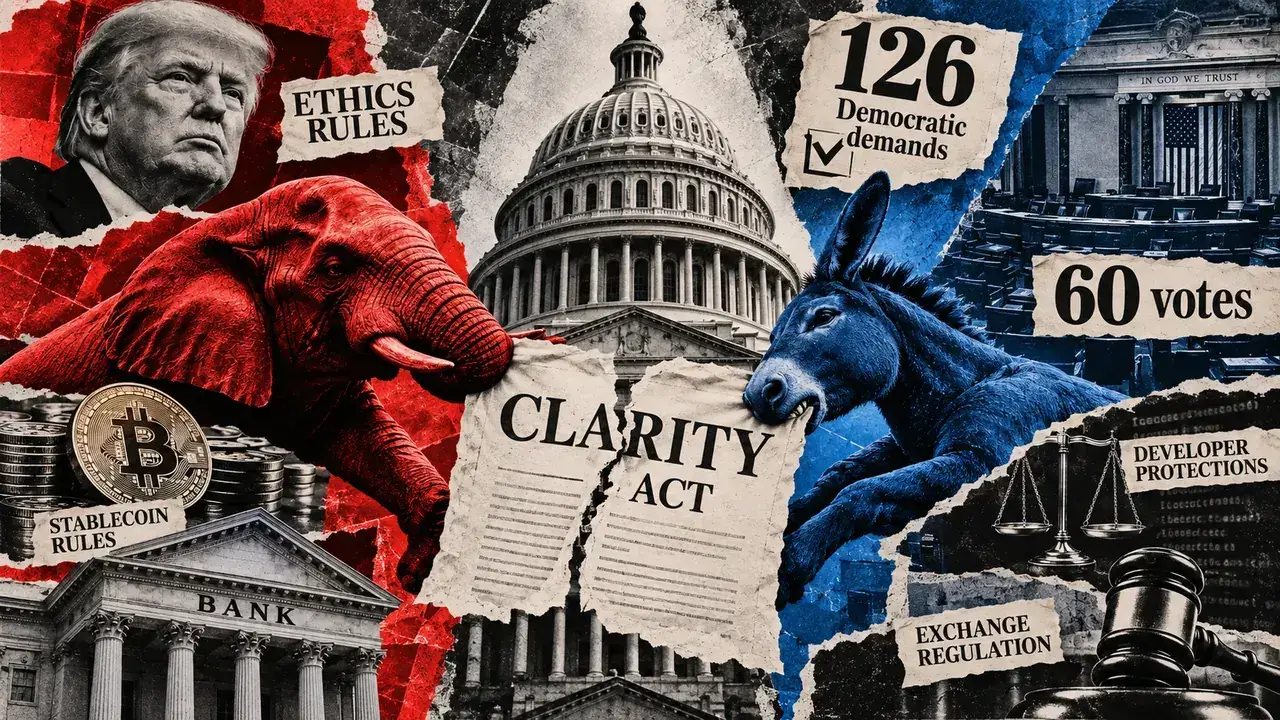
Senate Republicans released a revised version of the Clarity Act on Sunday, positioning it as their "last, best and final offer" ahead of Tuesday's procedural vote. The cloture motion will require 60 votes to advance, meaning Republicans need at least seven Democratic senators to support the bill.
The updated legislation includes ethics provisions that President Trump approved, marking a shift from his previous resistance to such measures. The new ethics language allows state attorneys general to enforce prohibitions on covered officials issuing, sponsoring, or maintaining significant financial interests in digital assets. Covered officials would be required to divest or place assets in a qualified blind trust, with civil penalties for violations. The definition of covered officials was expanded to include elected but not yet sworn-in officials and their spouses. Unlike earlier versions, the restrictions contain no sunset date.
Republicans incorporated changes to other contested provisions. The Blockchain Regulatory Certainty Act language was revised to remove explicit criminal prosecution protections under Section 1960, a concession to prosecutors but described as a setback by industry advocates. The bill clarifies that developers not controlling customer funds should not be treated as money transmitters, and extends those protections to miners and validators for the first time.
The revised text also includes "circuit breaker" language that would allow the Treasury Secretary to intervene if widespread deposit flight from community banks to stablecoins occurs, addressing banking industry concerns while maintaining the existing yield agreement struck in May.
Changes to the "Ag title" covering the Senate Agriculture Committee's portion clarify that state consumer protection laws remain applicable and that developer protections do not create exemptions from derivatives laws or affect prediction markets.
Early industry reaction has been positive. Galaxy Digital's Alex Thorn increased his 2026 passage odds from 10% to 25% following the release of the new text, though he cautioned that the tight legislative calendar remains a significant hurdle. Crypto lawyer Gabe Shapiro called it "still overall a great bill," noting it may be the best available for the industry.