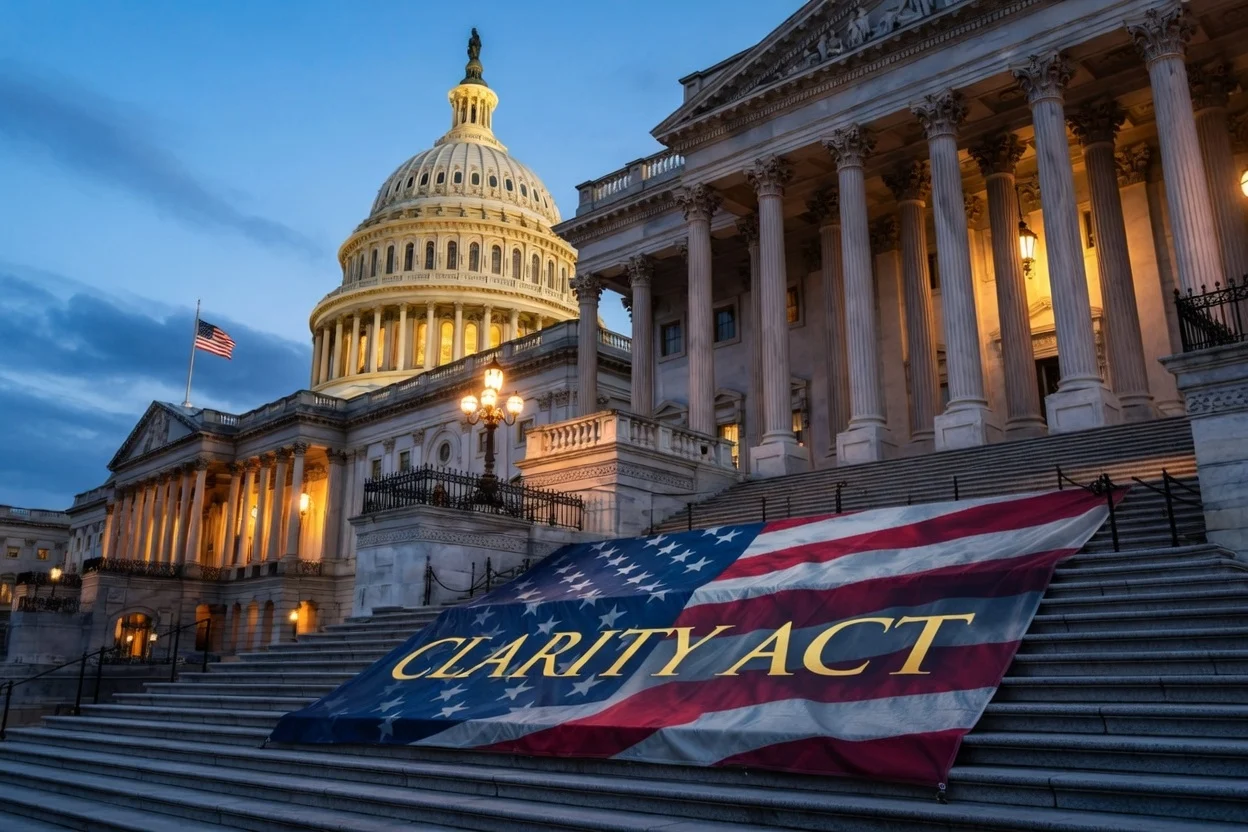
Senator Ruben Gallego has warned that a rushed Senate vote on the CLARITY Act could set back cryptocurrency market structure legislation. Speaking at the SALT Wyoming Blockchain Symposium on Wednesday, he urged lawmakers to continue negotiations rather than push for a quick vote.
The CLARITY Act is designed to establish clear rules for digital assets in the United States by dividing oversight of the crypto market between the Securities and Exchange Commission and the Commodity Futures Trading Commission. However, Gallego noted that lawmakers still have work remaining, pointing out that the Agriculture Committee's portion of the bill is not yet finished.
Timing and Congressional Path
Gallego stated that a fast vote would yield a rapid result, but cautioned that the outcome might not be favorable and could potentially delay the bill further. He added that Congress has not yet determined how the legislation will transition to the House once the Senate completes its work.
Senate Majority Leader John Thune confirmed on August 7 that the chamber is delaying the vote, stating that the CLARITY Act will be addressed when the Senate returns from recess in September.
Unresolved Ethics Proposals
A central point of discussion involves ethics rules. Gallego stated that he and Republican Senator Thom Tillis submitted compromise language on ethics to the White House prior to the congressional recess, aiming to build sufficient protections to attract more Democratic support.
According to Gallego, the White House has not provided a point-by-point response, noting that replies have arrived blank, weaker than previous iterations, or have not been received at all. The White House did not respond to requests for comment.
Administration Stance
The delay coincides with continued pressure from the Trump administration. During a White House event with crypto executives, President Trump publicly urged Congress to pass a fair version of the bill.
White House crypto adviser Patrick Witt stated that the administration intends to continue discussions with Democrats prior to the September vote, while also noting that the administration cannot wait indefinitely for an agreement. With the September deadline approaching, gaps between lawmakers regarding ethics rules and other provisions remain open.