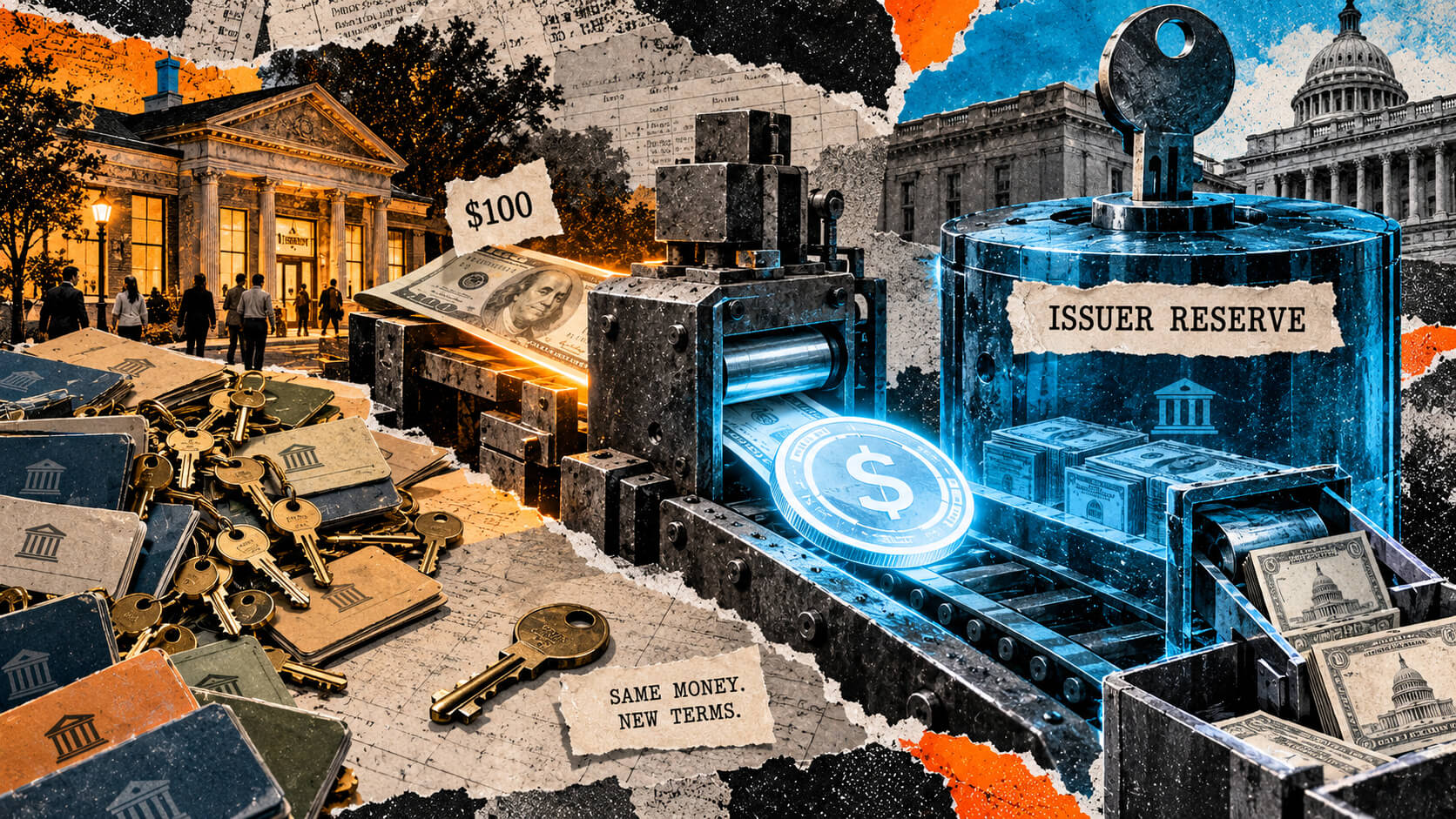
When a customer converts bank deposits into stablecoins, the dollars often remain somewhere in the banking system—but under different terms. A stablecoin issuer holding reserves as bank deposits creates a shift in funding dynamics that banks must account for, even when total deposit volumes stay unchanged.
The distinction centers on deposit reliability. Retail deposits from individual customers typically remain stable because people withdraw money gradually for everyday expenses. Institutional deposits held by stablecoin issuers, by contrast, can move in large amounts when token holders request redemptions. Banks classify the first type as retail funding and the second as wholesale funding.
Under banking regulations like the Basel framework's Liquidity Coverage Ratio, these differences matter. The ratio measures a bank's liquid assets against estimated cash outflows during 30 days of financial stress. Different deposit compositions change those estimates without any actual money leaving. A bank with the same liquid assets but more volatile deposits faces higher estimated outflows, reducing its safety buffer and potentially requiring costlier solutions like longer-term borrowing or additional liquid reserves.
The path stablecoin reserves take affects banking outcomes. When issuers buy Treasury bills instead of holding bank deposits, the money may move to whoever sells the security. If an issuer purchases an existing Treasury from a nonbank investor, the banking system retains the deposit overall, though with a different owner. Buying newly issued government debt involves additional steps through the Treasury's account. The composition of reserves determines the ultimate effect on bank lending capacity.
Geography matters too. Money reaching one bank as issuer deposits doesn't guarantee local businesses will find their original lender equally willing to provide loans. Receiving banks operate under their own lending standards and customer priorities.
The Federal Reserve's research documents this conversion from scattered household balances to large institutional accounts. The Bank for International Settlements used modeling to show how deposit totals can remain flat while funding becomes less dependable under regulatory measures.
Banks face competitive pressure to adapt. Some may offer higher interest rates to retain deposits, improve payment services, or issue their own stablecoins under regulatory approval. Increased competition for deposits can raise costs that banks pass along through reduced lending or higher borrowing rates for customers outside the stablecoin market.
Evidence of actual lending impacts remains limited. Establishing whether stablecoins have already caused banks to cut lending would require detailed data from individual banks on how they replaced deposits and what happened to their loan portfolios. The timing and source of stablecoin purchases—whether from existing domestic deposits or new foreign demand—also affects the outcome.
The debate involves genuine trade-offs. Faster payments can offer real value, and increased competition for bank deposits can strengthen market efficiency. Those benefits may come alongside higher funding costs for banks that ultimately influence lending decisions for the broader public.