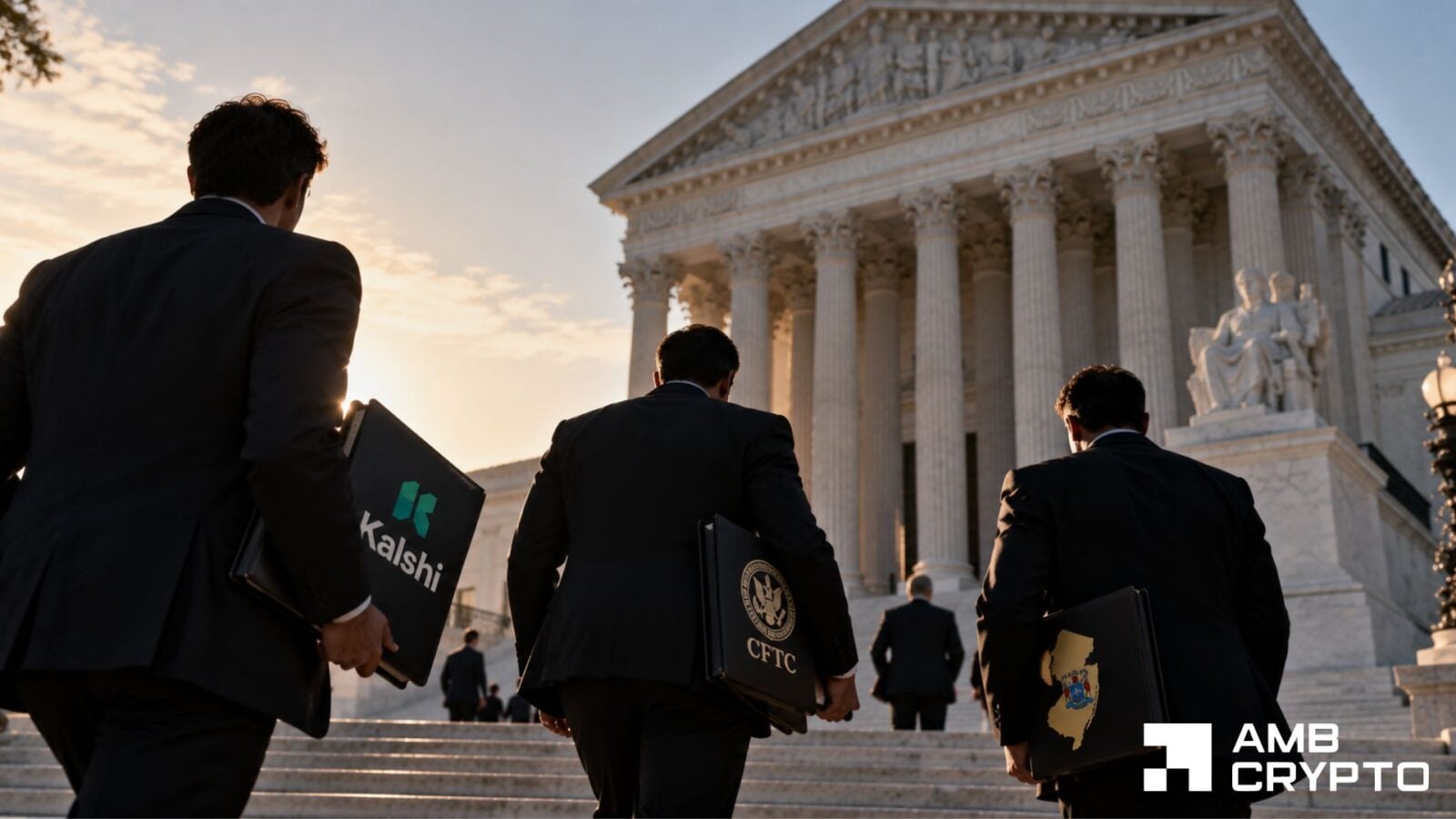
The U.S. Supreme Court is being asked to resolve a growing regulatory conflict over prediction markets, specifically whether sports event contracts fall under state gambling laws or federal commodity oversight.
On October 3rd, two groups representing gambling regulators—the International Association of Gambling Regulators (IAGR) and the North American Gambling Regulators Association (NAGRA)—filed a request for the Court to intervene. This followed a formal appeal filed by New Jersey on September 2nd, which asked the Supreme Court to clarify the role of state gambling laws and overturn rulings that sided with prediction market platform Kalshi and the Commodity Futures Trading Commission (CFTC).
Courts Reach Conflicting Conclusions
Federal courts have issued contradictory rulings on the same question. On October 2nd, an Illinois federal district court sided with Kalshi, Coinbase, and the CFTC, with Judge Martha M. Pacold finding that Kalshi's event contracts likely qualify as swaps under the Commodity Exchange Act (CEA) and fall within federal jurisdiction.
However, in separate cases, courts have ruled differently. In September, a court found in favor of Ohio and Tennessee, determining that sports-prediction contracts are not financial swaps and that state gambling rules apply. New Jersey and Illinois courts, conversely, upheld CFTC-led federal oversight in related cases.
Most states argue that prediction markets, particularly sports event contracts, should be regulated under local gambling laws. The CFTC contends it has sole oversight authority, noting that the CEA preempts state laws for licensed entities like Kalshi.
Growing Market Draws Scrutiny
Prediction markets have grown substantially. In September alone, Polymarket and Kalshi recorded a combined trading volume of $71 billion. The rapid growth has attracted attention from Congress, which has launched a probe into leading prediction market firms amid concerns over insider trading.