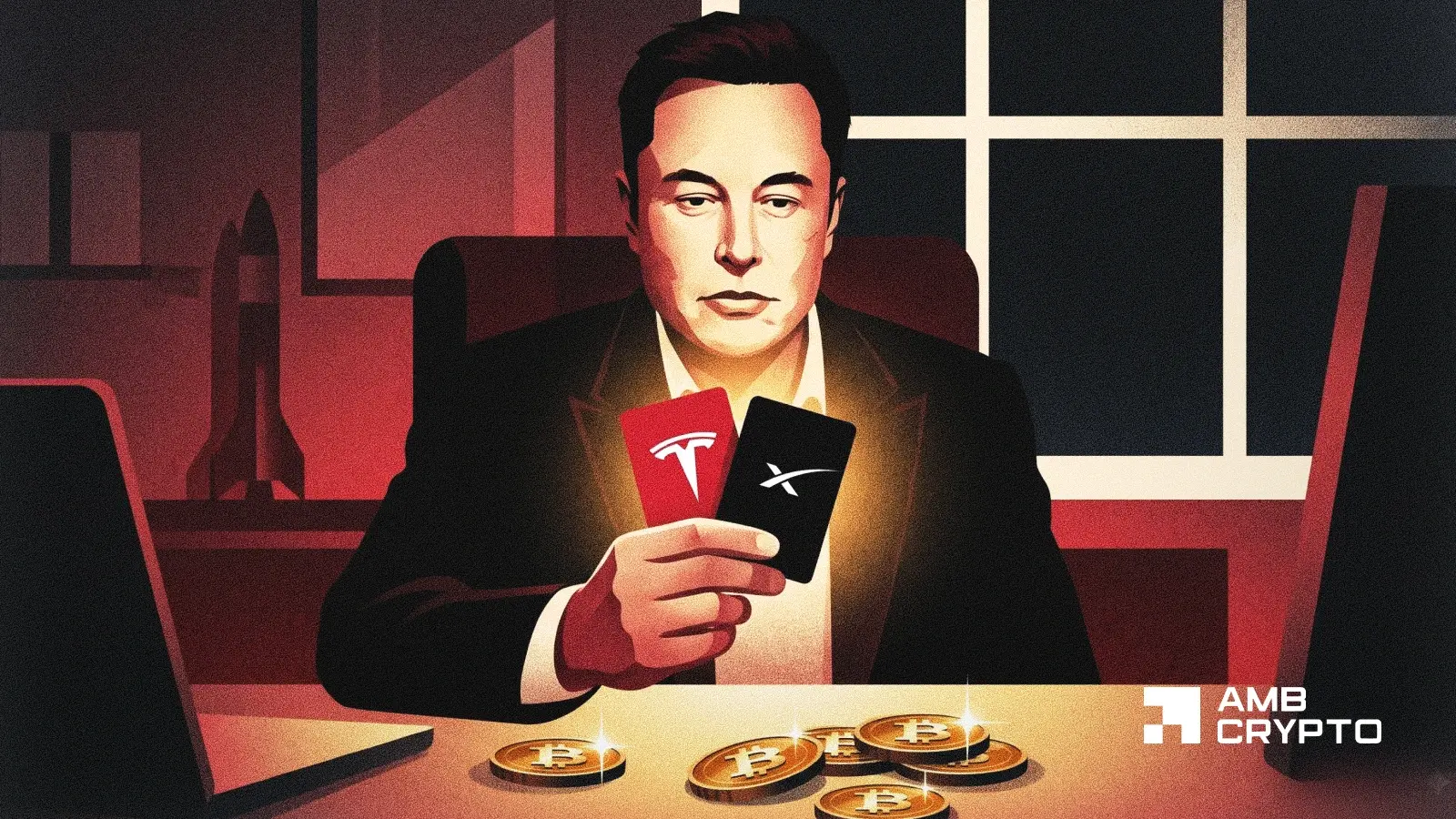
Tesla and SpaceX have established special exploratory committees to investigate a potential merger, an idea that CEO Elon Musk endorsed in October 2026. According to observers, shareholders have historically approved Musk's major proposals.
The combined Bitcoin holdings of both companies present a significant consolidation. Tesla currently holds 11,509 BTC valued at over $747 million, while SpaceX holds 18,712 BTC worth over $1.22 billion. A merger would pool these assets into a single entity holding 30,221 BTC.
However, the scale of these holdings must be considered in context. Tesla's valuation is $1.54 trillion and SpaceX's is $1.89 trillion. For both companies, Bitcoin represents a non-core balance sheet asset rather than a primary business focus. According to financial analysis, the cryptocurrency holdings are immaterial relative to the companies' capital expenditures and debt commitments.
Historical Bitcoin Activity
Both companies have demonstrated commitment to their cryptocurrency positions in recent years. Tesla last sold Bitcoin holdings in 2022 and has since purchased additional BTC while retaining existing reserves. SpaceX last conducted a sale in 2024 and has purchased over 10,000 BTC since then, including a significant acquisition in May 2026.
Potential Implications
Following a merger, non-core balance sheet assets typically undergo evaluation and restructuring. However, the recent purchase history of both entities suggests low odds of a major liquidation. If sales occur, they would likely be gradual rather than rapid.
The merged entity would rank among the world's sixth-largest corporate Bitcoin holders, positioning it behind primarily crypto-native firms and treasury-focused companies like MicroStrategy and Metaplanet. This status would occur despite Bitcoin remaining a non-core asset, potentially signaling institutional confidence in cryptocurrency as a corporate treasury holding.
Regulatory and Legal Challenges
The merger timeline targets a potential announcement by January 2027 or December 2026. However, the combination raises significant regulatory questions given SpaceX's role as a U.S. defense and Starlink contractor alongside Tesla's substantial manufacturing and sales operations in China. Regulators may scrutinize whether digital assets could be used to circumvent trade or national security restrictions.
Increased shareholder protections may also apply to cryptocurrency holdings if management's ability to buy, sell, or transfer Bitcoin raises concerns about company valuations or shareholder treatment.
Market Impact
If the merger proceeds, the consolidated Bitcoin position would demonstrate corporate institutional conviction in cryptocurrency, though the overall market effect remains uncertain. The merger itself does not necessarily signal a sell-off or price spike, though consolidating approximately $2 billion in cryptocurrency into a single balance sheet could create volatility considerations for investors.