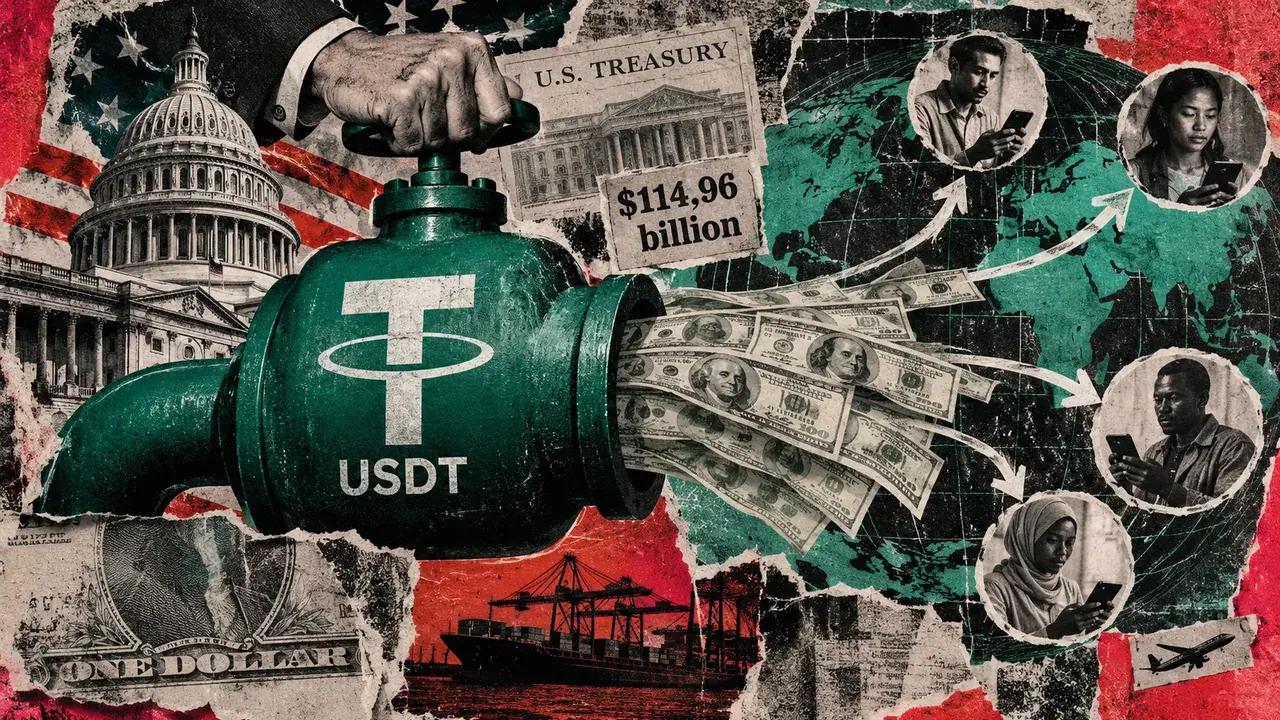
Tether has transformed from a company penalized by US regulators into a significant holder of American government debt, holding $114.96 billion in US Treasury bills according to its latest reserve report. This shift has given the stablecoin issuer newfound relevance to Washington policymakers.
In October 2021, the Commodity Futures Trading Commission ordered Tether to pay $41 million for making misleading claims between 2016 and 2019 that USDT was fully backed by fiat currency in bank accounts. The regulator found that Tether had held other assets and relied on arrangements that did not match those representations.
Following that enforcement action, Tether restructured its reserves. In October 2022, it eliminated commercial paper holdings and replaced them with US Treasury bills. This shift addressed a core financial challenge: maintaining confidence that USDT tokens can be redeemed for dollars, particularly during periods of crypto market volatility.
Tether's reserve report as of June 30 listed total reserve assets of $187.75 billion against liabilities of $183.64 billion. Beyond Treasury bills, the reserves included $18.84 billion in precious metals, $5.80 billion in Bitcoin, and $13.45 billion in secured loans. The company also held $18.63 billion in overnight reverse repo agreements.
By the company's account, USDT represented more than 60% of the stablecoin market at the end of June. The company reported approximately $1.50 billion in second-quarter net operating profit, led primarily by Treasury and repo income.
Government Interest in Stablecoins
On September 23, Bloomberg reported that the Trump administration was considering an overseas stablecoin initiative involving possible joint ventures with private companies. The Treasury Department, State Department, and the US International Development Finance Corporation could potentially participate. The stated goal is to extend dollar use globally and support demand for US Treasuries.
The reported initiative has not been announced as an operating program, and no deal with Tether has been established. However, Tether's distribution network and Treasury holdings make it relevant to understanding the appeal of such a proposal to Washington policymakers.
Tether's reach extends to users who might not have access to conventional American banking. For those in restrictive financial environments, purchasing USDT is often faster and easier than opening an overseas bank account, particularly for people already using cryptocurrency exchanges or digital services.
Institutional Recognition
Tether's credibility with regulators has evolved. On August 13, the company announced that KPMG US had completed an audit of its 2025 financial statements, issuing an unqualified opinion. This represented a significant departure from years when the lack of a financial-statement audit dominated discussions about Tether's reserves.
In January, Tether announced the launch of USA₮, issued by Anchorage Digital Bank with Cantor Fitzgerald as the designated reserve custodian and preferred primary dealer. This product serves the American institutional market separately from offshore USDT. The announcement clarified that USA₮ is neither government-guaranteed nor covered by federal deposit insurance.
Regulatory Framework
The Financial Stability Oversight Council proposed rules on stablecoin issuance that would restrict offerings to US persons unless an issuer met specified standards, including maintaining reserve assets in eligible instruments and maintaining custody arrangements. The proposal included an effective date for initial restrictions and July 18, 2028, for further restrictions on offers and sales to US persons.
The regulatory direction signals that access to American customers will come with American compliance requirements. Companies have time to prepare, but the trajectory is explicit.
Mutual Dependencies
The relationship between Tether and Washington reflects aligned but distinct interests. Tether can convert demand for accessible dollars into both private earnings and financing for the government. Washington gains a debt buyer without operating retail services. Users gain dollar-denominated balances accessible through networks they can reach, though with reduced control over terms compared to the issuer and government.
However, Washington is not dependent on Tether alone. Supporting competing stablecoin issuers could reduce reliance on any single company while advancing the same monetary objectives. Tether's distribution advantage is significant, but an administration promoting stablecoins has no inherent obligation to preserve its market share.