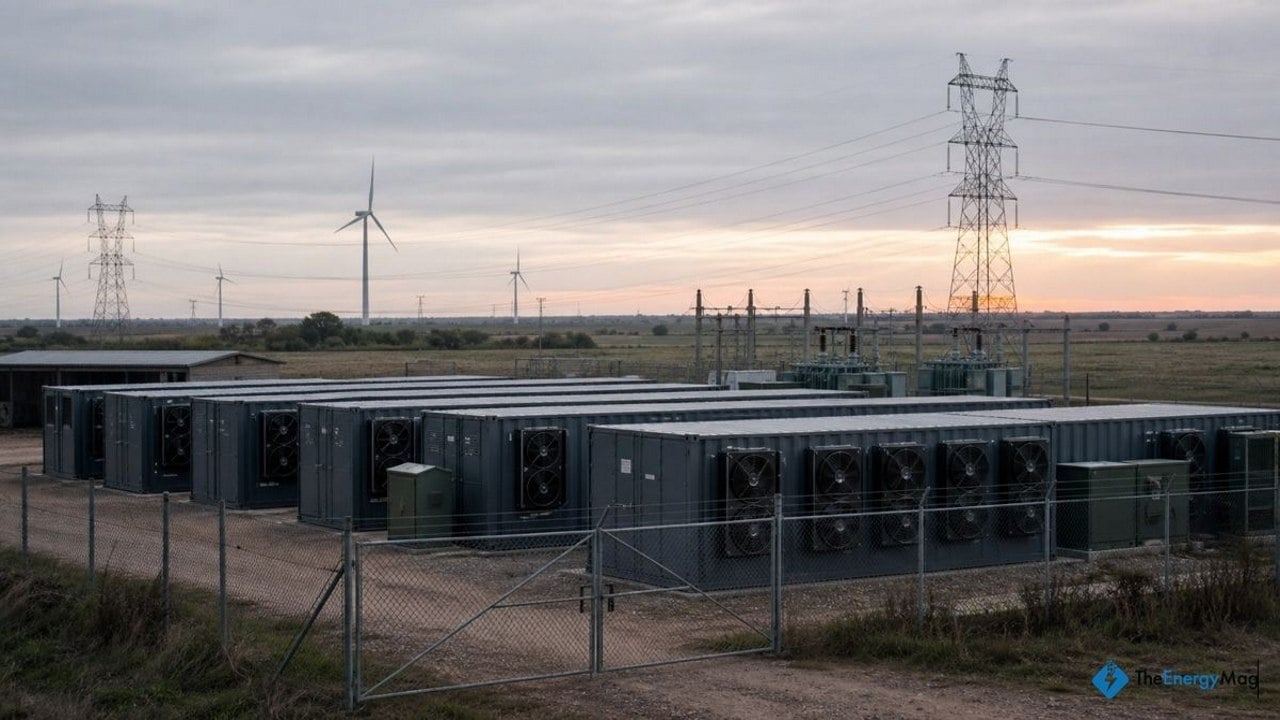
Tether has abandoned a roughly $120 million bitcoin mining investment in Uruguay following an escalating dispute with the state power company that led to unpaid bills, an electricity cutoff, and local layoffs, according to an investigation by Reuters.
The stablecoin issuer originally entered Uruguay in May 2023, drawn by the country's established electricity grid and renewable energy resources. Tether invested approximately $60 million into each of two sites located in Uruguay's rural Florida department through a locally licensed entity named Microfin. While the company never publicly disclosed the total project value, the $120 million investment equaled roughly 6% of Uruguay's annual foreign direct investment.
Operations initially generated revenue, but the relationship deteriorated due to a disagreement over electricity allocation from Uruguay's state-owned utility, UTE. According to Reuters, Tether viewed figures in its power contract as a minimum supply allocation that could be increased, whereas UTE treated the figures as a hard ceiling. As energy demand at the facilities increased, the sites periodically went without sufficient power for days.
The disagreement intensified after new leadership was installed at UTE under the government of President Yamandú Orsi. Microfin stopped paying its electricity bills in May 2025 and informed UTE the following month of its intent to terminate the contracts. Although UTE approved revised contract documents to try to preserve the project, Tether representatives did not attend the signing.
UTE ultimately cut off electricity to the mining sites on July 25, 2025. Local reports indicated that Microfin's arrears approached $5 million against a monthly power bill of about $2 million, surpassing the company's financial guarantee. Tether subsequently notified Uruguayan labor authorities on November 25 that it would cease operations, eliminating 30 of its 38 local jobs. UTE confirmed that Microfin settled its outstanding debts in December.
While renewable sources supplied 98% of Uruguay's electricity generation in 2025, industry specialists noted that abundant renewable supply does not automatically translate to low power prices. Bitcoin miners rely heavily on cheap, continuous power, and Uruguay's electricity costs have made it less competitive for mining compared to neighboring markets, particularly following the April 2024 bitcoin halving.
For Tether, the financial loss represents a small fraction of the profits generated by its core stablecoin business, which reported more than $10 billion in profit for 2025. Tether continues to promote bitcoin mining as part of its broader diversification strategy with deployments in other regions, such as El Salvador, but the Uruguay retreat highlights the critical role that power pricing, quantity, and strict contractual certainty play in large-scale crypto mining operations.