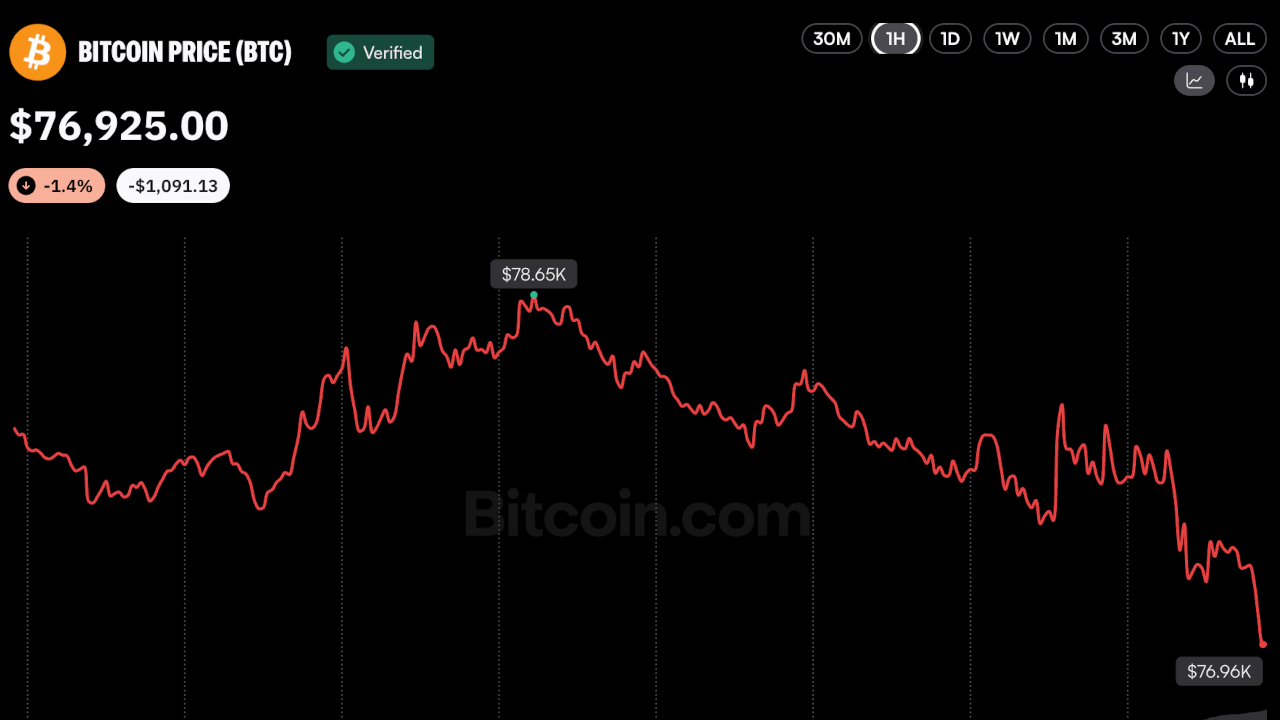
Bitcoin is trading near $78,000 after the recent $6.3 billion hack of Binance, prompting analysts to focus on three areas that could influence the cryptocurrency’s short‑term trajectory.
ETF Outflows Reduce Institutional Support
Last week, Bitcoin and Ethereum exchange‑traded funds (ETFs) recorded outflows of $202.59 million and $431.53 million respectively. Bitcoin ETFs saw a single‑day outflow of more than $643 million on Friday, the largest since June 25, while Ethereum experienced five consecutive days of redemptions, including a $156 million pull on the same day.
Exchange Withdrawals Test Liquidity
Binance resumed operations within 72 hours of the breach. During that period, users withdrew approximately $4.65 billion and deposited just over $1 billion, resulting in a net outflow of about $3.64 billion—roughly 2 % of the exchange’s total assets. The withdrawals have not been disorderly, but analysts note that accelerated outflows or stress on settlement systems could pose broader risks.
Hacker’s Fund Movements May Create Localized Pressure
On‑chain analysis shows the attacker moved roughly $242 million through cross‑chain platforms such as THORChain, Relay, Chainflip and Symbiosis. An additional wallet transferred 486,970 SOL, valued at about $46.4 million, and swapped it for Bitcoin via Relay. These transactions could generate localized selling pressure and complicate asset recovery.
Recent Price Performance
Over the past 24 hours Bitcoin’s price has been relatively flat, but it has slipped more than 2 % in the last week, over 5 % in two weeks, and about 7 % in the past month. Over the last year the cryptocurrency is down nearly 30 % from its all‑time high reached in October.