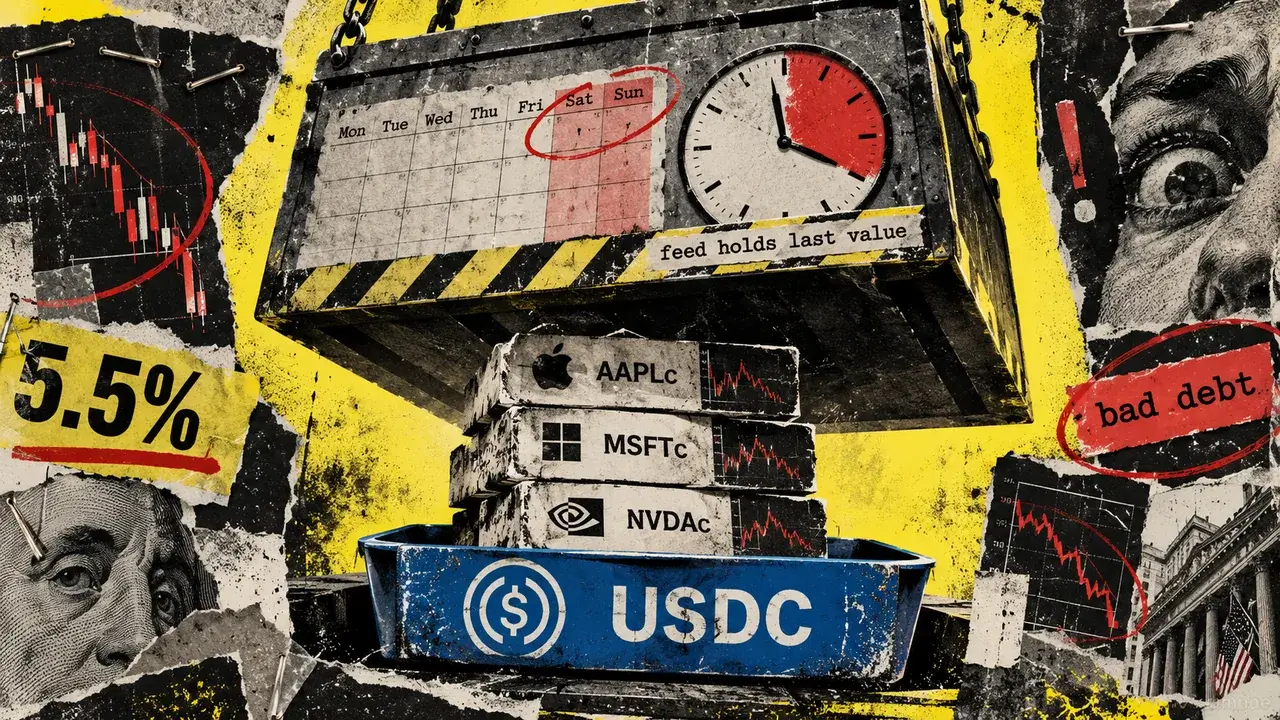
The ratio of tokenized funds to stablecoins has shifted dramatically over the past two years. In 2022, tokenized fund products represented just $2.99 for every $100 in stablecoins. Today, that figure stands at $11.39, reflecting a nearly fourfold increase in the category's growth relative to the broader stablecoin ecosystem.
This expansion occurs within a stablecoin market valued at approximately $300 billion, dominated by USDT and USDC. Tokenized real-world assets—products backed by Treasury securities and money market instruments—now account for between 10% and 17% of that market, though precise figures vary depending on measurement methodology across multiple blockchain networks.
Market Leaders Emerge
The growth has concentrated among major institutional issuers. Circle's USYC has accumulated between $2.5 billion and $3 billion in value. BlackRock's BUIDL fund on Ethereum holds approximately $2.2 billion to $2.7 billion. Ondo's USDY stands around $2.1 billion to $2.3 billion. Total tokenized Treasury and money market fund value now ranges between $15 billion and $33 billion across all chains and structures. During peak periods, some products have posted monthly increases of 8% to 10% or higher.
The Yield Advantage
The appeal of tokenized funds centers on yield generation. Traditional stablecoins function as digital dollars suitable for payments and settlement but provide no returns to holders. Issuers retain the yield earned on reserve assets. Tokenized funds distribute short-term Treasury yields to token holders, converting idle on-chain capital into productive assets.
Regulatory Landscape
The regulatory environment is shaping as a potential tailwind for tokenized funds relative to stablecoins. The GENIUS Act, expected to develop in 2025, would restrict yield payments on payment stablecoins while positioning tokenized funds as acceptable reserves.
JPMorgan analysts estimate tokenized funds currently represent approximately 5% of the broader stablecoin ecosystem. Their assessment indicates that without significant regulatory adjustments—particularly regarding transferability and cross-platform interoperability—tokenized funds are unlikely to exceed 10% to 15% of the total stablecoin market. Most tokenized fund shares face KYC requirements, redemption windows, and compliance layers that reduce liquidity compared to standard stablecoin transfers.
Infrastructure Applications
Beyond direct yield, tokenized Treasury products function as collateral and reserves for other financial instruments. Several protocols have integrated tokenized assets into their reserve structures, including Ethena's products. This composability represents a key use case for institutional adoption, with major financial firms positioning for a future where on-chain settlement of traditional financial products becomes standard.
Forward Outlook
The final form of the GENIUS Act will significantly influence market trajectory. Clear compliance pathways for tokenized funds combined with yield restrictions on payment stablecoins could accelerate capital rotation into the category. Interest rate movements also present a variable. Tokenized Treasury funds derive their appeal partly from elevated short-term rates. Aggressive Federal Reserve rate cuts would reduce their yield advantage and make the friction costs of tokenized funds harder to justify relative to simpler stablecoin alternatives.