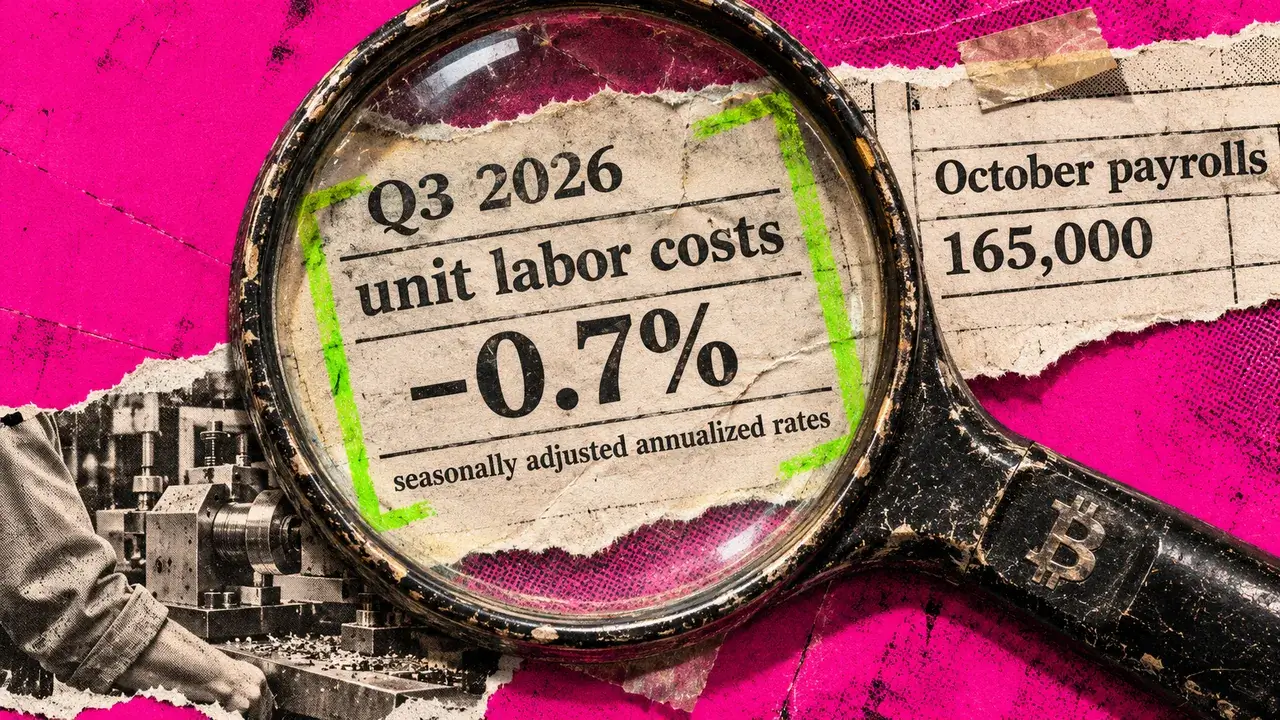
Preliminary third‑quarter data from the U.S. Bureau of Labor Statistics indicate that nonfarm business unit labor costs declined 0.7% at an annualized rate, while productivity increased 3.6% and hourly compensation rose 2.9%.
Key labor market figures
• Productivity grew 3.6% as output rose 3.7% and hours worked increased 0.1%.
• Hourly compensation increased 2.9% year‑over‑year.
• Unit labor costs, which compare compensation to output, fell 0.7% quarter‑over‑quarter but remained 2.4% higher than a year earlier.
Context for inflation and monetary policy
The decline in unit labor costs suggests that higher wages are being offset by stronger productivity, potentially easing one source of cost pressure on inflation. However, the Federal Reserve’s October 28 policy meeting kept the target range for the federal funds rate at 3.75%‑4.00%, noting that inflation remained elevated despite strong productivity growth.
Potential impact on Bitcoin
Bitcoin financing costs are sensitive to expectations for short‑term interest rates. If improved productivity leads to reduced inflation pressure, the Fed may lower rate expectations, which could lower borrowing costs for Bitcoin‑related activities. Conversely, persistent inflation or upward revisions to labor‑cost data could maintain higher rate expectations, limiting such relief.
Related labor market data
The November 6 employment report showed a payroll increase of 165,000 jobs in October, well above the 12‑month average of 48,000. Average hourly earnings for private nonfarm employees rose 0.4% month‑over‑month and 3.1% year‑over‑year.