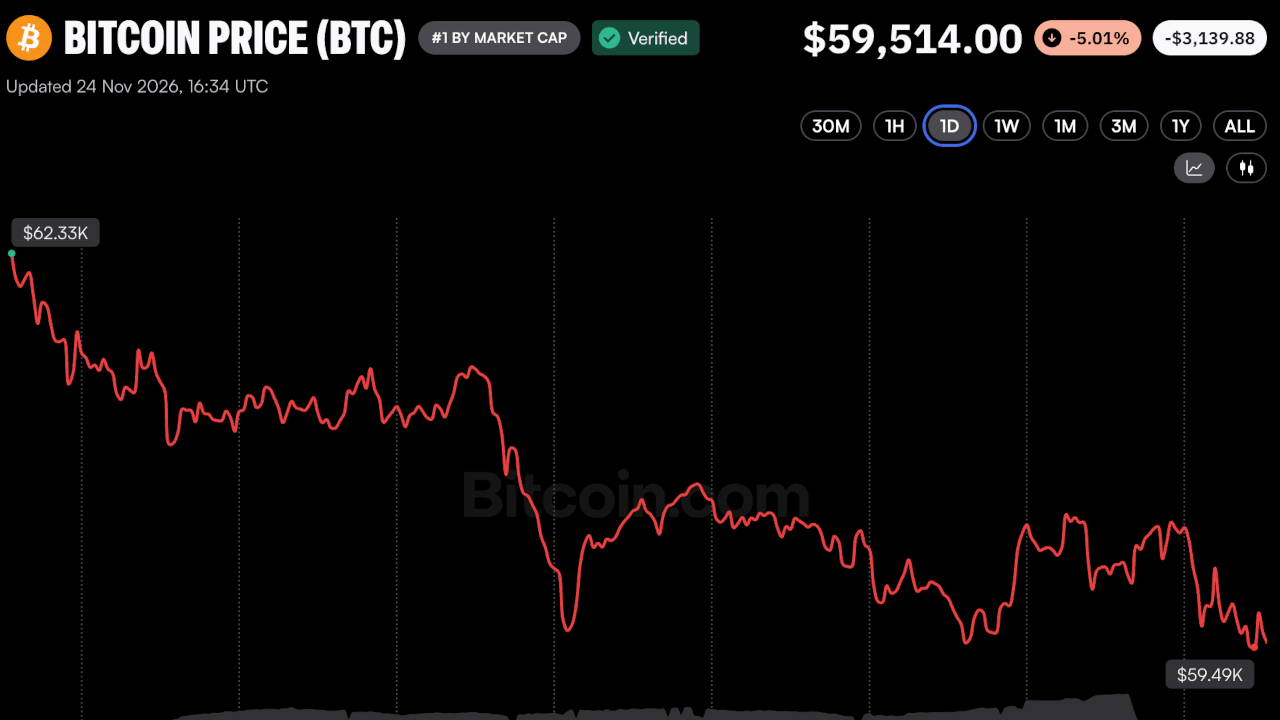
The Bitcoin futures basis trade has historically delivered substantial returns to traders, but recent market conditions have shifted the advantage to US Treasury yields. With the basis compressed to roughly 1-5% on an annualized basis, government debt now pays more than this once-dominant crypto carry strategy.
The compression followed $3.6 billion in crypto futures liquidations, with wider estimates placing the total deleveraging between $3.6 billion and $4 billion. These forced closures removed significant demand from the market, directly weakening the premium that futures commands over spot prices.
How the Basis Trade Works
The Bitcoin futures basis represents the gap between spot and futures prices, annualized into a yield. Traders execute the trade by buying Bitcoin on the spot market while selling a futures contract priced above it. Historically, this strategy delivered annualized returns exceeding 20%, compensating traders for the risks associated with crypto venues.
Pressure from Multiple Directions
Beyond liquidations, spot Bitcoin ETFs contributed to weakening demand. The funds posted net outflows ranging from hundreds of millions to over $1 billion across multi-day stretches throughout November 2026. Each withdrawal reduced the number of traders interested in pairing spot holdings with short futures positions.
The 10-year US Treasury yield reached at least 5.15% on multiple occasions in 2026, while real yields stripped of inflation approached 2.9%.
What This Means for the Market
When basis trades offered returns well above government yields, the extra compensation justified crypto venue risks. With that premium eliminated, the incentive to maintain leveraged positions has weakened considerably. For institutional traders, a strategy that once returned above 20% now competes directly against a Treasury bill and frequently loses.
Market observers should watch three key indicators moving forward: a sustained rebound in the basis above Treasury yields, movements in the 10-year yield, and shifts in ETF flows. A return to inflows would suggest investors are willing to accept crypto risk again despite attractive bond yields.