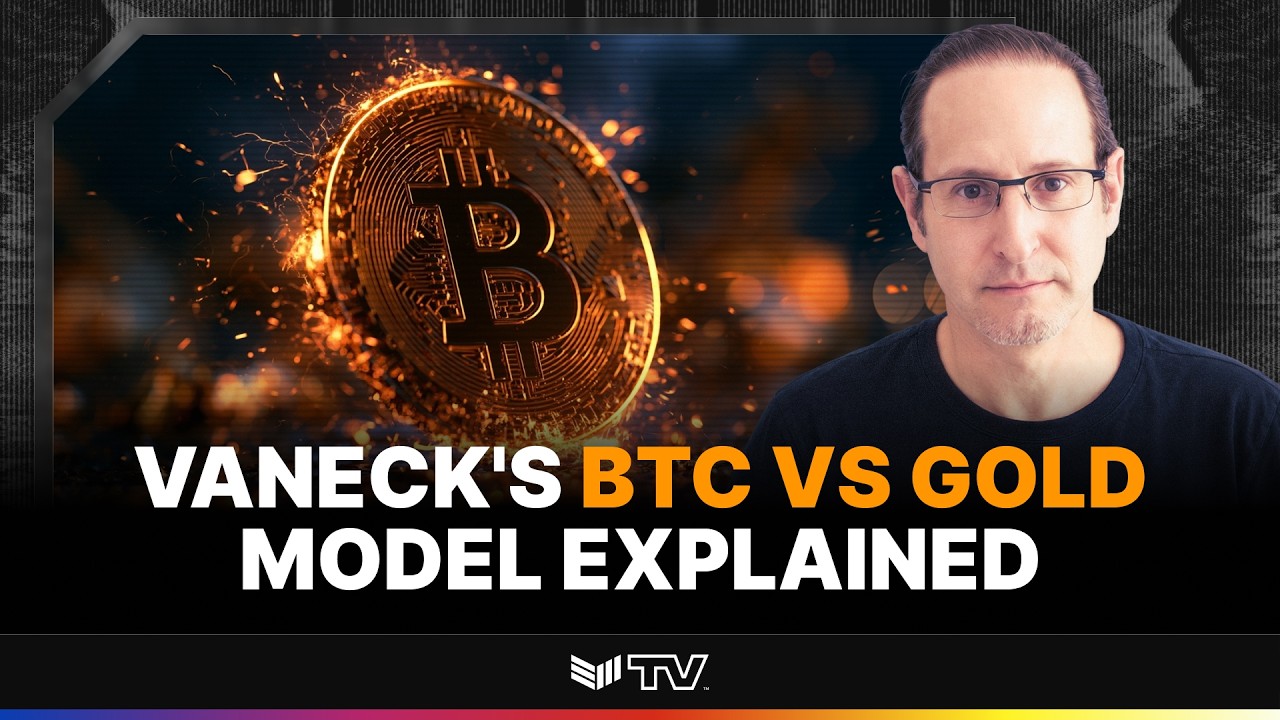
Matthew Sigel, head of digital assets research at VanEck, explained that Bitcoin miners who secure long‑term power contracts now hold a scarce resource that is increasingly valuable for artificial intelligence workloads. He noted that the AI sector’s growing demand for electricity has altered the economics of mining energy agreements.
Power Contracts and Miner Correlation
Sigel said that 10‑ to 20‑year leases with investment‑grade counterparties have reduced miners’ direct correlation with Bitcoin price movements. The stability of these contracts provides miners with optionality that is not reflected in traditional market metrics.
Gold Comparison
The discussion compared Bitcoin’s size and portfolio function to gold, highlighting the Bitcoin‑to‑gold ratio as a metric for valuation. Sigel referenced the notion that Bitcoin’s market cap could be viewed relative to half of gold’s market cap as a reference point.
Broader Economic Context
Other topics covered included the potential impact of quantum computing on cryptographic security, the view that additional regulation is not required for Bitcoin, and the role of Bitcoin as a hedge against inflation and fiscal dominance. Sigel also mentioned macro‑level price targets and adoption trends without providing specific forecasts.
Key Takeaways
- Long‑term power contracts are seen as a scarce asset for miners in the AI economy.
- These contracts can decouple miner earnings from short‑term Bitcoin price swings.
- Bitcoin’s valuation is often benchmarked against gold, with discussions of market‑cap ratios.
- Quantum computing is identified as a technical risk, not a catalyst for selling Bitcoin.
- Regulatory changes are not deemed necessary for Bitcoin’s continued development.