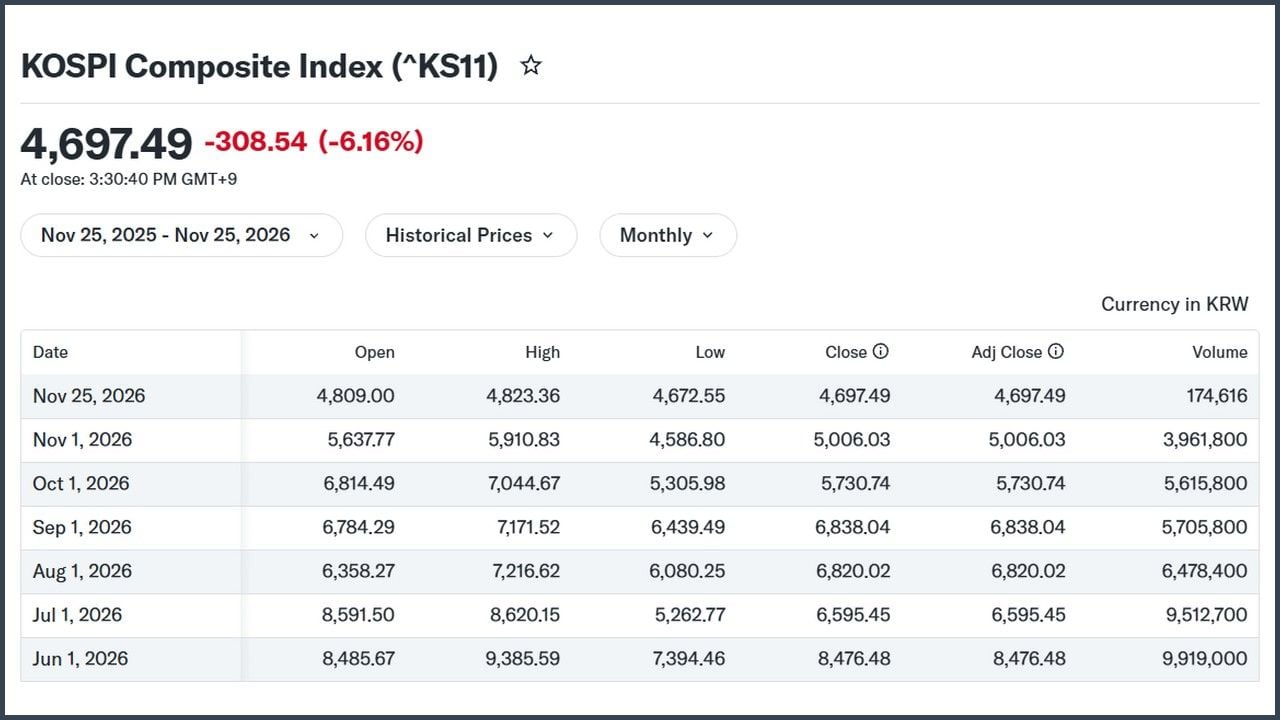
Wall Street strategists are split on whether current market conditions will repeat the late-2018 selloff, with competing views on the strength of artificial intelligence demand and Federal Reserve policy.
Fundstrat's Tom Lee sees less downside risk for US stocks through year-end, citing the AI boom as a key difference from 2018. He acknowledges structural parallels exist—including Fed tightening, midterm elections with Democratic gains, and an existing 10% stock decline—but argues that unlike 2018, the market now has AI-driven earnings growth to support valuations once supply-side pressures ease.
Citadel Securities strategists read the same conditions differently. Frank Flight, the firm's head of macro strategy, points to similarities between today's backdrop and 2018: solid US economic data masking an underlying slowdown, high bond yields, a firming dollar, and declining economy-sensitive stocks. Citadel warns that late-2018 risks are resurfacing.
Nohshad Shah, Citadel's head of EMEA fixed-income sales, added that with inflation still above 3%, the Federal Reserve may not intervene to support stocks if declines accelerate.
Lee's argument gains support from analyst behavior. During the 2018 selloff, analysts cut profit forecasts. This year, analysts have raised earnings estimates despite market pressure, contrasting with the 2018 experience.
The debate has implications beyond equities. Bitcoin has fallen approximately 29% since October 1, reflecting broader pressure on risk assets. A potential Fed rate increase in December will test whether rising AI earnings can sustain markets facing tighter monetary conditions.