Dual-Layer Structure and Holdings
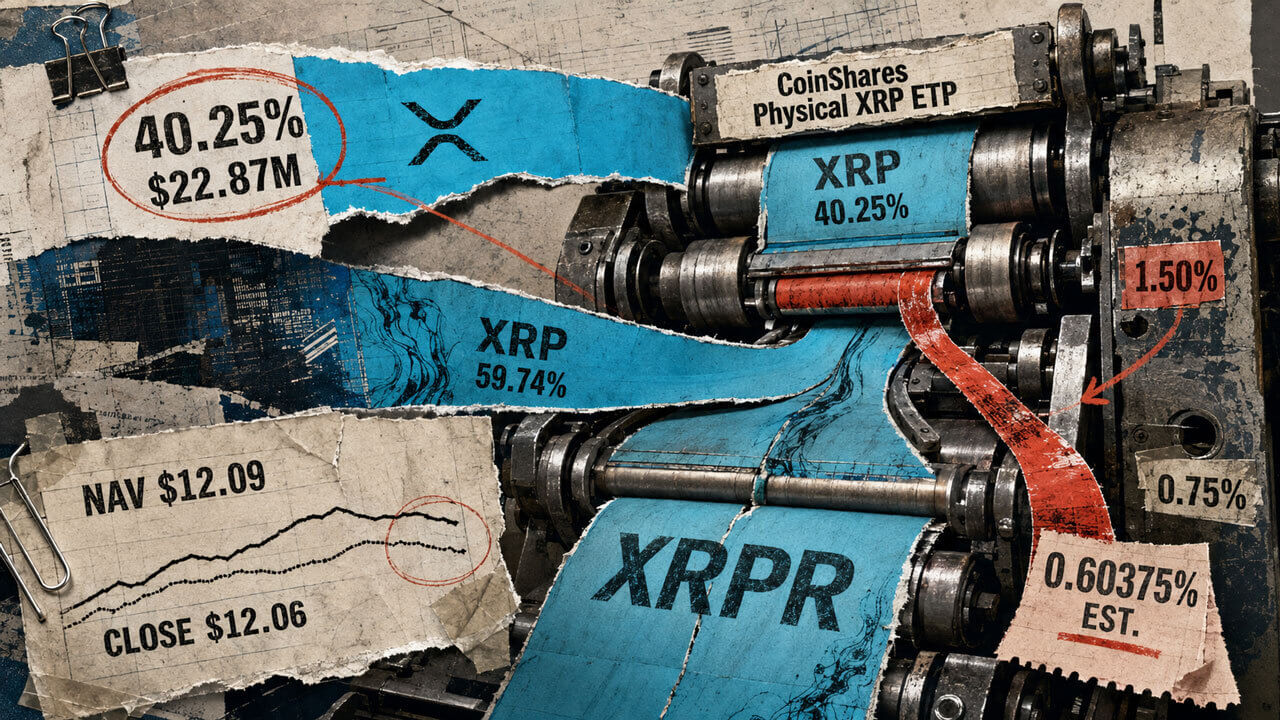
The REX-Osprey XRP ETF (XRPR) maintains a significant portion of its assets in another listed product, a strategy that routes capital through multiple layers of funds. According to a holdings snapshot from August 24, XRPR held 40.25% of its assets—equating to $22.87 million out of a $56.68 million portfolio—in the CoinShares Physical XRP ETP. The remaining 59.74% of the portfolio was held directly as XRP. At the time of the report, the fund had 4.7 million shares outstanding, a net asset value of $12.09, and a closing price of $12.06.
This allocation aligns with the fund's disclosed mandate from its June 30 prospectus, which states that the fund aims to keep at least 80% of its assets in XRP and instruments providing XRP exposure, while maintaining a minimum 40% investment in securities such as ETFs and non-U.S. exchange-traded products. Additionally, a February shareholder report indicated that the fund consolidates a Cayman subsidiary used for XRP exposure.
Fee Stacking and Expense Ratios
The multi-layered fund structure introduces stacked operational costs. XRPR discloses a 0.75% total annual operating expense ratio, while the CoinShares Physical XRP ETP carries a 1.50% annual fee. Based on the August 24 asset weighting, the underlying ETP fee creates an estimated 0.60375 percentage-point weighted annual drag inside XRPR before accounting for changes in allocation, prices, or operational expenses.
While the underlying product's charge is reflected internally, REX-Osprey’s statement of additional information notes that shareholders indirectly bear acquired-vehicle fees on top of the fund's own expenses. Because these allocations can shift daily, the exact impact of these costs can vary.
Market Frictions and Return Divergence
Beyond management fees, holding exposure through a secondary ETP introduces potential tracking differences and market frictions. XRPR investors trade a U.S.-listed ETF, whereas a portion of the fund's exposure relies on a Jersey-domiciled debt security listed on European exchanges.
Daily allocation shifts, trading costs, bid-ask spreads, and differing operating hours or market liquidity between venues can widen the return gap between XRPR's net asset value and the price of XRP. Furthermore, this structure adds an additional layer of issuers, custodians, and trading venues between the fund and the underlying assets.