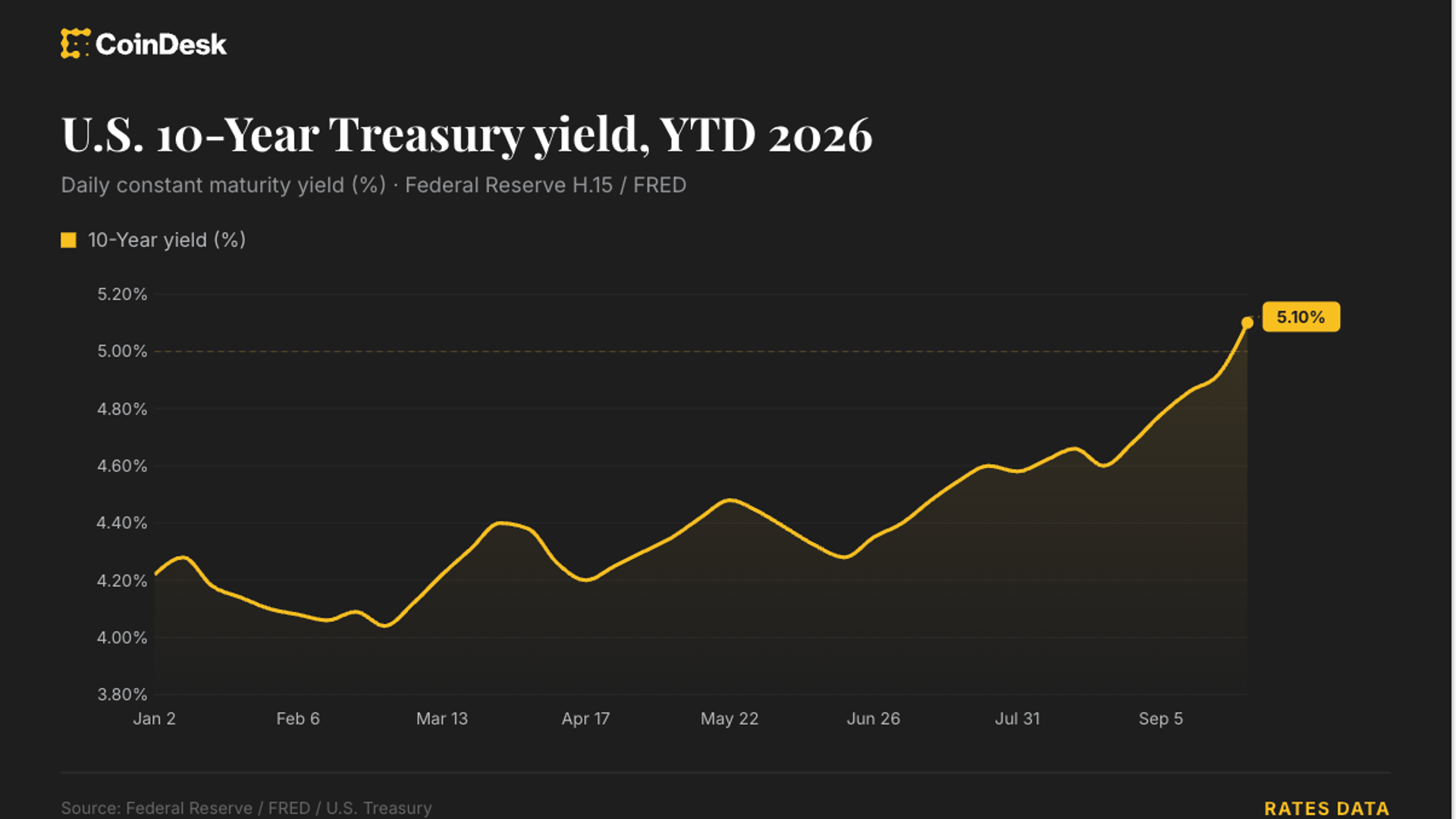
Bitcoin declined 2.7% on September 24 to trade at $84,061, pressured by a strengthening US dollar as the dollar index (DXY) reached an eight-week high of 101.231 on September 23.
The broader cryptocurrency market followed Bitcoin lower, with Ethereum falling to $2,683 and Ripple dropping 7.5%. Crypto market liquidations reached $513 million, according to CoinGlass data.
Dollar Strength Driven by Rate Hike Bets
The US dollar index has climbed 2.5% since hitting a low of 98.755 on September 9. Market expectations have shifted toward a Federal Reserve rate increase, with prediction market data showing 65% of traders betting on a 25 basis point hike at the October 2026 FOMC meeting, which would raise US interest rates to 4.00%-4.25%.
Higher interest rates typically encourage investors to shift toward safer assets like government bonds, potentially weighing on riskier investments including cryptocurrencies.
The hawkish policy stance has drawn criticism from some Trump administration officials. Kevin Hassett, Director of the White House National Economic Council, has questioned the Fed's rate-hiking approach.
ETF Inflows Provide Support
Despite downward price pressure, Bitcoin exchange-traded funds have recorded five consecutive days of inflows, totaling $2.06 billion during the week beginning September 21. The Morgan Stanley Bitcoin ETF saw $193 million in inflows this week and is on pace for its best week of inflows since launching in April.
Bitcoin ETF investors have returned to profitability following Bitcoin's move above the cost basis of $81,722, according to Bloomberg ETF analyst James Seyffart.
Technical Outlook
Bitcoin rallied above a bull flag pattern resistance on September 18 but stalled after reaching $86,600. A close above this level could potentially open a path to $90,000.
The relative strength index remains in bullish territory at 65, while Bitcoin continues to trade above all exponential moving averages. However, continued selling pressure could push Bitcoin toward support at the 20-day EMA of $80,390, with further downside potentially reaching the $80,000 psychological level if dollar strength and Treasury yields persist.