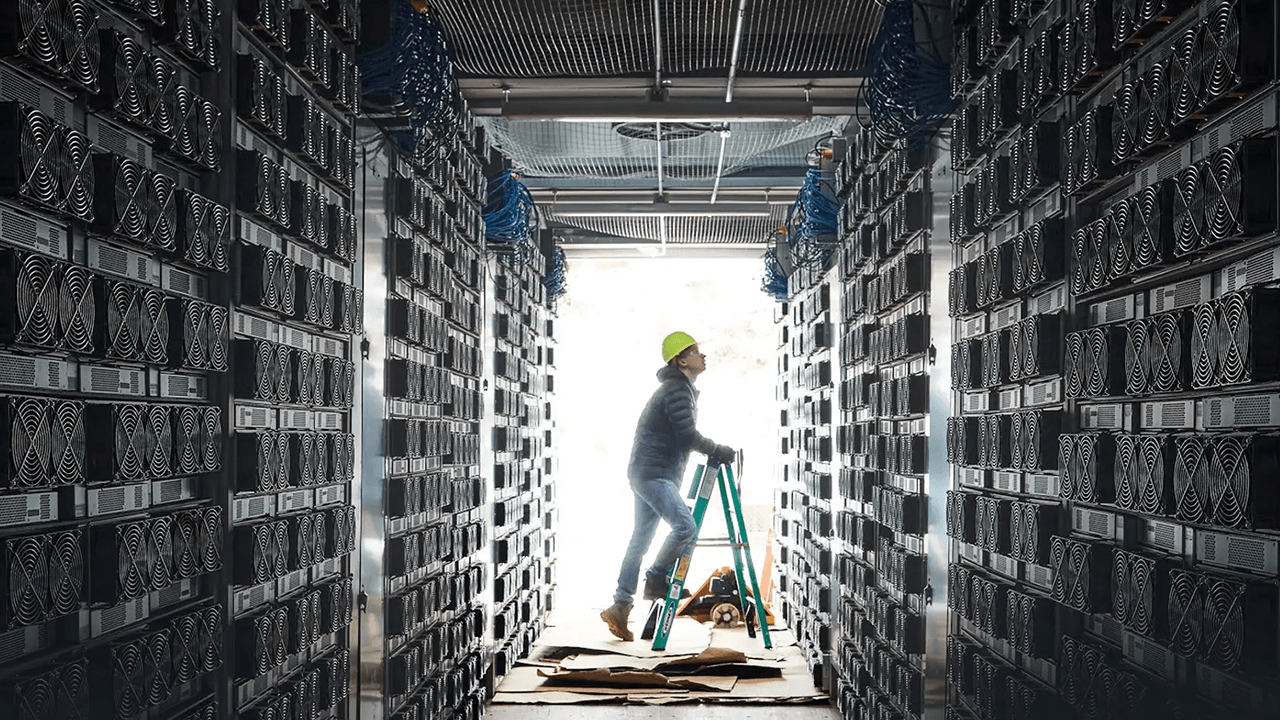
Bitcoin's network hashrate has entered what industry leaders are calling the first sustained decline in its history, as mining operators increasingly redirect infrastructure toward artificial intelligence and high-performance computing projects.
Rapha Zagury, CEO of Twenty One Capital, a Tether-backed bitcoin treasury company, said at the Bitcoin Asia 2026 conference in Hong Kong on August 28 that Bitcoin is experiencing its first "bear market in hash rate." The network's hashrate peaked near 1.3 zettahashes per second late last year before beginning a gradual decline that continues to set lower lows.
A Different Kind of Downturn
Zagury distinguished the current situation from previous hashrate declines, such as the 2021 collapse triggered by China's mining crackdown. In that instance, mining equipment largely migrated to other jurisdictions and eventually returned to operation. The current decline reflects a structural shift in how mining infrastructure is being used.
Data centers built for bitcoin mining now offer valuable resources—power, land, and grid connections—that artificial intelligence and high-performance computing companies actively seek. This has created competing demand for the same infrastructure that miners traditionally dedicated entirely to bitcoin production.
Major Miners Shift Operations
Several large public mining companies have already made significant moves toward AI and high-performance computing contracts:
- Keel Infrastructure shut down all of its U.S. bitcoin mining operations to prepare sites for AI and HPC workloads, ending the period with approximately $819 million in liquidity.
- Bitdeer signed a 16-year AI infrastructure agreement worth approximately $4.7 billion for 121 megawatts of capacity at its Tydal campus in Norway, with potential extensions that could bring the total to roughly $8 billion.
- Hut 8 secured a $9.8 billion, 15-year AI infrastructure lease covering 352 megawatts at its Beacon Point campus in Texas, with a broader contracted AI portfolio spanning 949 megawatts.
Winners and Losers
Zagury noted that public mining companies are increasingly reconsidering pure-play bitcoin mining as a primary strategy. However, the hashrate decline may benefit miners that remain committed to bitcoin. As competing hashrate disappears, operators staying focused on bitcoin production naturally capture a larger share of network rewards, potentially improving their individual economics despite lower overall network hashrate.