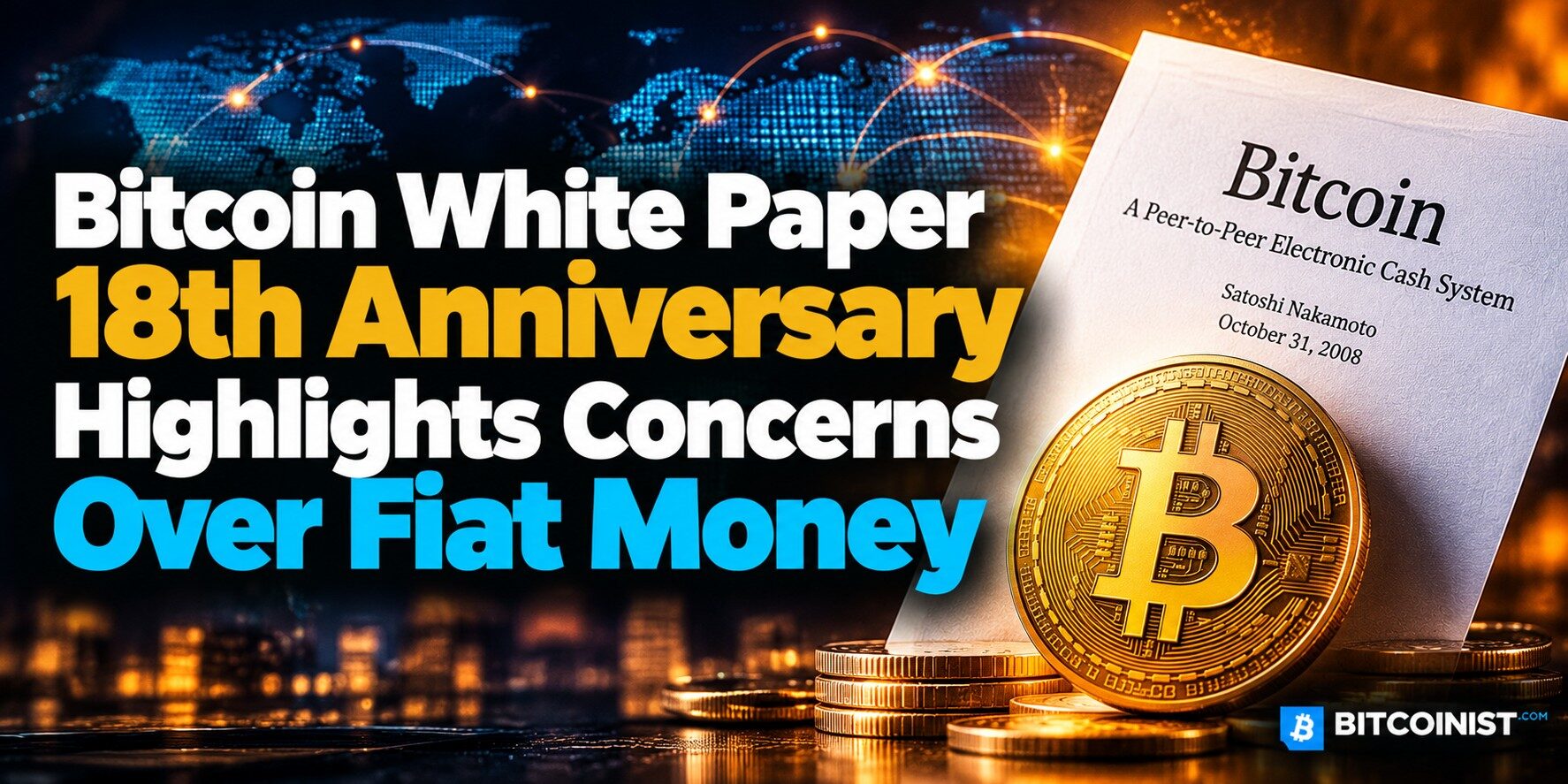
The Bitcoin white paper marks its 18th anniversary on October 31, returning attention to the financial-system concerns that surrounded its publication in 2008.
Written by Satoshi Nakamoto, the document described a peer-to-peer electronic cash system designed to operate without financial institutions or centralized intermediaries. It was released weeks after the US government approved a $700 billion bailout package for struggling banks during the global financial crisis.
Bailouts and monetary expansion
The financial interventions introduced during the 2008 crisis were followed by additional rescue measures in later years. During the COVID-19 pandemic, the Federal Reserve introduced extensive monetary support, and regulators stepped in again in 2023 after the collapse of Silicon Valley Bank.
According to Onramp CEO Michael Tanguma, the Federal Reserve’s balance sheet expanded from approximately $900 billion in September 2008 to $9 trillion by April 2022.
While these measures helped stabilize financial markets, their broader economic consequences continue to attract criticism.
Small businesses face persistent pressure
Small businesses, which generally operate with limited financial reserves, remain particularly exposed to inflation and higher operating costs. Rising food prices, wages, rent and other expenses have forced many business owners to increase prices, reduce operations or close altogether.
Fixed supply and volatility
One of Bitcoin’s defining characteristics is its maximum supply of 21 million coins. Unlike traditional currencies, its issuance cannot be expanded through government monetary policies or emergency financial interventions. That distinction has become central to the argument for holding Bitcoin as a long-term reserve asset.
Bitcoin remains highly volatile, having experienced significant price declines during previous market cycles. For businesses that depend on readily available capital to cover daily expenses, such fluctuations can create additional financial uncertainty.
Nevertheless, Bitcoin’s supporters argue that its limited supply provides an alternative way to preserve purchasing power over longer periods.
The debate continues
Eighteen years after its introduction, the Bitcoin white paper and its original proposition remain closely connected to the financial challenges that inspired its creation. Whether small businesses increasingly adopt it as a reserve asset remains uncertain, but the debate over traditional money and decentralized alternatives is far from over.