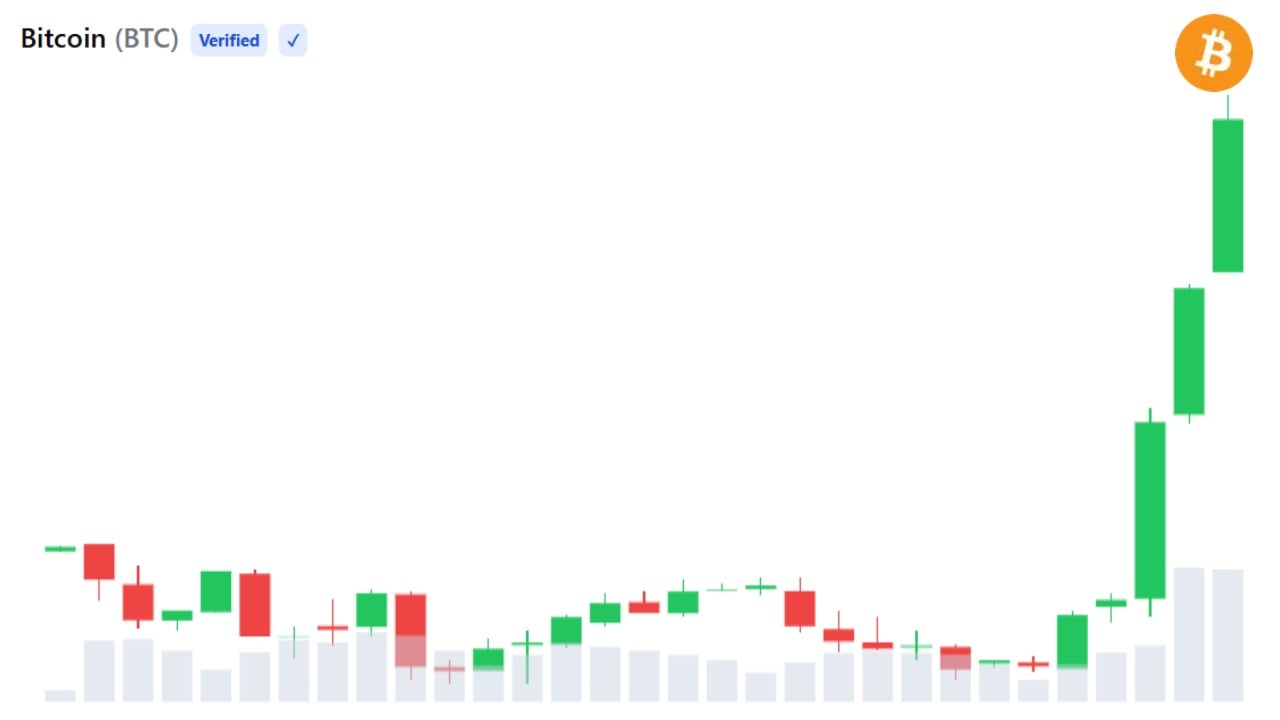
Bitcoin reached a multi‑month peak of $79,491 on August 21, with analysts at the crypto exchange Bitfinex attributing the move to spot buying and short covering rather than fresh leveraged positions. The analysts noted that rallies built on cash purchases tend to have a longer runway compared with squeeze‑driven moves that rely on liquidations.
Spot demand and ETF inflows support the rally
The U.S. Treasury announced on August 19 that it would double the maximum size of its long‑end liquidity‑support buybacks to at least $4 billion per operation, a change expected to lower long‑term yields and support risk assets. The same day Bitcoin jumped to $69,749, triggering roughly $1.48 billion in crypto position liquidations, most of which were short positions. Spot bitcoin ETFs added $297.6 million in the same session.
Open interest indicates limited leverage
During the rally, Bitcoin’s price rose 10‑11 percent while open interest increased only about 4 percent, suggesting that the price advance was driven primarily by spot buying and short covering, with leverage playing a minor role.
Key price level for profit‑taking
Buyers who entered positions over the past five months have a cost basis around $68,000‑$69,000. Trading above this range keeps that cohort in profit and reduces pressure from underwater holders.
ETF inflows and U.S. demand
U.S. spot bitcoin ETFs recorded inflows of $606.29 million on August 20, the largest single‑day total since May 1, with BlackRock’s IBIT accounting for 82 percent of the flow. Net assets across the funds reached $90.16 billion. A sustained week of similar inflows could strengthen price support, according to the analysts.
Risks to the rally
The analysts highlighted two main risks: a large volume of Bitcoin being moved to exchanges in profit, which could trigger a significant profit‑taking wave, and a rise in real yields that could pressure the price. Treasury Secretary Scott Besen‑t indicated that future buyback operations could exceed $4 billion per issue, and long‑dated bond yields remain a key factor for risk assets.