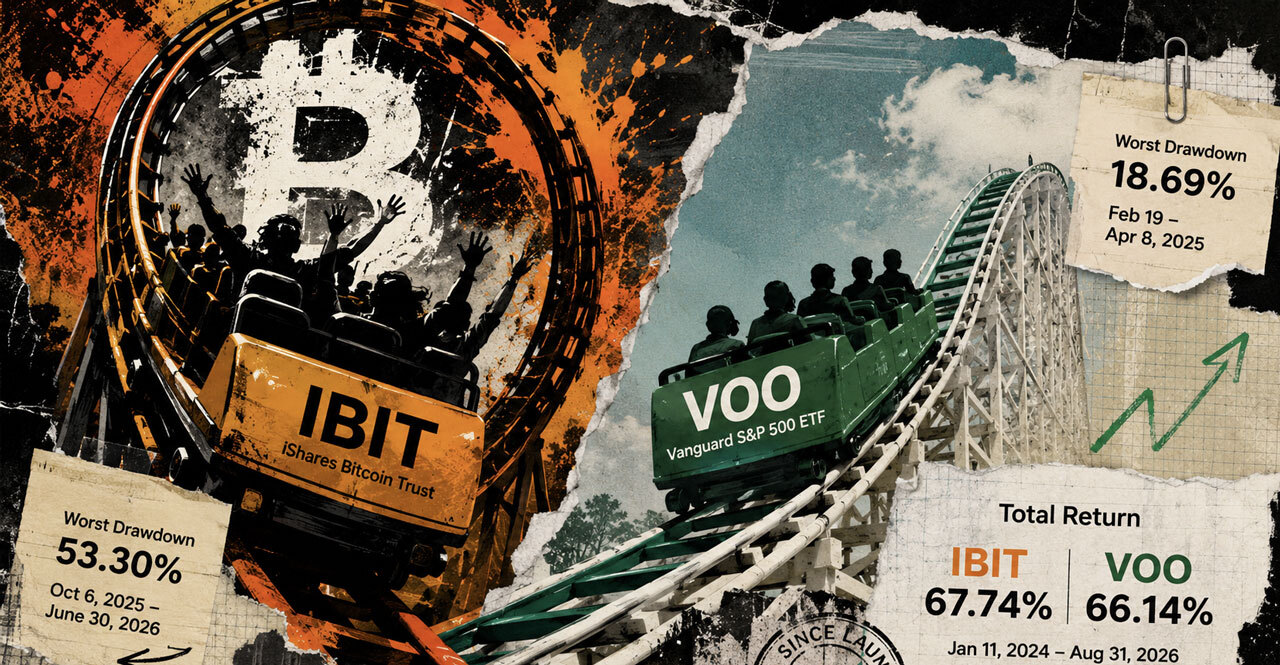
BlackRock's iShares Bitcoin Trust (IBIT) has narrowly outperformed Vanguard's S&P 500 ETF (VOO) since the Bitcoin ETF's January 2024 debut, despite subjecting investors to significantly greater volatility.
From January 11, 2024 through August 31, IBIT returned 67.74% on a total-return basis compared with 66.14% for VOO, giving the Bitcoin ETF a lead of just 1.60 percentage points. Bloomberg senior ETF analyst Eric Balchunas noted the surprising result, describing IBIT's path as resembling a roller coaster while characterizing VOO's advance as a straightforward climb.
The Volatility Gap
The similarity in headline returns masks a stark difference in the investor experience. IBIT experienced a maximum drawdown of 53.30% between October 6, 2025 and June 30, 2026, while VOO's worst peak-to-trough decline reached 18.69% from February 19 through April 8, 2025.
Bitcoin's price movements explain much of this volatility. BTC traded near $47,000 when US spot ETFs launched in January 2024 and subsequently surged to a record high of approximately $126,000 in 2025 following Donald Trump's election victory. The asset later declined to roughly $58,000 before recovering to around $77,000 by press time.
Growing Infrastructure and Scale
Despite the volatility, the Bitcoin ETF space has attracted substantial institutional interest. IBIT is now the largest spot Bitcoin ETF, managing approximately $60 billion in assets and accumulating roughly $63 billion of inflows since launch.
VOO operates at a different scale entirely. The Vanguard fund, which tracks the S&P 500 and provides broad exposure to large-cap US equities, crossed $1 trillion in net assets in June 2026, becoming the first ETF to reach that milestone.