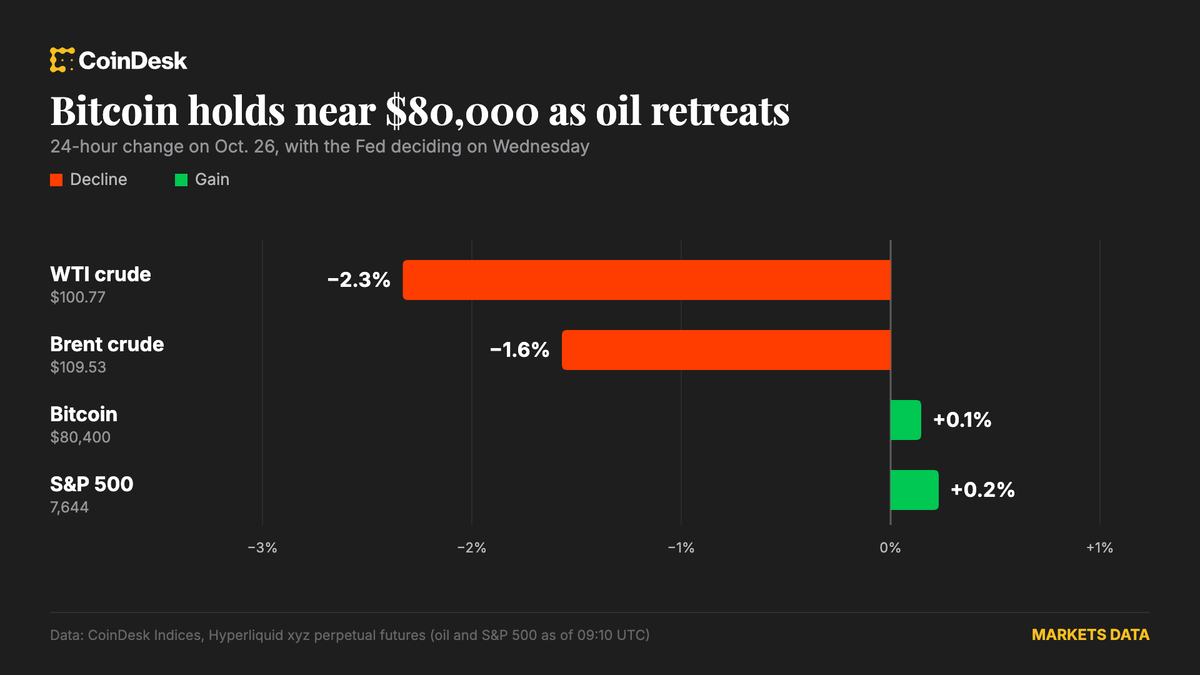
Cryptocurrency markets are navigating a macroeconomic-heavy week, with Treasury yields and economic data taking center stage. Bitcoin began the week near $85,000, following a decline from about $87,000 after Friday's weaker-than-expected employment report.
September payrolls rose by 29,000 compared to expectations of 90,000, while unemployment increased to 4.2%. The softer labor figures have shifted focus to whether incoming inflation and activity data will prompt another Federal Reserve rate increase.
Key Events Shaping the Outlook
The week features six major catalysts spanning Monday, Wednesday, and Friday. Monday opens with September ISM Non-Manufacturing PMI data and prices data. The August services PMI stood at 55.4, with the prices index at 72.6. September manufacturing prices jumped to 77.9 from 71.1, signaling elevated price pressures that could keep inflation in focus.
Wednesday concentrates the week's largest bond-market events. The Treasury is scheduled to conduct a $39 billion 10-year note reopening, while the 10-year yield recently reached 5.34%, its highest level in roughly 24 years. Later Wednesday, the Federal Reserve will release minutes from its September meeting, when policymakers unanimously raised rates by 25 basis points to 3.75%-4.00%.
Friday concludes the week with preliminary October University of Michigan consumer sentiment and inflation expectations data. September sentiment fell to 48.1, while one-year inflation expectations climbed to 4.6%. Five-year inflation expectations increased to 3.4%.
Why Bond Yields Matter for Crypto
Higher Treasury yields raise returns on lower-risk assets and can tighten financial conditions, limiting demand for speculative assets like cryptocurrencies. Bitcoin's recent performance has already been affected by elevated yields. The key question for the crypto market this week is whether bond yields retreat from recent highs or remain elevated, with macroeconomic data likely to be more influential than crypto-specific developments.