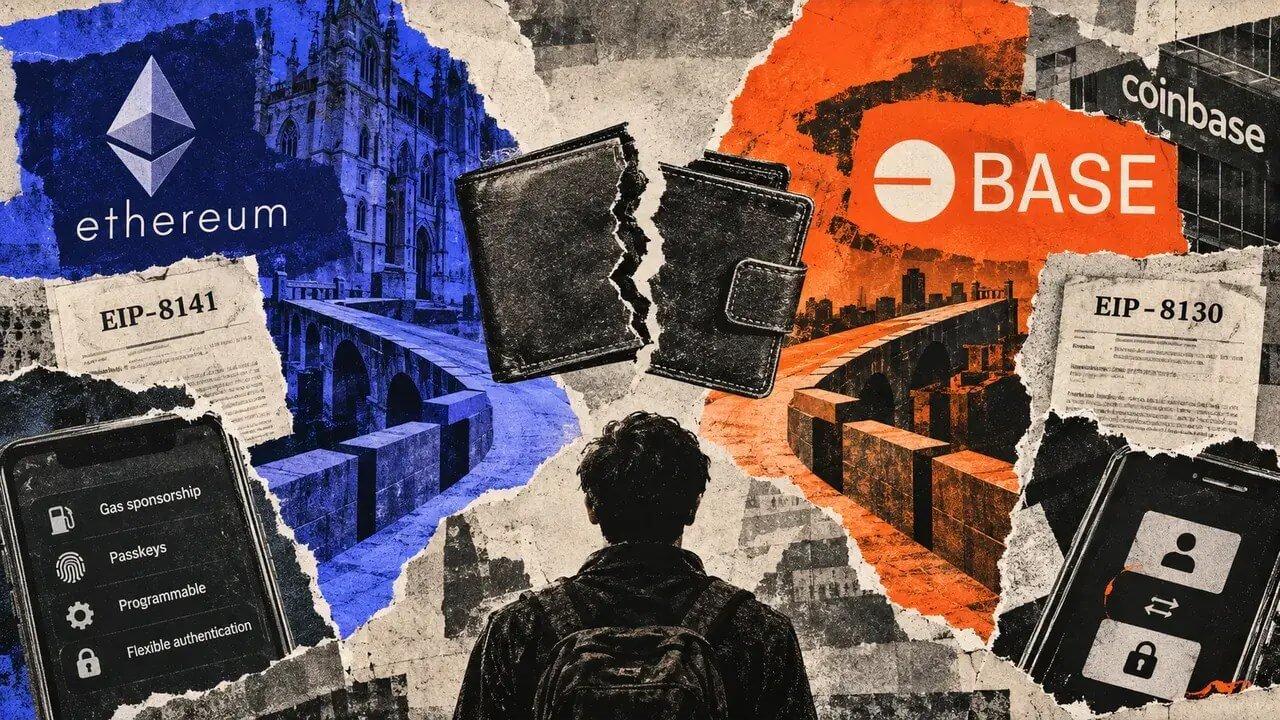
Ethereum and Coinbase-backed layer-2 network Base have ended collaboration on a unified standard for next-generation crypto wallets, according to Ethlabs researcher Derek Chiang on September 14. The breakdown came after developers working on Ethereum's EIP-8141 Frame Transactions and Base's EIP-8130 failed to reconcile their different technical requirements for account abstraction.
The split means Ethereum will advance its Frames proposal while Base pursues a separate design, potentially forcing wallets to support different transaction architectures across networks that have historically shared similar account and transaction systems. Both proposals aim to make wallets more programmable, enabling features like gas sponsorship, passkeys, and flexible authentication.
The disagreement centered on a fundamental question: how much freedom should protocols give accounts, and how much structure should chains impose on transactions before execution. Chiang noted that "Ethereum wanted to be the best version of Ethereum, and Base wanted to be the best version of Base."
Market Competition Drives Divergence
The breakdown exposes a structural problem that could intensify as Ethereum's layer-2 blockchains mature into independent networks with their own users, commercial priorities, and development schedules. Ethereum core developer Matt Garnett said divergence among L2s was inevitable because market competition forces them to introduce features faster than Ethereum's base layer can.
"Market pressure forces them to ship features at a pace that L1 cannot match, so incompatibilities accumulate," Garnett said.
Technical Differences in the Proposals
EIP-8141 introduces Frame Transactions, which break a transaction into programmable calls handling validation, execution, and gas payment. The design aims to detach accounts from elliptic-curve keys, enable key rotation, and provide paths toward post-quantum authentication.
EIP-8130, written by Coinbase engineer Chris Hunter, takes a more structured approach. It requires transactions to identify their authenticator so nodes can determine validation work before executing wallet code. The current draft describes this structure as a way to make validation predictable and allow nodes to reject unknown authenticators before execution.
For Ethereum mainnet, the priority is what Chiang calls "CROPS": censorship and capture resistance, open-source software, privacy, and security. These requirements favor account models developers can extend without chain permission and transaction designs supporting privacy systems and future post-quantum signatures.
High-throughput layer-2 networks like Base face different pressures, needing account-abstraction systems that scale while remaining legible enough for chains to determine which authentication methods they will permit.
Implications for Layer-2 Networks
The dispute reopens questions about whether layer-2 growth automatically strengthens Ethereum itself. Crypto lawyer Gabriel Shapiro suggested the split makes the case for layer-2 networks as inherently beneficial to Ethereum harder to sustain, noting that L2s can capture sequencing economics and make product decisions around their own competitive priorities while Ethereum provides underlying settlement and security.
Shapiro argued Ethereum may need to rely less on companies like Base and instead emphasize attributes the base layer uniquely provides, linking this to increased emphasis on censorship resistance, privacy, and security.
Layer-2 networks can still generate settlement demand and keep applications within the broader Ethereum ecosystem. EIP-8130 includes mechanisms intended to preserve account portability across EVM chains, showing Base is not designing for complete isolation, though the account-abstraction dispute provides a concrete example of how interests between layers can diverge.