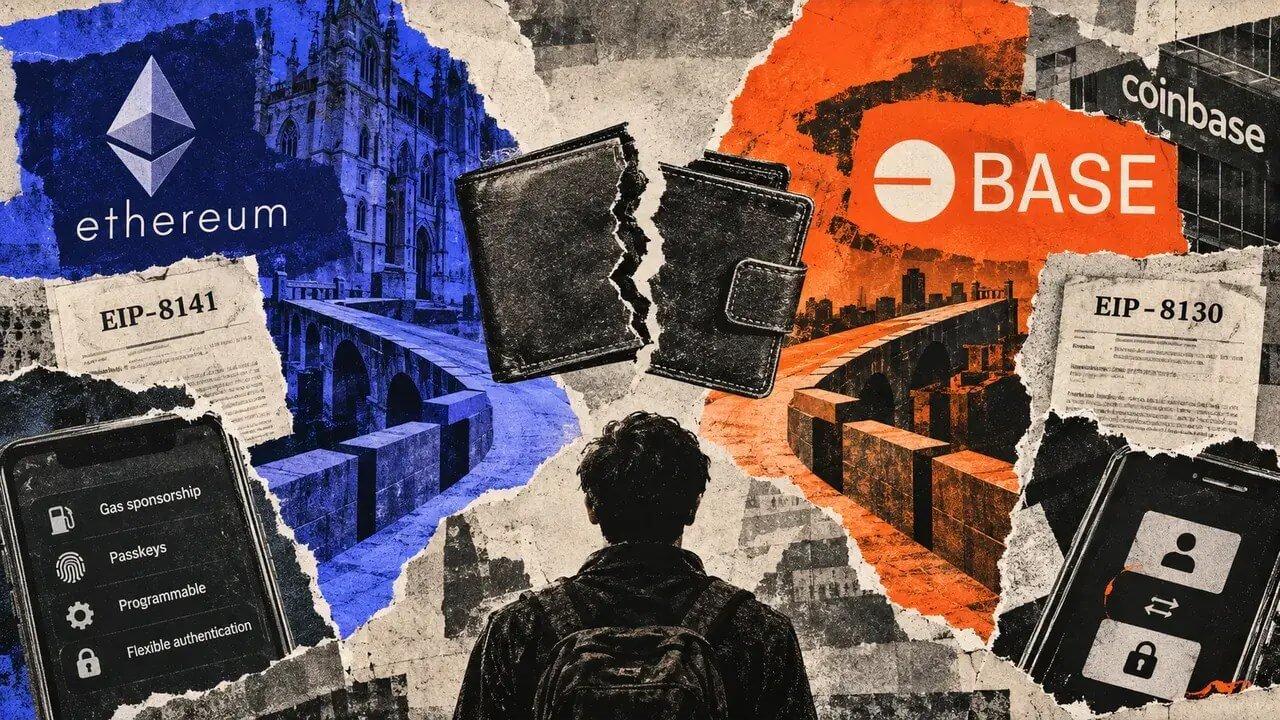
Ethereum builders face competing pressures as the network considers formalizing how validators and builders exchange blocks and payments. A debate among Lido contributors and protocol developers centers on whether builders should secure payments through capital locked in the protocol itself or through trusted arrangements with counterparties.
Under the proposed enshrined proposer-builder separation (ePBS) design in EIP-7732, validators would receive signed commitments from builders before transaction payloads are delivered. The specification allows two payment methods: collateral-backed payments drawn from Ethereum deposited into the protocol, and trusted payments that rely on builders honoring promises through alternative routes.
According to Commit-Boost contributor Jason Vranek, builders using protocol-backed payments face three potential costs. They must maintain Ethereum reserves inside the protocol to fund payments, cover unusually valuable blocks, and remain liable for payments even when delivery fails or when they would have preferred to cancel offers.
Capital held as collateral cannot serve other purposes, and exposure to payment obligations without guaranteed delivery may make builders less willing to commit maximum payments. A trusted arrangement could reduce these costs and leave more room to compensate proposers, though whether this produces higher actual payments depends on available capital and counterparty reliability.
Operator Configuration and Market Access
An operator's configuration determines which block-payment opportunities its validators can access. Lido's initial direction proposed accepting collateral-backed offers broadly while restricting trusted offers to a governance-approved allowlist.
Alternative approaches are under consideration. Builders could reach validators through open peer-to-peer offers without operator configuration, while configured routes could connect through relays that serve multiple builders and manage payload publication. Titan Builder indicated it expects validators to continue connecting through relays rather than direct builder endpoints.
Stakeholders have also raised implementation questions. Operators need accurate records of offer sources and consistent settings across backup nodes, and differences in how clients handle offers could increase incident-management costs.
Timeline and Technical Separation
Glamsterdam, a related technical proposal, is testing on devnets with mainnet expected in the fourth quarter of 2026. Its purpose is distinct from payment guarantees: separating consensus work from execution processing to give validators more time for heavy computational tasks.
Transaction-inclusion guarantees belong to another part of the Ethereum roadmap. The Ethereum Foundation identified fork-choice enforced inclusion lists as a priority, a mechanism that would let validators impose inclusion requirements on builders' blocks.
The next evidence will come from the policies Lido implements, how offer-handling clients are designed, and the payments available under resulting configurations.