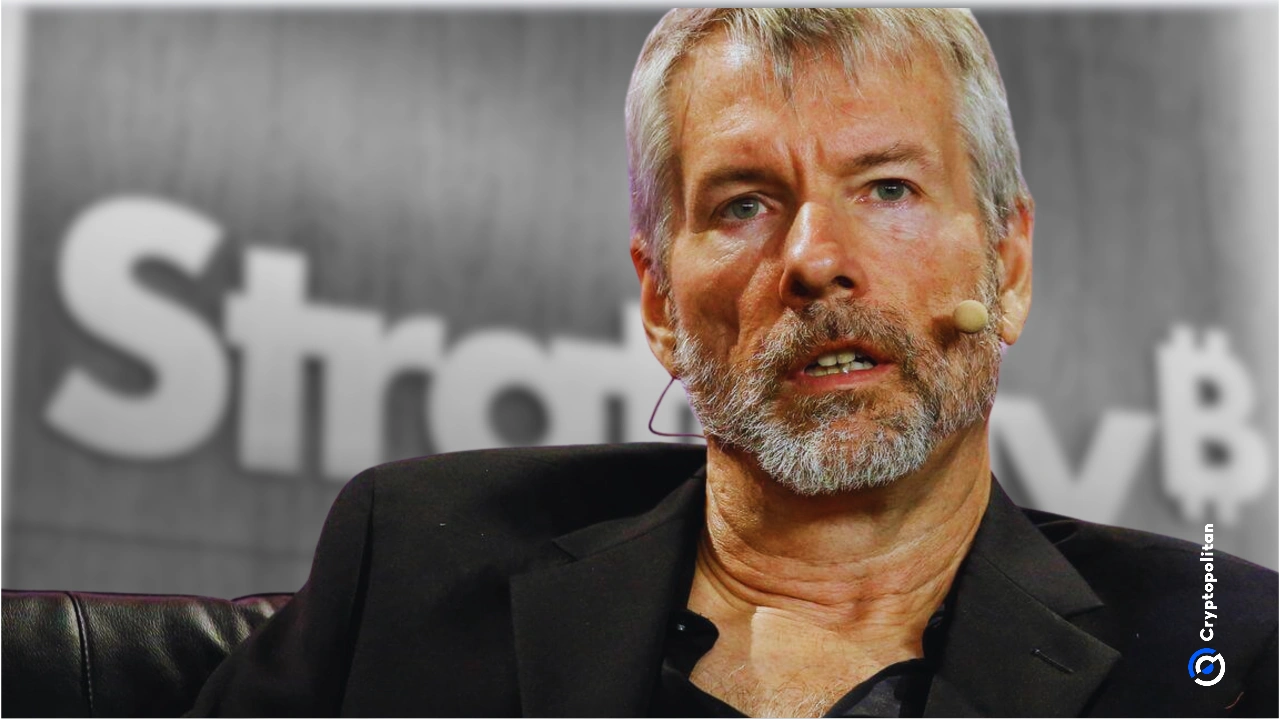
Michael Saylor has proposed that individuals and corporations be granted five fundamental rights over digital assets. Speaking at the Bitcoin Policy Institute's Freedom Tech DC summit and in a subsequent essay, Saylor outlined rights including the ability to create digital assets, issue them to raise capital, custody them directly or through a chosen provider, transfer them freely, and use them to spend, invest, earn, and borrow.
Saylor argues these rights should be applied equally and backed by financial privacy and real access to markets. He contends that ownership holds little meaning if the state restricts what owners can do with their assets, citing recent legislation like the CLARITY bill as an example of restriction-heavy regulation.
Capital Formation and Economic Growth
Central to Saylor's argument is the need for cheaper capital and freer movement of money to sustain economic productivity as automation and artificial intelligence advance. He warns that AI and automation will eliminate jobs and make existing products obsolete, requiring new businesses to launch faster than older ones disappear.
Saylor pointed to the initial coin offering era as evidence that digital asset issuance can facilitate capital formation. He noted that only about 400 well-known companies out of America's 40 million businesses can easily raise money on public markets today, with even well-funded firms struggling to secure additional capital.
Banking and Crypto Integration
Saylor, whose firm holds one of the largest corporate Bitcoin treasuries in the world, argued that banks should be allowed to custody Bitcoin and lend against it under workable rules. He characterized the Basel framework requirement—which mandates banks hold capital equal to 1,250% of the value of certain crypto holdings—as overly harsh and incorrectly treating all crypto activities the same.
He distinguished between different activities: a bank holding a customer's crypto in custody, lending money using crypto as collateral, and betting on crypto with its own money. Saylor believes these should be governed by different rules reflecting their distinct risk profiles.
According to Saylor, approximately $1.6 trillion worth of Bitcoin exists currently, with most of it not tied to any bank. He asserts that bank involvement will be the biggest driver of future crypto growth.
Stablecoins and Reporting Requirements
Saylor advocated for allowing banks, fintech companies, and tech platforms to freely compete in issuing their own stablecoins and paying interest on them. He suggested such competition would help extend U.S. dollar usage to billions of people worldwide who already own smartphones.
On regulatory oversight, Saylor stated that reporting requirements should have a clear purpose and be proportional to actual risk, rather than automatic or blanket in application.