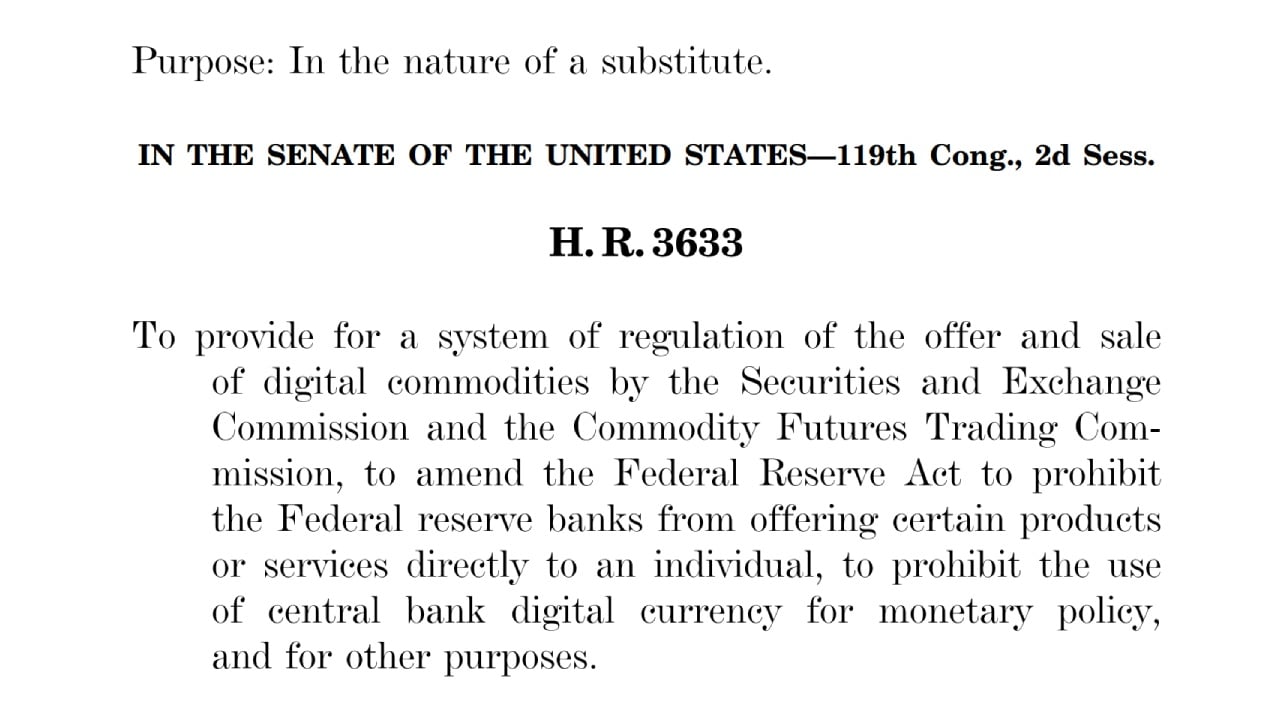
Senate Republicans released revised legislation for the CLARITY Act on Sunday, presenting what they described as a final offer to Democrats before a procedural vote scheduled for Tuesday at 2:15pm ET. The 635-page proposal was released by US Senate Banking Digital Assets Subcommittee Chair Cynthia Lummis, alongside Chairmen John Boozman and Tim Scott.
The revised bill text reflects one year of bipartisan negotiations and incorporates 126 changes requested by Democrats, according to Lummis. The proposal also includes modifications to the Blockchain Regulatory Certainty Act and new provisions governing stablecoin yield.
Ethics Restrictions for Federal Officials
The bill introduces new ethics provisions that would restrict federal officials' involvement with digital assets. State attorneys general would be authorized to enforce bans preventing federal officials from issuing, sponsoring, or holding significant financial interests in digital assets, as well as prevent exchanges from listing assets that violate those bans.
Covered individuals would be required to divest significant financial interests or place them in a qualified blind trust. Violations would result in civil penalties of $500,000 or 20% of the amount received in the prohibited transaction, whichever is greater. These ethics provisions would take effect 360 days after enactment, or sooner if implementing regulations are finalized.
Stablecoin and Developer Protections
On stablecoins, the Treasury Secretary would be required to introduce rules restricting rewards if community banks lose deposits on a substantial scale. This authority would expire 18 months after the bill becomes law.
The revised Blockchain Regulatory Certainty Act would retain protections against treating developers as money transmitters or financial institutions under the Bank Secrecy Act. The protections would be extended to miners and validators, which were previously excluded from this coverage. References to Section 1960 of Title 18 of the US Code, relating to unlicensed money transmitting businesses, would be removed.
Additional Changes
The proposal strengthens safeguards around affiliate trading and conflicts of interest at digital commodity exchanges, brokers, and dealers. It also clarifies how consumer protection laws apply to these entities.
The Tuesday procedural vote will determine whether the Senate can advance the bill toward floor consideration.