The Aave DAO is considering a proposal that would allow DeFi risk manager Sentora to operate an isolated lending market while the DAO retains ownership of the underlying contracts.
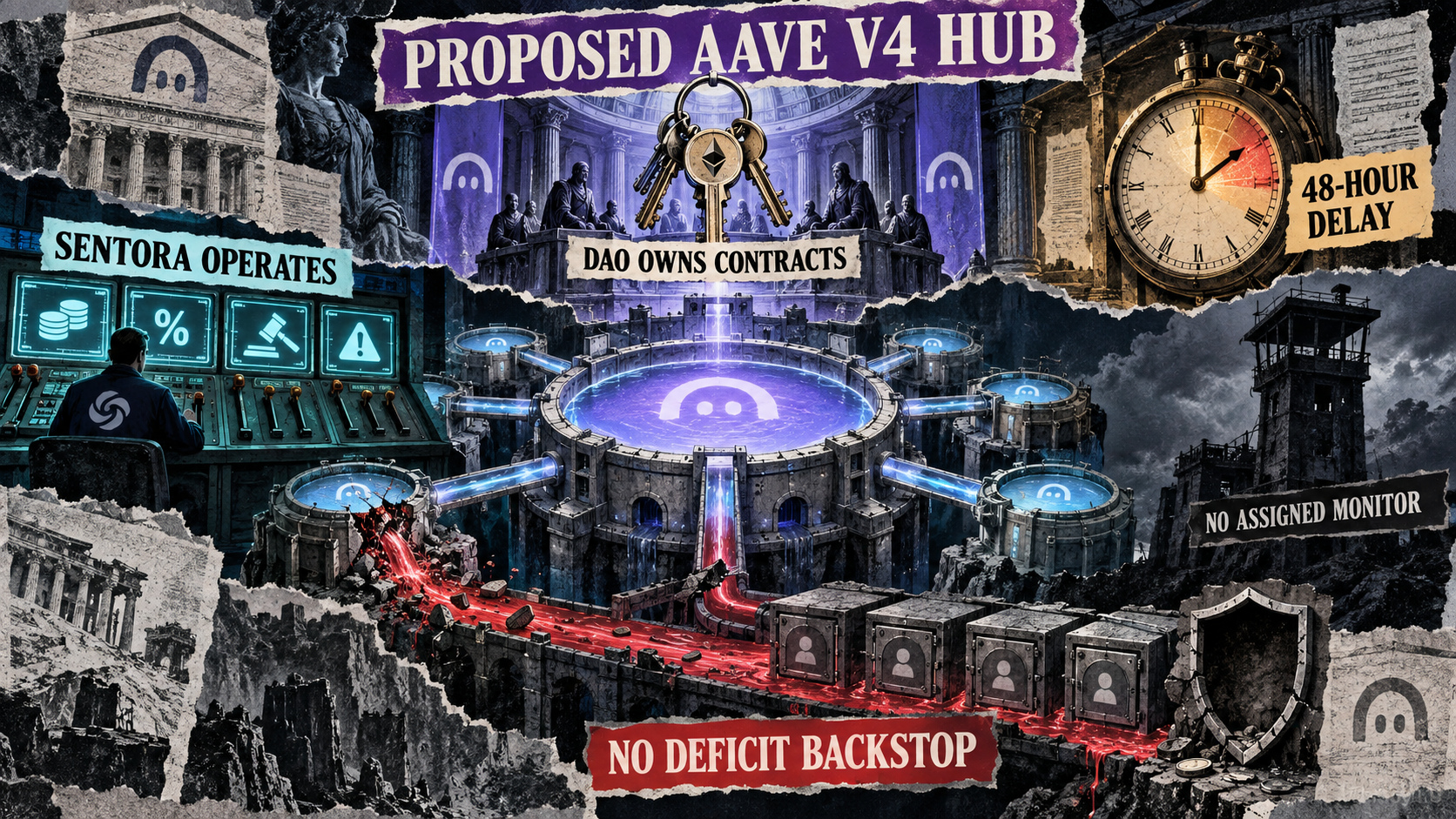
Under the governance proposal posted September 28, Sentora would control day-to-day decisions including collateral selection, interest-rate curves, liquidation settings, and oracle choices. The DAO's Governance Short Executor would retain admin roles and the ability to revoke Sentora's operational authority through an on-chain governance proposal.
Operational Structure and Response Times
Aave V4 separates a Hub that holds liquidity from Spokes where loans originate. Sentora's proposal would establish one Ethereum Hub exclusively for its Spokes, with no credit lines to other Aave DAO Hubs.
The structure creates different response windows for different actions. Sentora can pause or freeze reserves immediately. Risk reductions would also be immediate, but increases to risk, rate model changes, or liquidation configuration adjustments would carry a 48-hour on-chain delay. Adding new collateral or deploying another Hub would require a two-week forum review, during which any appointed DAO service provider could object and escalate the decision to a binding Snapshot vote.
The proposal limits borrowable assets to RLUSD, PYUSD, and OUSD, excluding USDC and USDT.
Risk Monitoring and Oversight
The proposal assigns no independent monitor to review Sentora's instance. While Aave's existing risk service providers could raise concerns on their own initiative, they would not be required to review submissions or monitor the market. A quiet review period would not establish that anyone examined proposed changes.
Loss Absorption and Revenue Sharing
If a liquidation exhausts a borrower's collateral while debt remains, suppliers of the Hub asset bear the loss. The proposal specifies no deficit backstop or first-loss protection for the isolated market.
The commercial arrangement splits protocol revenue equally: Sentora receives 50% and the DAO receives 50%, including reserve-factor earnings and protocol liquidation fees.
The proposal is currently an ARFC for community discussion. Next steps include a Snapshot vote followed by an on-chain Aave Improvement Proposal before any approval.