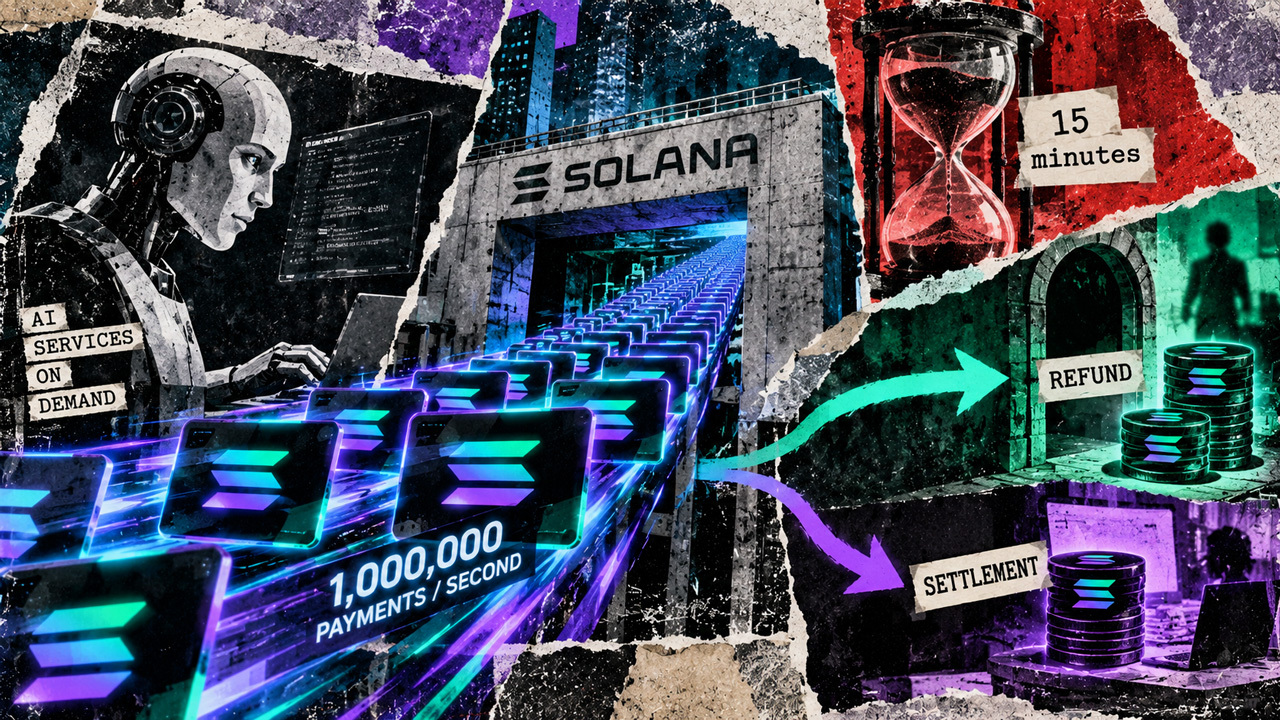
Solana Foundation announced a payment channel system on September 3 capable of processing more than one million payments per second through a proxy using 100,000 unique wallets. However, the system creates significant collection risks for merchants if operators become unresponsive.
The payment channel involves three parties: a customer who deposits funds, a merchant who provides services, and an operator who processes payments. The customer funds the channel and the merchant supplies the service, while the operator advances SOL tokens for fees and account rent. Spending is authorized through signed messages rather than individual blockchain transactions.
How Collections Work
When both parties cooperate, the designated payee can submit final settlement and seal the channel, distributing funds in a single transaction. The merchant and customer can receive their portions without delay.
If the operator becomes unresponsive, the customer can request forced closure, triggering a grace period. The specification draft recommends 900 seconds, or 15 minutes, though this is configurable per channel. The timer begins when the closure request is recorded on-chain, not when the customer first detects a problem.
After the grace period expires, anyone can submit the sealing instruction. The customer can then withdraw their remaining deposit, minus amounts already settled on-chain.
Merchant Collection Vulnerability
Merchants face a narrower collection window than customers. A merchant's ability to collect depends on whether its final bill reaches on-chain settlement before the grace period closes. An off-chain voucher, an on-chain settlement record, and actual token distribution are three separate stages.
Once the customer requests forced closure, the ordinary settlement process stops accepting new bills. The merchant must instead use a payee-authorized settlement path to record its final bill before the deadline. If delivered service never reaches the final on-chain settlement before closure completes, that portion can become uncollectible from the channel.
Merchants that have already recorded settlements on-chain face a better outcome—those funds remain reserved for distribution after sealing, provided the merchant's token account is usable.
Additional Constraints
Recovery depends on a functioning network and usable token accounts. The program documentation warns that an issuer-frozen escrow can block transfers, and a non-functional beneficiary account can redirect funds to the treasury.
The published benchmark measured payment gate responses without independent mainnet transaction settlement. The headline throughput figure does not establish performance when durable session storage is required, which becomes part of the request path in production deployments.
The Solana Foundation indicated Alibaba Cloud API endpoints were live at launch, with a mainnet deployment listed in the program repository. The published material does not establish a single live grace period or signing mode for all channels, meaning customer and merchant exposure depends on their particular channel configuration.