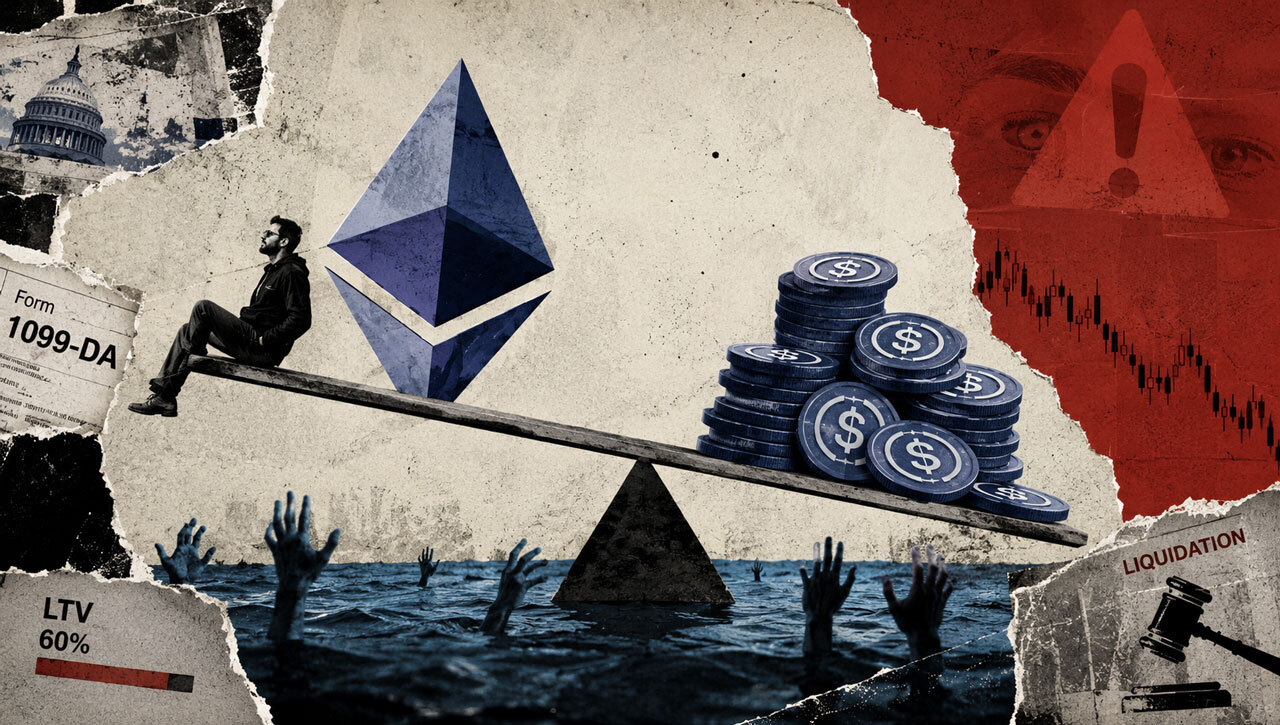
A working paper by researchers from the University of Texas at Austin and the National University of Singapore examines how traditional tax-avoidance strategies translate into decentralized finance (DeFi), potentially introducing hidden credit risks to lending protocols.
The strategy mirrors the traditional "buy, borrow, die" approach used by high-net-worth individuals. Instead of selling appreciated assets—such as Ethereum—and triggering a taxable capital gain, investors deposit the asset into a lending protocol as collateral and borrow stablecoins against it. This provides the borrower with immediate liquidity or spending power while deferring taxable sales and maintaining exposure to future price increases.
While the strategy benefits borrowers, it introduces a fragile mathematical dynamic for shared liquidity pools. When a borrower takes out a loan, the initial loan-to-value (LTV) ratio may have a comfortable cushion. However, if the collateral price falls, the LTV ratio increases. If it crosses the protocol's liquidation threshold, external traders can step in to repay part of the loan and claim the collateral at a discount.
The researchers—Lisa De Simone, Peiyi Jin, and Daniel Rabetti—analyzed transactions on Venus, a DeFi lending protocol on the BNB Smart Chain. Covering the period from November 12, 2020, through July 31, 2022, the study analyzed the 15 largest tokens on the protocol, translating approximately 13 million transactions into 1.36 million daily borrower observations. During this sample period, about 3% of traders experienced defaults, defined by the authors as instances where a loan remained above Venus's 60% LTV limit for at least seven days without further borrowing or depositing.
The study also investigated the impact of the US Infrastructure Investment and Jobs Act, enacted on November 15, 2021, which expanded information-reporting requirements for digital asset brokers. By inferring US-based wallets using metrics such as trading concentration during US business hours, US-specific holiday inactivity, and dollar stablecoin holdings, the authors observed how tax expectations influenced user behavior.
The findings indicate that US-linked borrowers became 24.5% less likely to trade assets compared to international users after the law was enacted, with stablecoin borrowers showing an additional 23% decline in trading activity. Borrowers motivated to avoid taxable sales tended to resist de-risking their positions as collateral values dropped, keeping debt open longer.
Automated lending protocols monitor collateral prices, debt balances, and liquidation thresholds, but they cannot inherently measure a borrower's purchase price or tax incentive. When liquidations fail or lag due to market volatility or blockchain congestion, unpaid losses can affect protocol reserves, token holders, or liquidity suppliers, transforming individual tax preferences into systemic credit risk.