Hyperliquid’s native token, HYPE, surged toward record territory following comments from U.S. President Donald Trump regarding regulatory efforts to bring the crypto trading platform into the United States.
White House Meeting and Market Reaction
During an Aug. 19 White House meeting with cryptocurrency, technology, and finance executives, Trump stated that Commodity Futures Trading Commission (CFTC) Chairman Michael Selig is working to bring Hyperliquid into the United States in a compliant and legal manner. The meeting included executives from companies such as Coinbase, Ripple, Robinhood, Kraken, Gemini, Cboe, and Intercontinental Exchange, alongside Securities and Exchange Commission (SEC) Chairman Paul Atkins.
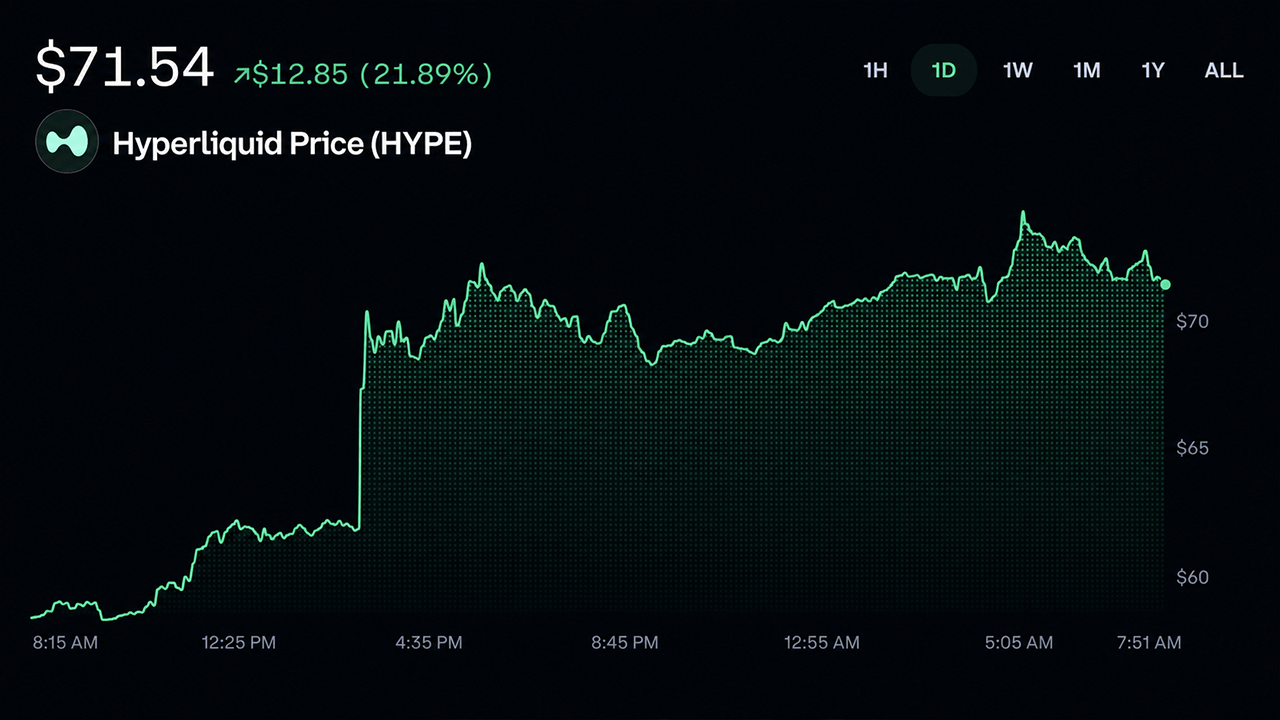
Following the remarks, HYPE jumped roughly 20% to 25% over a 24-hour period, trading between $70 and $73 and pushing its market capitalization toward $18 billion. Trading volume surpassed $1.3 billion, moving the token closer to its previous all-time high of above $76 per unit recorded on June 16, 2026. HYPE currently ranks as the ninth-largest token by market capitalization.
Despite the market movement, Trump announced no formal regulatory approval, CFTC registration, or specific timetable for the platform's entry into the U.S. Hyperliquid's main interface continues to block U.S. users.
Platform Mechanics and Token Utility
Hyperliquid operates as a blockchain designed primarily for trading perpetual futures via an onchain order book, combining centralized-exchange speed with decentralized finance transparency. The platform has previously captured between 40% and over 70% of decentralized perpetual futures volume during various periods, with open interest peaking above $11 billion and lifetime volume reaching into the trillions of dollars.
HYPE handles staking, governance, and activity within the network's Ethereum-compatible smart-contract environment. The protocol directs a majority of trading fees toward an Assistance Fund that buys HYPE in the open market for accumulation or burning, creating ongoing token demand tied to platform revenue and volume.
The possibility of a compliant U.S. operation also impacted related equities. Hyperliquid Strategies, a Nasdaq-listed company holding HYPE, rose as much as 30% to 31%. Conversely, traditional derivatives operators including Cboe Global Markets and CME Group declined as markets evaluated the potential competition from a regulated onchain rival.
Regulatory Outlook
Realizing a compliant U.S. pathway requires resolving complex regulatory issues involving custody, leverage, market surveillance, customer protections, and the integration of a blockchain-based order book into existing financial rules. Market participants are now awaiting formal proposals, registration processes, or regulatory frameworks from Selig and the CFTC following the administration's signal of support.