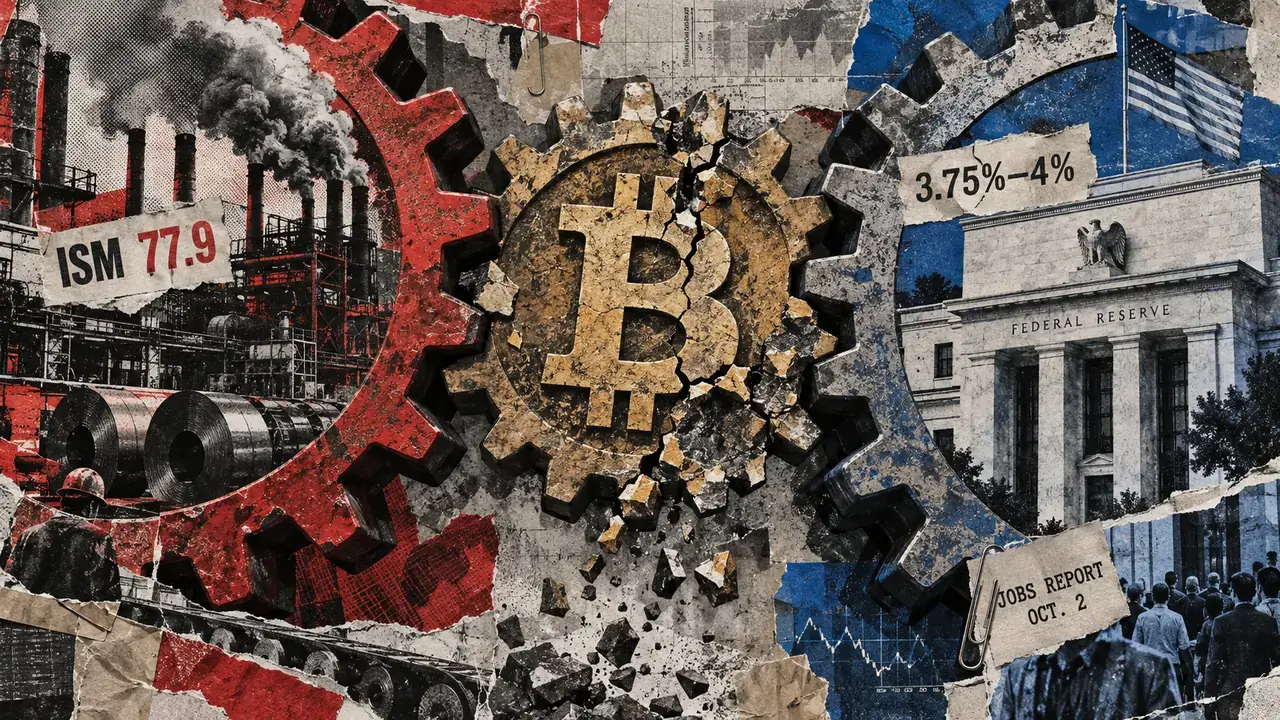
US manufacturers reported more widespread input-price increases in September, adding to the debate over future interest rate policy ahead of Friday's jobs report.
The Institute for Supply Management's October 1 release showed its manufacturing prices index at 77.9, up 6.8 points from August's 71.1. The manufacturing PMI registered 54.5, with new orders at 55.3 and employment at 52.7. Higher input prices were reported by 58.6% of respondents, compared with 46.2% in August.
For Bitcoin and other risk assets, the combination of resilient manufacturing activity and widening cost pressures matters because it could complicate the case for lower interest rates. The Federal Open Market Committee completed a rate increase on September 16, raising its target range by a quarter percentage point to 3.75% to 4%. In September 29 remarks, New York Fed President John Williams said another upward adjustment might be appropriate late this year if the economy followed his forecast.
Rate expectations and asset returns
The Federal Reserve's transmission framework shows that policy changes affect short-term borrowing costs and Treasury bill returns, while expectations of future policy influence longer-term rates and financial conditions. For Bitcoin, potential pressure operates through two channels: more expensive borrowing, which could make financed risk-taking less attractive, and higher returns on interest-bearing dollar assets, which could raise the return investors demand to hold Bitcoin.
The Bureau of Labor Statistics will release September's Employment Situation on October 2. The ISM's manufacturing employment reading cannot substitute for that national report, which will provide the broader payroll context.
What comes next
Bitcoin's market response depends on how investors interpret the combined data. If the jobs report strengthens expectations of higher rates, financing costs and competing dollar returns could become a firmer obstacle to Bitcoin's advance. If front-end Treasury yields or expected policy rates fall, that would weaken the proposed transmission. A February 2023 New York Fed staff study found no systematic Bitcoin response to monetary and macroeconomic news in its historical intraday sample, suggesting the practical test is whether rate expectations move and Bitcoin responds, rather than assuming a factory-cost increase guarantees a selloff.