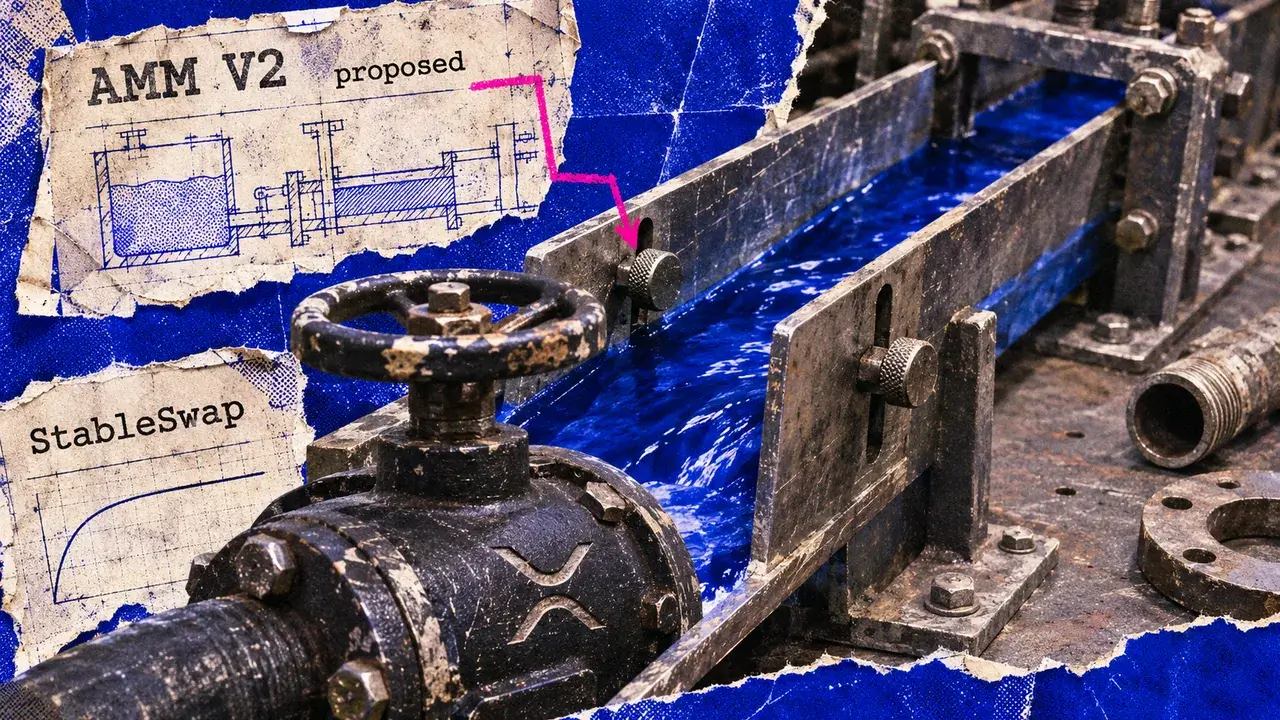
Ethereum co-founder Vitalik Buterin has defended EIP-8037, a proposal intended to prevent the network's state from growing too quickly as gas limits increase. The measure would make writing new data into Ethereum's state significantly more expensive, but Buterin argues that is an acceptable trade-off if it protects decentralization as the blockchain expands.
Why state growth is a constraint
In a detailed explanation of his position, Buterin said Ethereum's execution capacity can be expanded relatively easily, while state growth is harder for node operators. A larger state brings higher storage requirements, longer synchronization times and slower data access.
The network's state currently grows by approximately 110 GiB each year. According to Buterin, a tenfold increase in the gas limit without other changes could push that figure to around 1,100 GiB annually.
He noted that other proposed upgrades in Glamsterdam, which have been delayed, could make execution verification and data broadcasting more manageable even at much higher capacity. That would leave state growth as the main constraint still to be addressed.
Repricing state-creating operations
EIP-8037 addresses the imbalance by repricing operations that create new state. Under the proposal, creating an account would cost 197,900 gas in total, up from 36,600 currently. Deploying a 24 KiB contract would rise from 4,947,200 gas today to about 37.8 million gas.
Buterin described the proposal as the "least-bad solution to allow multiple EVM gas dimensions." Other alternatives include abandoning scaling altogether, accepting greater centralization, or reducing the gas costs of almost every other operation. According to Buterin, the last option would require extensive changes and could eventually force basic EVM operations below one gas unit.
State gas reservoir and compatibility concerns
If passed, the proposal would also introduce a state gas reservoir that separates the cost of creating state from ordinary execution gas. Buterin said this would allow large contract deployments and certain calls to proceed even if their state-related costs exceed the usual 16.7 million gas transaction limit.
The reservoir would not resolve all compatibility problems, however. Some applications have fixed gas limits embedded in their contracts or bridge mechanisms, and such features cannot be easily upgraded. Buterin specifically warned that the OP Stack bridge could be exposed to malicious transactions that cause withdrawals to fail under the new rule.
Possible fixes include changing how refunds are processed and adding a different reservoir for state access costs, in addition to advancing EIP-8141. That proposal would let transactions specify execution and gas limits more directly, but Buterin noted that such changes could introduce more problems and further delay planned upgrades.