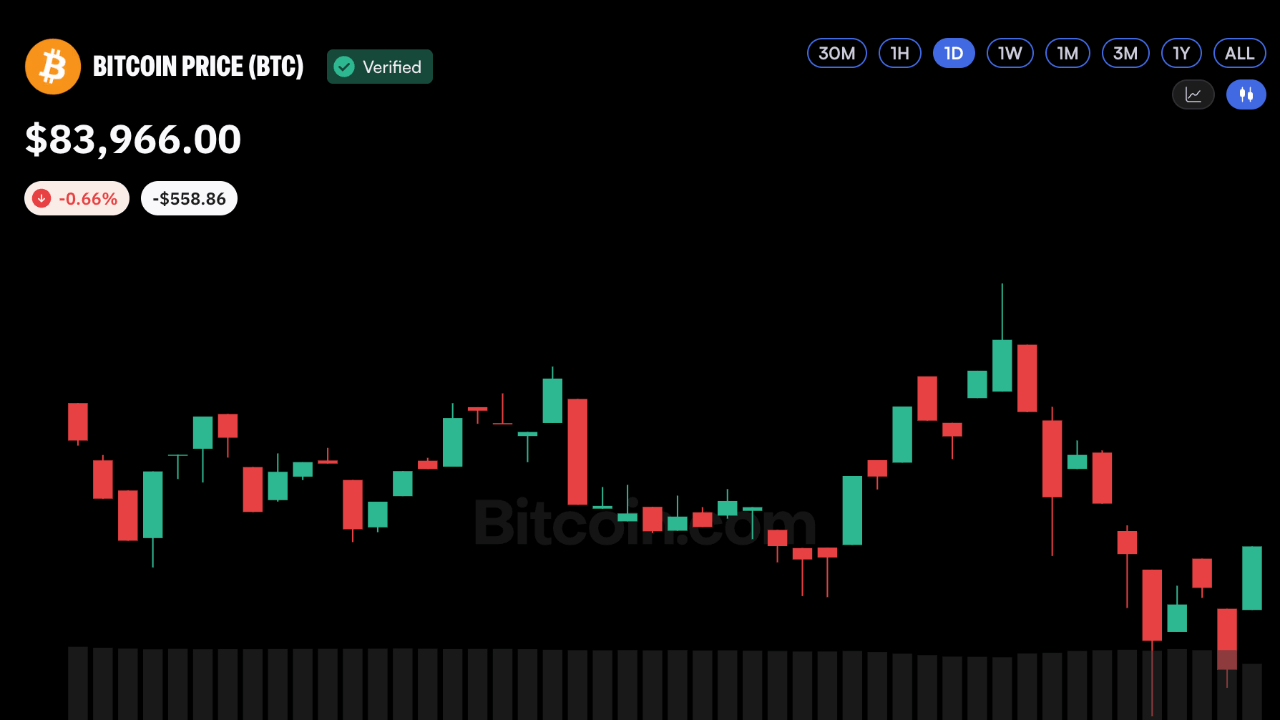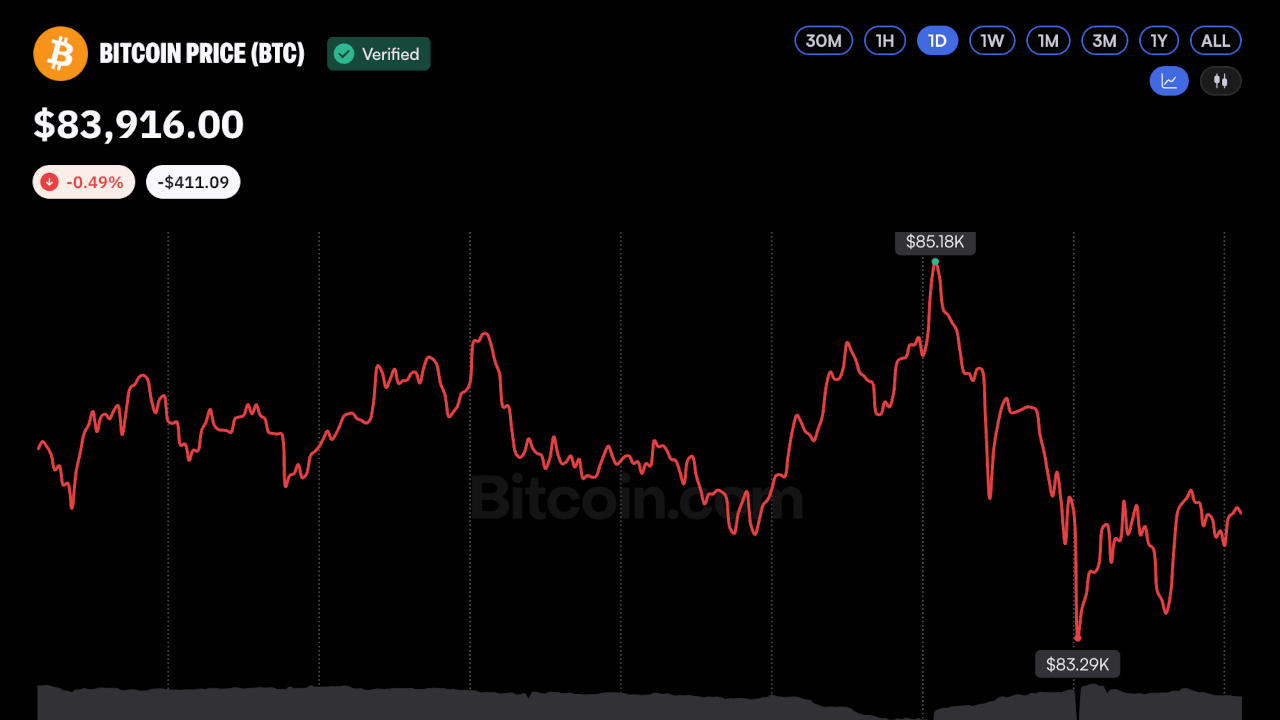
Bitcoin traded primarily between $84,000 and $85,000 on Friday, following an earlier weekly high above $87,000. Intraday swings saw the price dip to $83,229 before stabilizing around $84,000.
The cryptocurrency experienced volatile price action throughout the day. After trading in a confined range near $84,000 to $84,750 earlier in the session, a sharp move pushed bitcoin to $83,229 around 10:05 a.m. EST. A subsequent relief rally carried it back near $84,000, where it remained relatively unchanged from 24 hours prior.
Bitcoin's volatile trading triggered $67 million in leveraged position liquidations, split between approximately $47 million in long positions and $20 million in short positions. Across the broader cryptocurrency market, total long liquidations exceeded $145 million compared with $134 million in short positions.
Macro Pressures Shape Market Sentiment
Analysts point to broader macroeconomic forces as primary drivers of recent price action. Andrew Melville, head of research at Block Scholes, identified three key factors weighing on sentiment: rising U.S. government bond yields, oil prices above $100 per barrel, and Federal Reserve officials signaling potential rate hikes.
Treasury yields have climbed sharply, with the 30-year yield reaching its highest level since 2004. Over two days, the 10-year yield rose approximately 20 basis points. Since the beginning of geopolitical tensions in the Middle East, the two-year yield has climbed more than 150 basis points.
Brent crude has settled above $100 per barrel despite reports of potential reopening of the Strait of Hormuz. Federal Reserve speakers adopted a hawkish stance during the week, with futures pricing in at least three rate hikes over the next year.
Institutional Support Provides Resilience
Despite macroeconomic pressures, risk assets have remained resilient. Spot bitcoin exchange-traded funds recorded their largest single-day inflow earlier in the week since October record levels. Additionally, a major institutional investor made its first bitcoin purchase in nearly a month, signaling continued institutional interest.
This institutional support and broader asset resilience may position markets favorably as they enter the fourth quarter of 2026.