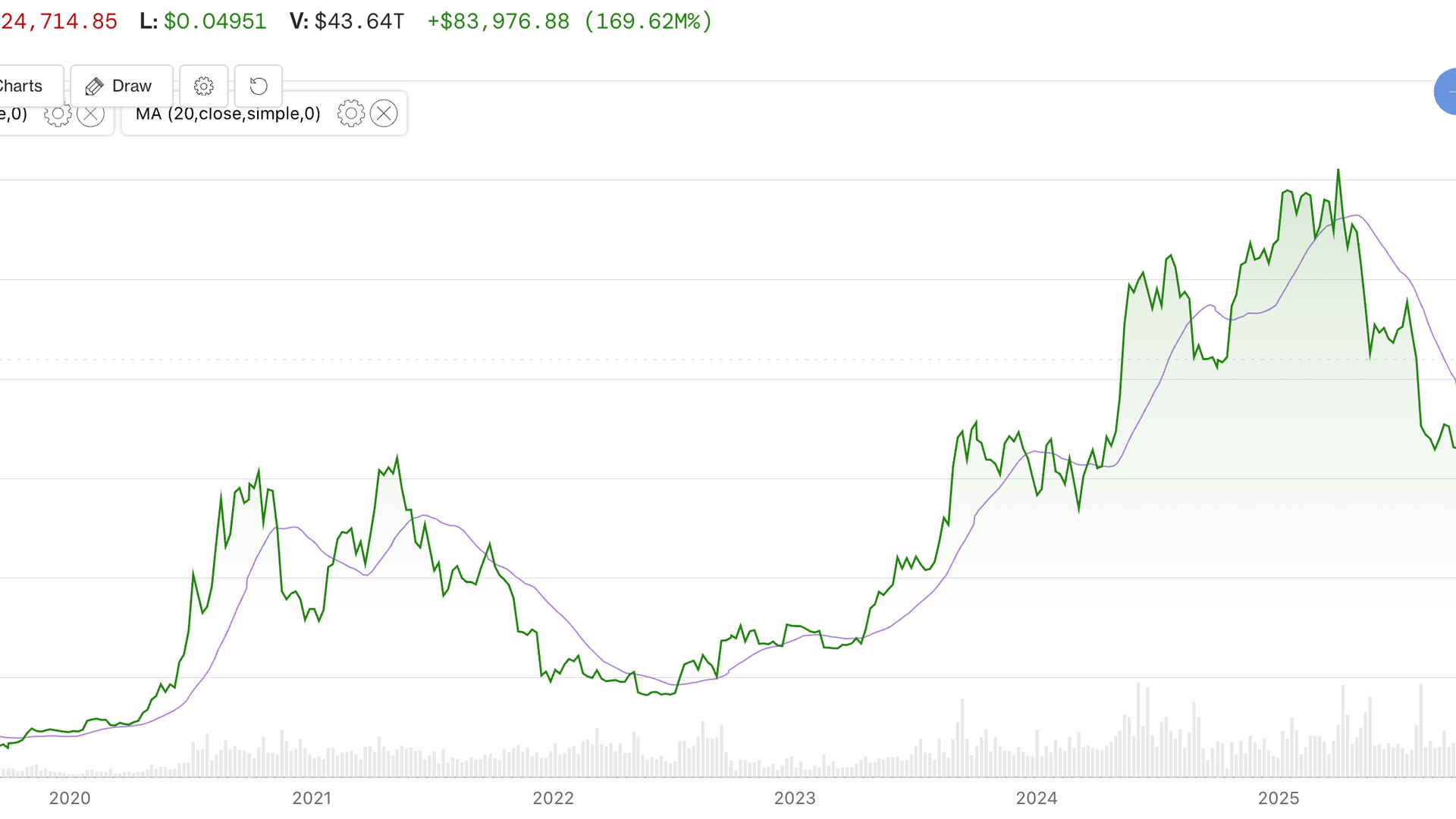
Bitcoin's recovery toward $85,000 has prompted miners to liquidate portions of their holdings. On September 21st, miners sent 19,866 bitcoins to Binance, bringing inflows near the 20,000 BTC level last seen in August. The sales allow miners to cover operating expenses such as electricity and maintenance while purchasing new equipment without waiting for further price appreciation.
The impact of these inflows on Bitcoin's price will depend on how miners deploy the proceeds. If miners use funds to purchase alternative assets before converting to fiat, exchange supply of Bitcoin could increase, potentially creating downward price pressure.
Infrastructure Revaluation Favors AI
Mining companies are increasingly monetizing their facilities for artificial intelligence and high-performance computing workloads alongside or instead of Bitcoin production. Year-to-date, miner stocks focused on AI operations gained 21%, while stocks of traditionally-focused Bitcoin miners declined 8%, reflecting investor capital allocation trends.
The valuation gap is substantial. AI-linked mining operations trade at approximately 12.9 times future revenues compared to 3.7 times for traditional Bitcoin mining operations, demonstrating the market's assessment of infrastructure value for AI workloads.
Changing Revenue Models
Several mining operators have begun generating significant revenue from AI and high-performance computing leasing. Core Scientific generated approximately $136.7 million from such services compared to $21 million from Bitcoin mining. IREN's cloud-AI revenue reached $70.5 million, exceeding its $66.7 million Bitcoin mining revenue. TeraWulf earned $31.9 million through HPC leasing.
As alternative revenue streams expand, miners' dependence on Bitcoin production may decrease. Diversified revenue sources could reduce the impact of lower Bitcoin prices and reduced mining demand on operators' financial performance, potentially affecting Bitcoin's hashrate growth and mining landscape.