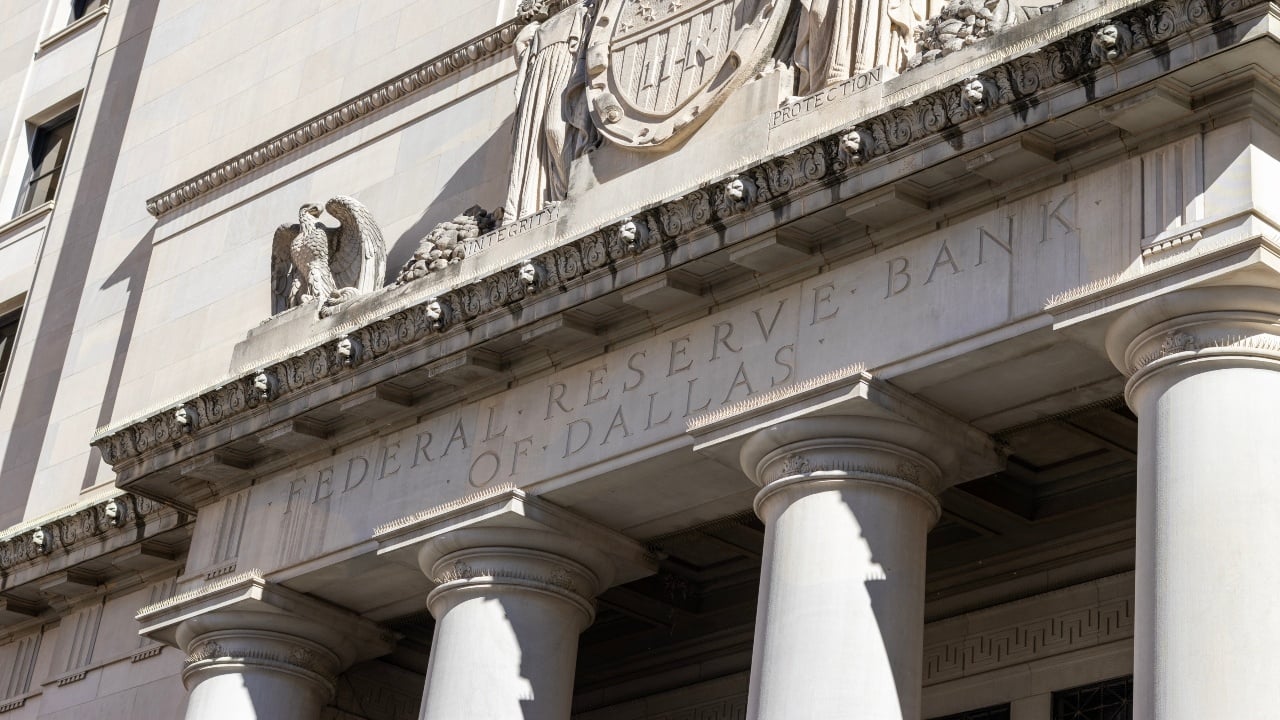
Research from the Federal Reserve Bank of Dallas warns that tokenized deposits and instant 24/7 blockchain transfers could destabilize traditional banking functions by reducing banks' capacity for long-term lending and forcing institutions to maintain larger liquid asset reserves.
The report, authored by Dallas Fed researchers Rosie Levy and Srini Ramaswamy, examines how blockchain-based commercial bank deposits could affect the U.S. banking system's core operations. At the center of commercial banking is maturity transformation — the practice of accepting short-term, low-cost deposits and using them to fund long-term, fixed-rate assets such as mortgages and business loans.
Banks have historically relied on the relative stability and stickiness of customer deposits to manage this duration risk. However, the report suggests that tokenized deposits — which enable near-instantaneous transfers across banking networks 24/7 — could eliminate those traditional frictions. With automated yield-switching tools and programmable smart contracts, depositors could automatically shift funds to higher-yielding institutions in real time.
Impact on Lending Capacity
According to the report, roughly 80% of the $7 trillion in aggregate duration risk assumed by U.S. banks depends on the unique duration characteristics of standard deposits. The authors estimate that a 10% reduction in the weighted average lifespan of deposits would reduce the banking system's capacity for maturity transformation by approximately $580 billion.
Heightened Liquidity Demands
Under current regulatory frameworks, banks must maintain a liquidity coverage ratio (LCR) by holding high-quality liquid assets, including cash and U.S. Treasuries, against potential deposit outflows. Operational deposits currently receive favorable regulatory treatment due to their historical stickiness.
If tokenization increases deposit velocity and volatility, regulators and stress-testing models would likely assign higher assumed outflow probabilities to these balances. Banks would then be forced to reallocate capital into lower-yielding liquid assets rather than higher-yielding loans.
Industry Perspective on Settlement Mechanics
Industry experts have challenged aspects of the Dallas Fed analysis. Chris Turner, co-founder of decentralized impact investment platform Kula, argues that the report oversimplifies blockchain transaction mechanics by equating token speed with actual legal claim settlement.
Turner contends that while a token can traverse a blockchain network in seconds, the underlying payment, ownership right, or legal claim remains tied to external infrastructure. Finality and legal rights depend on traditional intermediaries including banks, custodians, clearing systems, and regulatory registries, Turner noted.
While major financial institutions continue exploring tokenized deposits as a regulated alternative to stablecoins, real-world adoption remains in its early stages. The debate reflects an ongoing challenge for policymakers: balancing the operational efficiencies of instant, programmable value transfer with the prudential safety and sound funding structure of commercial banks.